In China Beyond Litti-Chokha

It is nice that Nitish is visiting China. I have read few reports on his China visit in Telegraph. Calcutta. He had promoted Bihar’s Litti-Choka for long enough. It’s getting boring now. Every state has some cuisine like that. That’s the uniqueness of India. It may satisfy his ego and some sycophants may be keeping him elated. It’s not going to fetch much.

Let him have a feel of the rural China as Bihar lives in villages.

If China had done something unique to improve the quality of life of its rural population, Bihar or other states in India must emulate.

What are the rural industries that have grown in China to improve the local employment? NREGA rather MGNREGA can’t be an effective solution. Rural population must get useful employment through creation of jobs in villages. Some business models where some organized business enterprises outsource the work that can be efficiently and profitably done in villages must get evolved.

China has also achieved a great success in power generation through biomass. Can Bihar emulate some? Or for that matter, can Gyanesh Pandey open a branch in China? With Bihar becoming a major consumer, can Bihar be an attractive place for manufacturing of those consumable items or the machinery used in setting up those factories? Many years ago, some entrepreneurs from Bihar set up manufacturing plants for the equipment and machinery used in farming. Why can’t Bihar be a manufacturing state of the unique agricultural equipment and accessories?

Bihar’s farmers still lag behind in yield per unit of land. China has achieved much higher agriculture productivity. Nitish team must look into possibilities of collaborating with Chinese for improving the yield. As reported, ‘the yield of most crops in India is 20-40 per cent of the world’s best levels.India can increase wheat production by 30 million tonnes or around 40 per cent and double paddy production at the current levels of technology.’

There are many other areas that may help increasing the GDP of the state and provide employment to its people. One such thing may be to have a huge skill training centre for manufacturing techniques with help of the Chinese. The Chinese have mastered and improved some technologies. The leather sector may be another attraction for Bihar.

Mature Nitish and his team mustn’t get mesmerized by Chinese achievements and focus on the Chinese achievements that help the state become developed in real sense beyond spreading the attraction of litti-chokha.

I wish some reputed journalists from the state would have accompanied Nitish team to cover its visit in details on day to day basis. However, Nitish team must on return present a detail report of his China visit and the lessons from the visit for the benefits of the state. That’s the way it happens in corporate with good work culture.

PS: Nitish visits Chinese village
———–
Information: ‘Over the Years’ is my photo autobiography. You can click and access, and perhaps assess.
Posted in bihar, economy | Tagged | Leave a comment

Nation’s Holy Grail of Hopes

The circuses going on small screen and print media for quite some time now would have certainly damaged the image of the nation around the developed world. Most of the days, it had been disgusting to watch or go through it. However, there were some holy grails of hope for me. I shall like to share with the elite and young group of my readers.

‘Business Today’ has recently reprinted an article, ‘Innovation’s Holy Grail’ from Harvard Business Review that was written by C.K. Prahalad and R.A. Mashelkar and published in its July-August 2010 issue. It deals with a number of Gandhian innovations from India- disruptive business models of TCS, Infosys and Wipro that made India an IT power to reckon with; Asia’s fastest supercomputer in 2007 by Tata’s Computational Research Laboratories (CRL); Tata Motors’ Nano; Lupin’s drug development process; and EMRI’s world’s largest emergency management entity that handles 60,000 to 80, 000 calls a day and uses 2,600 ambulances to attend to 7,000 emergencies a day, saving 110 lives a day with help of 11, 00 employees.

New York Times published on June 2, a news report, ‘Organic Farming Finds a Growing Fan Base in India’ by AMY YEE. The article would have certainly raised the hopes of many of a good future for this business of farming. It’s really heartening that in a country like India and its most backward state, Bihar. I hear of organic farming even in remote villages.

India Knowledge@Wharton June 3, 2011 has a report on “2011 Innovation Tournament: Finding ‘A Novel Match Between a Solution and a Need’

The tournament judged three Indian entries as winner:

Best new customer-centric innovation: L3, for a new video encryption technology. Anil Gupte has patented the process and plans to market it through his company, K.E.E.N.

Best implemented sustainability innovation: Revolo, from KPIT Cummins, for a process that converts old automobiles into hybrids.

The “Hair Twister” team from India proposed a mat filled with human hair to clean up oil spills.

Many individuals and young entrepreneurs are helping to innovate the products that will be attractive worldwide particularly in Africa and Latin America because of its affordability. An old employee of Godrej developed ChhotuKool, a battery-operated refrigerator that can cool to about 20degrees below outside temperature priced at RS 3,200.

IIMs, IITs and many engineering institutes are incubating new innovative products that one day will change the quality of living for the common people at the bottom of the pyramid in rural and urban India. Anil Gupta of IIM, Ahmedabad has made a big difference with push for grassroots innovations covering every corner of India.

And how exciting it is to know the arrival of Rs 2200 laptop that will be given to the students of IIT, Rajsthan by June?

I also read about an engineering marvel in making that will be a pride of the nation: “When completed in 2016, the 1.3-km railway bridge over the Chenab will soar 359 meters above the river bed, 19 meters higher than France’s Tarn River bridge.”

All these news provide hope. I am sure the number of such innovations will increase exponentially in days to come. And India in real sense becomes product innovator. It will move to take over the leadership of hardware rather than limiting itself to software only.

I wish the scientists and technocrats work for innovating all the household appliances, be it an air conditioner or cooker or washing machine that runs on solar power.

Posted in education, governance | Tagged | Leave a comment

From Alto to Mini-Xylo: My Next Vehicle in Wishlist

I bought my Alto in 2000. It is wonderfully serving us. We are just two and senior citizens in all sense of the term. In Noida, it is difficult to live without a car. I don’t need a bigger or newer car. But the way Noida neighbourhood adds new models; one can’t but develop an inferiority complex. I feel like changing my car. But then what will be that car that I must go for as my next vehicle. I came across a news report that has allured me and I am eagerly awaiting some more information.

Images of Mini-Xylo

M&M is all set to launch a mini version of its popular car, Xylo. The trial production for the car has already begun in all likelihood at Chakan. I don’t want to buy if it be something like Wagon R.

I want the present Xylo cut from middle to shorten it. It must look strong and be powerful, preferably keeping the same 2.50 litre diesel engine with same tires. I wish it to be priced around Rs 5 lakh.

As I looked into Google I found a huge number of entries on mini- Xylo and also images.

In 1990s, I worked with Mitsubishi for Hindustan Motors for bringing Minica in India. Mitsubishi had a wonderful product in Mini-Pajero. As it seems it still survives. I had longed that Mini-Pajero (images) got manufactured in India. It was not a viable proposition. India didn’t have a market for that. Hindustan Motors had come with Lancer, but had dropped small car Minica. Later on Hindudtan Motors did also produce Pajero. But that was a high-end vehicle.

Will Mini- Xylo be of the quality that Mini-Pajero was or will it be better? A recent write up in Financial Express, Pawan Goel, President of auto division of M&M revealed that Goel had an internship in Hindustan Motors in 1972. Goel would have certainly come to me. Will he listen to my request to get my dream mini Xylo as I want it?

Posted in industry, management, manufacturing | Tagged , | Leave a comment

Manmohan, Anna and Ramdev-My Views

Interestingly, Manmohan government is excessively proactive for avoiding any breakdown of law and order situation at Rajghat where Anna is holding a one day fast today against the midnight police excesses during the eviction of Ramdev rally of Ramlila ground on June 4. It has deputed more than thousand security men around the site of the fasting place near Rajghat. Why is it necessary? Unfortunately, the same government keeps on dragging its feet from taking proactive fast actions against very critical national issues, be it against the black money stashed in foreign banks or against rampant corruption or land acquisition issues.

Anna went for fast for the Lokpal Bill at Jantar Mantar. The bill is with government for many years. First the government hesitated. The movement gathered momentum and spread nationwide. Manmohan yielded to everything that Anaa demanded such as including the five members nominated from civil society by Anna in drafting committee. The government handed over the notification on the joint drafting committee before he gave up the fast.

Why couldn’t Manmohan show the same urgency for Lokpal bill that as he showed for nuclear power bill? I personally feel Anna’s group would have asked for the final draft from the government and got all its own points to make it effective and robust, integrated in it rather than joining the task of drafting it. Can Anna or the civil society do the same for all the bills of national importance such as land acquisition bill that is holding up the industrial development? Let the legislators do their jobs that they are paid for.

Having lost its stand in case of Anna, when Ramdev went for his protest rally at Ramlila maidan, Manmohan got nervous. He went out of the way and sent four of his ministers including Pranab Nukherji and Kapil Sibal to interact with Ramdev at airport itself. How did Pranab Mukherji agree for the same? The four Ms continued the negotiation and almost agreed for the demands of Ramdev. The most important of the demands were the declaration of all the black money in foreign banks stashed by unscrupulous people of India as national assets that must be returned to the national exchequer of India. None in India can disagree for that. Even the main opposition party went to the president demanding that. Why couldn’t Manmohan agree for that and take a proactive action by announcing an ordinance on it? It is unfortunate that Ramdev didn’t use the service of some of his knowledgeable disciples as advisors. He would have focused just on one issue of declaring the black money in foreign banks as national assets. But one can’t expect much from such persons.

Surprisingly, Manmohan’s government takes actions in such a manner that the unscrupulous Indians take proactive action and make the government actions ineffective. Let me mention the black money in Swiss Banks stashed by Hasan Ali that was estimated as $40 billion. After few days, the finance ministry reported it missing or reduced to just $1 billion. Once these unscrupulous persons come to know of the seriousness of the government, they take proactive actions. Many opine that the recent boom in real estate is due to the black money gushing in from the foreign sources that is really the money of Indians stashed there.

Let the government be proactive on national issues.

Posted in governance, indian politics, social issues | Leave a comment

A Government of Coward Sycophants

The country has not witnessed such a bankruptcy of leadership and government here before. How can Manmohan, who sent four of its senior ministers to receive Baba Ramdev and who had kept on negotiating till 7PM, suddenly orders a police action at midnight on sleeping protesters with their guru? It reminds of the emergency period of Indira Gandhi that changed the course of politics in India and put the country 20 years behind.

There is some semblance with the emergency era. It was an advocate Sidharth Sankar Ray who advised Indira government then. It is Kapil Sibal who is playing almost similar advisory role of Sonia Gandhi who is the de-facto ruler of the country. Kapil Sibal has taken over telecom ministry from Raja whom he gave a certificate with a statement that there was no loss to the nation in 2G scam. I don’t know why the country, Anna, or Ramdev didn’t ask for an apology from him or refused to sit with him in any negotiation. Why someone couldn’t go to court against his lies.

But there is a major difference. Today the country doesn’t know who is effectively ruling the country: the dummy prime minister, the defacto prime minister or the troubleshooter gentleman from Bengal.

Why was the police action required at dead night? Did the government not know what Ramdev was talking for the whole day that the whole country listened? Why was he not told or appealed to disperse the meeting for which he had not been permitted?

Why did Manmohan and Sonia Gandhi allow his party’s spokesman and general secretary to keep on vomiting venom against Ramdev in name of democracy, while their ministers were negotiating? Was all that not meant for instigating Ramdev to remain tough?

Why couldn’t Manmohan Singh or Sonia Gandhi or for that matter Rahul Gandhi walk up to the meeting and talked to Ramdev and if necessary with the people present there?

Why couldn’t Manmohan address the nation in the evening about this serious situation?

Why is the Sonia’s government trying to test the patience of the people of India?

After all Ramdev was asking for declaring the black money in foreign banks as national property and wealth that is in national interest and for arranging to bring it back. And as reported, the government agreed for it.

Posted in governance, indian politics | Tagged | Leave a comment

India Today:A Shame

What a shame! Why is government so much afraid of Ramdev? Why is the prime minister personally giving so much importance? He himself appealed. Ramdev didn’t yield. He then sent four of his ministers, the great trouble shooter, Pranab, legal luminary Kapil Sibal, Subodhkant perhaps one of the disciples of Guru turned business man, and Bansal who manages parliament to dissuade Ramdev for going on fast right to the airport where Guru arrived in a private plane from Ujjain. This was something that had never happened. Two and a half hours talk could not make Ramdev yield. All the four are still continuing the effort to convince Baba.

Manmohan government got shaken in the same way when Anna had started his fast. It’s because Sonia, Congress and Manmohan can’t even stand against these so called leaders from the civil society politically? What a scarcity of a political leadership in this most populous democracy! Where will it end?

Who will be the next Anna or Ramdev and what will be his or her issue of public interest? Will a woman leader come out for women reservation? Will someone from the deprived class go for a similar fast for removing the poverty of the majority of the billion plus population of the country? Will Sri Sri Ravi Shankar be the next guru who joins the new race with some issue?

The total government approach is just childish. It is for the government to take up proactive actions against the burning issue of the country.

Posted in governance | Leave a comment

Powering Bihar, Alternative Route

The centre keeps putting in costly ads providing its success reports on ‘Bharat Nirman’ including that of rural electrification. When I visited Pipra last March, I noticed a board declaring Pipra already covered in Rajiv Gandhi Rural electrification scheme. In eight days that I was there, perhaps Pipra would have received electricity barely for few minutes. Alok had spent on wiring and fixtures in thousands to give me surprise and comfort. But how could Alok get electricity through it? Why should not the centre take responsibility of providing the electricity to the thousands of villages that it claims to have connected? It’s surprising even the power plants located in the state can’t feed the state’s grid beyond its quota. Further, centre hesitates or cancels allocation of coal block for new power plant in the state.

Centre’s apathy to Bihar is crossing the tolerance limit. The Centre’s mandate prohibiting production of ethanol directly from sugarcane killed the investment in the sugar industry in Bihar that can improve the economy of the state through cogeneration. Even the chief minister of the state can’t decide the location of a central university neither can he seek upgrade Patna University as one. Centre will not cover all districts of Bihar under the Sakshar Bharat Yojana, a literacy mission aimed for all backward regions in the country. Is it the way a centre deals with a state just because the ruling party doesn’t exist in Bihar for all practical purposes? Can it do the same with any of the Southern states, such as Tamil Nadu? How long Nitish Kumar can go on begging? I put an entry in Face book asking Biharis to organize a candle light protest against the centre’s step motherly behavior in every city and towns of the country. A similar tough stand can be planned against the big industrial houses that show apathy to the state for no reasons by boycotting their products.

Bihar government on its own cleared private investments to the tune of Rs 1.5 lakh crore in the power sector. But it hardly means much. It’s also trying its best to complete the modernization and expansion work of the older power plants such as Barauni and Nabinagar.

Land acquisition is also a major problem which has held up the private sector power plants. Can Bihar set an example to be the first to find an amicable and innovative enough solution to the land acquisition problem that other state may emulate?

Now Good news for Bihar: Adani Power Ltd has agreed to set up 1,320 (610×2) MW thermal power plants and the centre has agreed to give coal linkages too.

State electricity Board is ready to buy power. Eight power companies have evinced interest. Let us see how fast it happens.

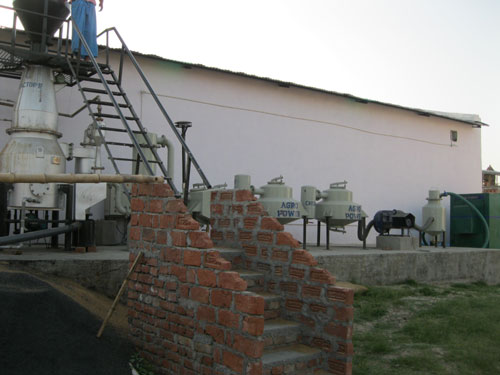
There are means to ease the power problem. And Bihar must go for it whole hog. Gyanesh Pandey has already shown the alternative way for providing cheap and clean electricity generated from waste rice husk for the 380 villages in North Bihar. Why can’t Bihar government assist and encourage the technology to reach every village that produces sufficient husks or alternatives? Interestingly, Bihar annually produces 50 lakh metric tonnes of rice. One can easily calculate the output of husk. I know each of the villages in rice rich Rohtas can have a husk power generation centre. The integration of a briquetting unit for the farm waste can improve its storage and use for longer time.

In my own village, I found a rice mill powered by a diesel engine using the gas from rice husk.

Bihar can also use the business model and technology developed by another IIT Kharagpur alumnus, S Venkatesam for rural electrification. His Energy Plantation Projects India (EPPI) is working with an idea of “energy forest”.

I hope Nitish Kumar also encourage the local entrepreneurs for setting up the local plants without waiting for big power plants to come up.

Posted in agriculture, economy, indian politics | Leave a comment

Bihar: Lack of Capacity for Post Matric Education

Nitish has brought about almost a revolution in primary education. The pink buildings all around even in the remote villages are those new temples built or refurbished in last few years. However, 100% enrolment with no dropouts is still a distant dream. Another big drawback of the education sector is the lack of post-matric education facilities at least up to class XII in the rural Bihar.

This year’s number of those appeared and of the successful students in matric examination is huge. The more exciting is another news report. 80% of the passed out students are from rural regions. As reported, 9.31,993 students appeared for matric examination of 2011: 5, 32,523 were boys and 3, 99,470 were girls.

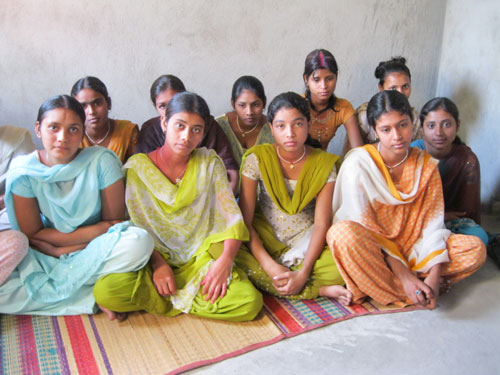
Interestingly, out of 41 students securing the top 15 positions, 13 are girls. During my last visit to my village I met a group of girls who according to the headmaster were hoping to obtain first division. But they were morose as they would not be able to pursue their higher education. There is no school nearby and moving to Sasaram the nearest town with the facilities will be almost impossible.

About 15.56 per cent (1, 43,864 students) have secured first class whereas 32.93 per cent (3, 04,385 students) have secured second-class marks.

About 18.71 per cent (1, 72,971 students) have secured third class.

The pass percentage is 67.21 (6, 21,220). Around 15.54 per cent boys (1, 43,700) and 16.88 girls (1, 56,016) have failed.

How many of the successful ones in matric will pursue further studies? We should assume that all the first and second divisioners, that comes to 4, 48,247 that should continue. But will they? It will be possible for the students in suburban areas to continue, as there is sufficient number of schools with facilities to teach up to class XII. But what percentage of rural students that are about 70% of the total successful ones can get accommodated in the very few rural schools that have facilities for class XII? Those who can’t be accommodated will have to move to suburban schools or will fail to pursue further education and drop. A large percentage of such students will be the girl students from rural areas who either can’t afford a suburban school or the parents will not like them to go to suburban schools to live out of family. What is needed?

1.The government and the private entrepreneurs in education must invest in creating education facilities up to class XII in at least one of the school in every panchayat on priority.

2.Another serious concern is about the failed students and particularly the girl students who are in lakhs. They are the suitable stuffs for trade education. Has the government plan for creating sufficient capacities for the failed and third divisioners to provide one or another skill-training?

3.Can the government with help of private artisans and experts run skill training centres in the local primary schools in second or evening shift?

4.Can the government encourage the engineering and other professional colleges such as medical to run diploma and skill building diploma course or if necessary make it mandatory? It will also lead to better utilization of the existing facilities.

5.The left-out children in rural India can have the education of class XI and XII through government and NGOs assisted distance learning facilities in each village and preparing a group of local franchises for the work. The educators or facilitators may be paid certain stipends or be allowed to charge some fees. Contents on cell phone, radio, TV channels and through computers at village centre pr postal services can be of help in distance learning.

As reported, Nitish offered radios for the people under BPL category, why can’t there be equally focused endeavour to educate and to skill each and every children of those who are being offered the radio? If Japanese could master lessons of quality management through radio, why can Bihar spread education and skill through radios and cell phones?

As Kapil Sibal keeps on saying only 12-14 of 100 students today get into higher education in India and he has set a target to pull up the figure to 30 or more. How can Bihar contribute to take the percentage of students moving to higher education to equal that of developed countries if 60% of rural population doesn’t contribute significantly in it?

Posted in bihar, education | Tagged | Leave a comment

Raju, Raja and Kani- Crime, Punishment and Destiny

Years ago as a child, I read a story of Valmiki, the poet of the great epic Ramayana. Valmiki was a bad man. He looted and robbed. Once he met a hermit and tried to take away his belongings.

The hermit asked, “Why have you taken to this profession?”

Valmiki said, “To provide my family members with food and their other requirements”

“Do you know that whatever you are doing is sin and you will have to suffer for it and end up on hell after your death?”

“Yes”

‘Have you asked them if they will share your suffering?”

“No”

“Will you go and ask them?”

Valmilki went and asked. None agreed to share the suffering. His family was eager to share the fruits of his bad actions; they would not share his sins.

Valmiki got changed and Ramayana was born.

Why should the siblings of those charged of sucking from the national exchequer be allowed to enjoy on the wealth amassed by the parents or family heads in wrong way?

I wonder if an arrest and/ or jail for the persons such as Raju, Koda, Raja, Kalmadi or Kani, is good enough as a deterrent. I can very well appreciate the inconveniences of these persons about heat, toilet, cleanliness, and bed. But I think as a first thing all the bank accounts of near in the family must be freezed. The family members unless one has been living independently and earning, must be allowed to withdraw only a sustenance allowance to the extent of 15,000 – 20,000 per month. Why should they be using the money amassed in wrong way?

Nitish Kumar has already got a bill passed for confiscation of the properties of the corrupt bureaucrats. SC also has stayed any objection against the act. Even the Lokpal drafting committee is also planning to a provision for confiscation. the nation wants the wealth created illegally to be be declared as national assets.

The punishment must be severe enough to deter the greedy ones in society and their siblings to resort to misuse the authority and manipulating the system to accumulate personal wealth.

Unfortunately, the present generation and even the Next hardly worry about the divine punishment or the fear of hell after death. So they must get into hell right here itself as soon as a prima-facie case is there.

I still doubt if CBI is not showing partisan approach in identifying all the real culprits. Is the destiny helping them to escape or skip Tihar?

Posted in governance, indian politics, social issues | Tagged , , | Leave a comment

Bihar: Need of Water Conservation

I get amazed when I hear the news of water level in various parts of Bihar going down and wells for drinking water getting dried. It is happening in a state with large number of famous rivers flowing through it. Simultaneously it’s shocking that neither the government nor the people at village level are doing anything to understand the reasons of this malady in our own callous approaches in recent past. One can find misuse and wastage of water everywhere, irrigation water flowing out of canal going to waste land or in other rivulets to reach finally the main river. Over irrigation is also another factor. There is hardly any endeavour for preservation of water or water harvesting, leave aside the innovative methods of effective water requirements for farming through drip irrigation or other advanced methods.

I go down the memory lane, and find gradually the large number of water bodies, ponds, ahar etc disappearing in almost every village. Diesel or electric run water pumps were not there, but industrious farmers used to toil hard with the primitive means of irrigation for transferring water from the water bodies for cultivating the fields. Wells were dug even inside the farm to use for irrigation by Persian wheel that was perhaps the best mechanical equipment in use for irrigation. My mother got a well dug by me in one summer holiday to irrigate a plot of land that didn’t have facility to get canal water. One of my uncles got a pond dug in our village.

It is unfortunate that most of the water bodies of the villages have been filled up to create farmland or encroached for building habitation. It has happened because of lack of education and appreciation about the need of the water-bodies and short sightedness. Some bigger water-bodies have got silted over the years and hardly even with schemes like NREGA, some effective programmes have been undertaken to refurbish those water-bodies. Though years after years, the finance minister of India talked of renovating the hundreds of thousands of water-bodies of the countries in his budget speech budgets, nothing concrete happened on the ground. Death of natural water bodies must have been causing the fall of the water levels.

Even the government grazing areas and extra land used as road by bullock carts have not been spared and forcibly and illegally occupied. I am not against providing government land to the landless families for building their houses if required, but it must be done following some rules and recorded. It should not be free for all under particular scheduled categories. The mad rush to increase the land for paddy and wheat must stop.

1.As the most urgent step, the various types of water-bodies must be defined, recorded and mapped through a detail survey. And every panchayat must take the responsibility of maintaining the same through NREGA or other schemes and saving them.

2.Every possibilities of creating water-bodies with huge projects of road building requiring a lot of earth digging must be explored and executed. Any new road project may create a large number of water-bodies too.

3.Every village and town, small and big, must undertake the schemes for conserving the rain water.

4.Possibilities of storing water in every river and water streams, even the seasonal ones such as Thora Baba in my district Rohtas or several rivers feeding Kosi through suitable barrages as executed in Gujarat for Village Pond, Check Dam, Boribandh dams (sand bag dams), must be explored.

5.It will not be a bad idea to encourage the old practices of creating water ponds by rich people in villages or by a community through donations.

6.Bihar government must invite and allure companies such as Hindustan Unilever Ltd with a plan of the setting up of the ‘India Water Body’ (IWB) to address water scarcity in India.

7.Agriculture and engineering universities must take innovation projects for water conservation related products and projects. Farmers need to be educated about farming system such as the rice intensification system that requires less water.

A lot of education is required to save water in rural Bihar. It can bring manifold improvement in the prosperity of the region. In absence of that, all dreams will remain on paper.

Use effectively every drop of water that comes from the sky, and all the water that flows through our rivers.

PS: Rohini Nilekani, the wife of Nandan Nilejani, had written an article, ‘How Not To Stop The Flow’ about the need for a water policy and water conservation in Times of India, May 28, 2011.

Posted in bihar, economy | Tagged , | Leave a comment