Living at 70: Some Tips for Gen Next

I happen to watch a serial these days on NDTV Imagine, as Harendra, the personal aid of Yamuna likes to see its heroine, Suman’s story and insists for it. Interestingly, the head of the family is the old grandfather and it is he who takes all decisions. I wonder why he has been doing that. He would have handed over the reign to next generation to get rid of all the worries and agony that go with running of a household.

I remember Jamuna baba (about whom I wrote earlier) got the family divided just to keep his control on his part of the property even when his way of running it became obsolete. It resulted in bigger agony for him and total loss.

The joint family system in which I grew is getting scarce. My youngest uncle lives with his youngest son and his wife. Alok, his son has successfully taken over the total responsibility of the farming and household affairs. My uncle had been running the bigger show when the property of the three brothers was jointly held. Today he does only as much as he likes or is asked for by Alok. Perhaps, that is the best option for a person at around 76 years of age.

I am now 70 plus and live with Yamuna, as the three sons are in US. I am to take all the worries about self and Yamuna as well as whatever little property I have to sustain us well. Sometimes I feel morose and melancholy. I fail to find out what actually I want. What would have made me happier?

We have been living on the rental income. Naturally, I shall have to enjoy the worries that go with the property management. I had undergone heart surgery some 10 years ago. The doctor suggested an angiography again. My eyesight has gone poor because of cataracts. I never like going to doctor and avoid it till it is unbearable such as toothaches. Perhaps I want someone to take care about me, and to carry me to doctor or to call doctor. I hardly listen to Yamuna so far my personal matters are concerned and she keeps on cursing me. I enjoy marketing and bringing routine vegetables, fruits and groceries on day to day basis while returning from my morning walk. But many a times I feel, I would have loved someone else doing that for me.

My expectations have upped only because of my sons: Rakesh did everything when I underwent heart surgery. Rajesh took care of the truant tenant where I would have failed. Anand took some burden during the construction of Ajira, Salt Lake and rather pushed me to Delhi.

Actually I get morose and envy my father who never had to worry about the household worries. When he lived in my paternal village, his uncle and then his younger brothers did everything. And then he came to live with my mother in the village of my maternal grandfather after his death, but my mother took care of all the affairs. Ultimately, he was sick and almost bedridden. He lived with us with no worries of household and nothing to do. Some one or the other took care of all his needs.

With the growth of nucleus family, more couples will have to live the way we are living. Many a times, the couples after retirement find it difficult to pass the time as they don’t prepare for it. The planning must get started well in advance.

1. One must have sufficient money to support without expecting any assistance from any relative or acquaintance. So, save, save, and save after 45.

2. One must also develop interests and hobbies that can keep them busy usefully in the old age. What would have happened if Internet and books would not been my interest?

3. One may plan of remaining self-engaged with some knowledge based services such as consultancy to remain busy. Use your network while at the peak of work to arrange engagement after retirement.

4. One must try to keep oneself fit and lean. None can help you here but yourself.

And it is you who must do all these things. I do suggest my younger friends to prepare for the days and years to keep you engaged when it comes. Don’t grumble if you have failed to do that.

As I was finishing this write-up, I happen to talk with my HM friend AJ Bhattacharya, a graduate from Jadavpur University, and a real smart and handsome person at that time. Bhattacharya was working till a year or two ago when I met him. I was shocked to hear his trembling voice. He lives with his wife and my ‘baudi’ in his Salt Lake house in CF block. He is suffering Parkinson’s decease. Both the sons are away, one in Bangalore and the other in US. I really felt sorry, but couldn’t talk long. He was finding it default to converse.

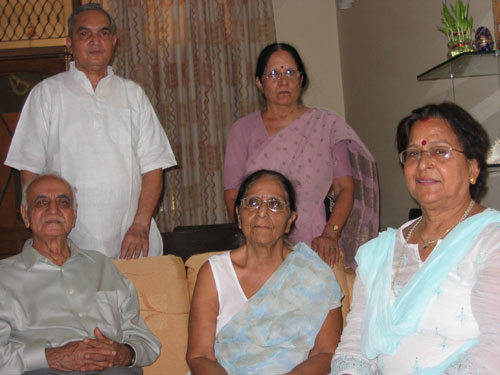
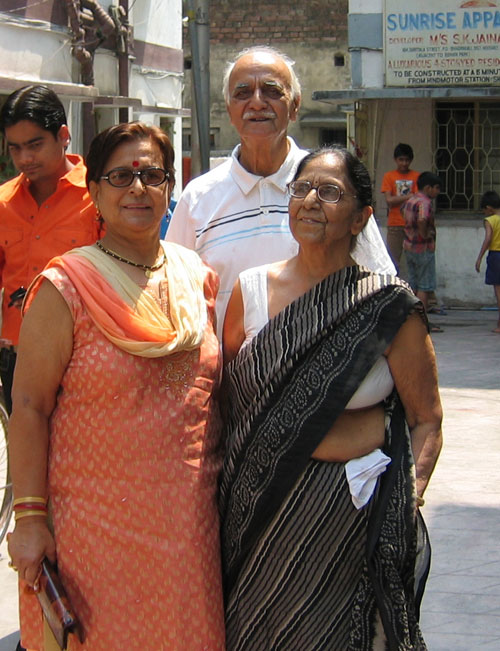
And on Monday morning I got another shock when Mrs. Lakshman Singh, 70 who lives near Hind Motors informed me about the nightmare that she might have undergone when Lakshman Singh. 80 got a heart attack on Saturday night. They live alone with Rajat and his wife Sushmita in New York. Now Lakshman Singh is out of danger and pretty well, but the inconveniences of Mrs. Lakshman Singh would not have ended. Managing a hospitalized husband with no one from the family is pretty difficult. But the acquaintances and the people in Eastern India are still more helpful and sensitive and provide great moral support in such emergency.
And now I hear that Rajat is coming for 10 days to see his father.

This is the way one is to learn to live the life at the end. So prepare in advance mentally and try to face the life boldly and perhaps by yourself.

Posted in personal | Leave a comment

India Moves ahead: Hope and Hope Allover

Sensex: If one can believe media, many things are happening that brings hope and delight for a better bright future. Sensex is slowly but steadily surging ahead. Some even predict it to reach 50,000 by 2015.

Order book:There are smiles on the faces of the CEOs of India Inc. Its order book at Rs 92,290 crore doubled in the fourth quarter (January-March) of the last financial year compared, to the year-ago period.

IPO: The Indian industry is likely to raise $30-35 billion (Rs1.34-1.56 trillion) through public sector divestment, initial public offerings (IPOs) of more than 50 companies.

Global India Inc: It’s not only Sunil Mittal’s Airtel getting into to the top five telecoms companies of the world. Vijay Mallya’s United Spirits Ltd (USL) has overtaken France’s Pernod Ricard SA to become the world’s second largest spirits firm by sales volume, and has its sights set on occupying the top spot within a year.

Manufacturing: Almost all the automakers of the world are now in India and are making it either the global manufacturing hub for its small cars or its R&D activities. Renault-Nissan was one of the last ones but has already put up a comprehensive strategy to make India its production hub for small cars. Ghosn has made public his desire to make India a key country in its global strategy.

Global Scale: Maruti has sold over a million units in a financial year and join the elite band of Toyota, General Motors, Volkswagen, Ford, Honda, Renault, Hyundai, Suzuki and Nissan, which are among those producing a million units or more every year. Maruti sold 10,18,365 vehicles during 2009-10, of which 1,47,575 were exported.

India has now two of the world’s 10 largest car factories: Maruti Suzuki India Ltd’s factory in Gurgaon, which is at No. 3, and Hyundai Motor India Ltd’s in Chennai at No. 7, an indication not so much of the country’s growing market for cars or its emergence as an export hub, but, analysts say, of the unique nature of and the challenges involved in manufacturing in the country.

ISRO’s Achievements: ISRO’s first fully Indian-made GSLV satellite launcher with the critical indigenous cryogenic upper stage stands ready at its launch pad and will be flown on April 15 from the Sriharikota space centre. India’s space agency will launch in May five satellites, including a 120-kg remote sensing satellite from Algeria on a single rocket.

India is the first country to orbit 10 satellites in one single mission and the facilitator for a major discovery of water molecules and water ice on the lunar surface. Also, it is one of the six in the world with capability to make satellites and launch them from its own soil.

IPL’s Success: India’s hottest sporting property, Indian Premier League (IPL), is scoring heavily abroad as well. It exhibits the prowess of a unique innovation of business with sports.

Private Power: And as a welcome change for the first time, a spirited performance by the private sector has contributed to a record power capacity addition in 2009-10. A total of 9,585 MW of capacity was added during the last fiscal, of which 4,287 MW or 45 per cent was by private developers. If I go by media reports, increasing numbers of private entrepreneurs are getting into to power sector giving hope for solution of the problem in near future. The private companies are setting up plant to produce power equipment, wherever required importing it even from China, acquiring coal mines, and are participating in transmission and distribution too.

Booming Health care Sector: And India is writing these days a new chapter of growth in healthcare with massive boom in private hospitals with bleeding- edge technology, wonder drugs and star facilities. The health care market at Rs 2, 00,000 crore is growing at 16% year on year basis.

Indian Job Market: Further, unlike the western countries, Indian job market is hot making dreams of youngsters realized and even inviting even foreigners to limited extent. According to a report by the Associated Chambers of Commerce & Industry, the Indian economy will create 87.37 million new jobs by 2015. Interestingly, the most significant growth will come from the manufacturing sector, which will add 32% (27.88 million) of the new jobs.

It’s hope, hope all around.

Posted in economy | Leave a comment

Bihar Leads Today, Rest of India Follows

From the mails that I receive from the persons of Bihar’s origin living in different states of India and abroad, everyone is concerned about the developments in Bihar. They celebrate all the good news coming in media, but get morose with disturbing news too.

Something unique is happening in last few months. Bihar has suddenly become the subject matter of the writings of many columnists and all for good aspects of the transformation brought about after the downfall of Lalu’s regime about five years ago. Bihar is no more a state known with flourishing kidnapping industry.

Swaminathan S Anklesaria Aiyar was the first to project Bihar’s image with findings of Bihar’s unprecedented GDP growth. His latest ‘Backward Bihar goes for the smartest cards‘ in Sunday Times of India provides some inspiring evidence. In many areas Bihar has been taking steps that even the developed states have failed to do.

Bihar has taken the technological lead with the hightech smart cards. “This state has just completed a pilot project for smart cards in Patna district, called e-shakti (meaning power from electronic governance). These cards use not just fingerprints but biometric matching of the human iris, which is state-of-the-art technology. E-shakti has covered 13.5 lakh people in Patna district. It is now being expanded to cover the whole state. This bids fair to be the biggest biometric card scheme in the world. And the cost aspect is surprisingly low for the benefits that it may provide. The Bihar government estimates that the cost of smart cards for the whole state will be Rs 400 crore, just a peanut for such a large population.

Saibal Gupta, member secretary, Asian Development Research Institute, Patna also wrote a column recently in Times of India that realistically analyzed the Nitish’s era in Bihar and how the land reform issue is causing trouble for Nitish at wrong time when he is going to face the assembly election very soon.

In the last four years, no chief minister in post-independence India has got as much adulation as Bihar’s incumbent….. Bihar’s state-building exercise would be incomplete without addressing the problem of land management, especially with relation to updating of records, consolidation of holdings etc. In anticipation of Nitish taking some steps related to land management, members of a section of the elite, mainly upper caste, turned belligerent.


And as reported, leaders of the landed upper castes, cutting across the party lines are having separate meetings to discuss the issues related to Bataidari (Sharecropping) Bill. I wonder how the bill will not be a problem for the landowners of other castes, if it causes heartburn for the so-called upper class. There are huge numbers of landholders of OBC in many regions of Bihar. So why are the organizers not calling representatives of landholders of all castes? Why can’t there be a discussion on the subject without a caste bias? I wish the leaders of socalled upper caste find better ways to improve the lot of farmers’ community.

Ashok K Mishra of Economic Times did also publish a good analysis on the economic growth of Bihar.
In December 2009, Bihar topped the chart for cement consumption in the country with an annual growth of 36%. The state economic survey shows that the construction sector grew by 83.58% in 2006-07 and 43.85% in 2008-09. The new infrastructure being built, including roads, bridges and other public works, contributed 13.4% of the state GDP against 4.2% in 2003-04. Truck sales grew by 150% in the seven months till October 2009 on a Y-o-Y basis. “When businessmen complain to police about traffic jams, not law and order in general, I think it is a tribute to the system.” It can be heartening to all the people of Bihar.

There are many more articles in media recently on Bihar. I don’t think that these are paid insertions.

It is unfortunate that some raising the anti-Nitish issues are from JD (U), his own party, but from so-called upper castes. I am one against it and so must be many, as it will help those who damaged the fabrics of governance in Bihar. As on today, Nitish is the only hope for Bihar. There is hardly any other political leader in JD (U), Congress, or even BJP who has chief ministerial material. Nitish might have failed on many fronts. But the other two stalwarts, who have not shown any change of heart, are trying their best to make comeback. Those, who are against Nitish for vested reasons will help the reentry of the two oldies even with their history of vested interest for governing the state instead of any development vision for the state. Interestingly, both, over years have nurtured only their family members becoming strong and rich.

I wish Nitish to return but with a changed manifesto and dynamism to bring in some changes that can push Bihar in the league of developed state with education and skill training as the focus for sustaining any growth.

Posted in bihar | Leave a comment

Why Shall I not Like to Live Long?

I was surprised and amused to see Anand Sharma’s comment on My Reasons to Seek a Long Life that was as follows:

Well, I can give you many many more reasons to be around till 2039. For starters, I will be 67 years old! I am sure you would like to see how I will be at your age..:-)


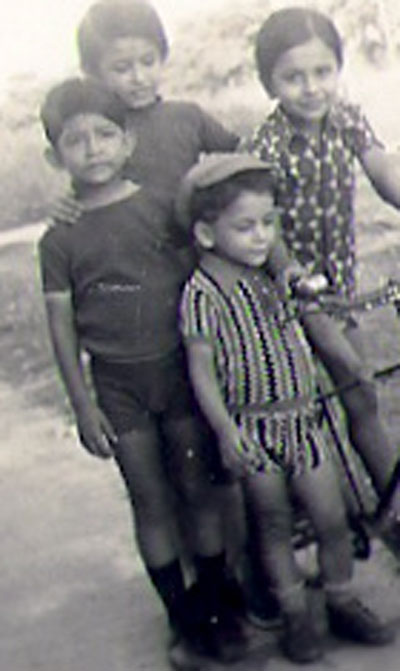
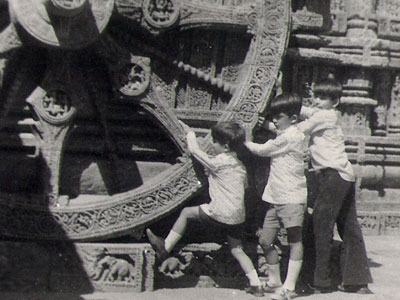
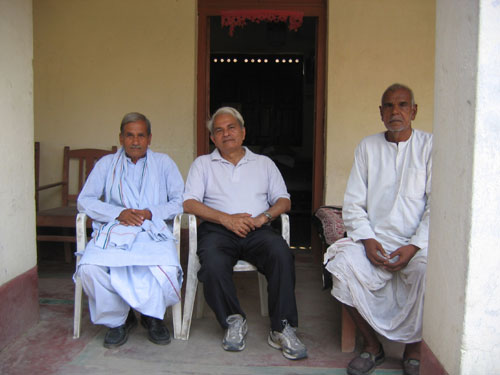
Precisely that is the reason that I don’t wish live up to 2039. When I see my own transformation in photos below, I can imagine for my kids:


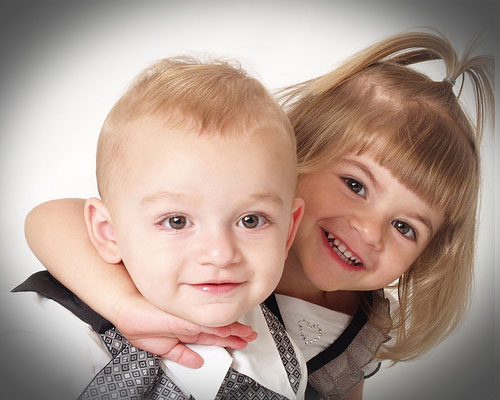
Emma and Zach will be 31 and 33, while Keshav will be 41 and his father 73. I love how they look today. Here is a photograph and see their divine facial expressions. Will it remain the same with their age in 2039?

Can Shannon get a photograph of this quality in 2039? Both will be busy in their own affairs, as their parents are today.

I have some beautiful photographs of Anand, Rajesh and Rakesh in my collection but more so in my heart and mind that I enjoy at all moments.


I shall certainly not like to see them at the age with all the possible changes that will come in physical appearances and attitudes.

I love them as they are today. For parents, the children remain kids all the time. I can’t just imagine seeing them that old.

I wish the readers of this blog take some time and at least glance through the link to get an idea of India 2039 and understand the assumptions taken in building up the dream India.

I shall feel bad, if even in 2039, ‘the absolute poverty persists in limited areas in India’, as the report predicts.

A February 2010 Carnegie Endowment paper titled The World Order in 2050, by Uri Dadush and Bennett Stancil. (Available as a working draft at http://www.carnegieendowment.org/publications) Even in 2050 about 4 per cent of India’s population that will be in many crores in number, would be living on less than $2 a day. No amount of per capita increase in income will be of any solace. What will be that growth that will not make 100% Indians literate rather educated? That will be certainly not that I wish to keep on seeing even in 2039.

Finally, the horror of not finding some Harendra or Syamal to look after us is equally dissuading to dream for living thr’2039?

I wish the researches by 2020 could make us find easy ways and means to win over the human disability to live well, and eliminate the dependence of aging persons on others.

Posted in personal | Leave a comment

Next Generation Kids: Fast Changing Priorities

While walking, I keep my eyes and ears open. I have not attainment faculty where I can shun hearing what is bad. Normally in my morning walk I keep chanting some slokas.

I was walking alone. From a distance I found a group of kids-boys and girls of age below or around ten years sitting in circle in the ground of the park in Sector 40. I could hear distinctly a girl asking a boy, “Do you have a girlfriend? Don’t you love her? Tell truthfully. sach sach bolna?” We have been asking similar questions to Keshav and Svanik sometimes jokingly for fun. Anad even narrates about one and half years Zach how he goes after the girls.

But somehow I got serious after hearing the stray talk of the kids. Most of them were from the housings for low-income group attached to the park. I started pondering over why the kids today have gone to that extent. Why couldn’t they talk about the subject taught or other things happening all around? Is it the effect of the TV and cinema culture?

I don’t know how we shall react if we hear Keshav, Anvita, Svanik or Emma asking similar questions today?

I came out with my observations few minutes ago with Popli when he joined me. He did also feel bad and kept on the poor and irrelevant programmes on hundreds of TV channels.

Should I consider my worry as one from the old men who don’t anything else to do or does it carry any lessons for parents and intellectuals who can change the situation as long term social evils cropping up?

Posted in Uncategorized | Leave a comment

Album and Autobiography-5

The fond memories of childhood in my village keep me happy in my solitude. Recently, I discovered that I have with me the photograph of the place rather the room where I was born. Basically that room was very auspicious so was used for the delivery for all the children before and even after me before the final division in the family. The photograph is a typical of a courtyard of a house in a village. One can see the rural old rice making appliance (Dhenki/ka) that used to make rice from paddy. I have seen the appliance extensively in use with singing women folks working for dehusking the paddy till rice mills arrived. It must have been a tiring exercise for their legs.

My family house had four courtyards and the roofs all over were covered with khaprel and naria (baked rural terracotta tiles). The southernmost was for male and the cattle. At one time, we had some 10 bullocks, two-three buffaloes and one very good horse. I remember some of bullocks had some unique identities based on places from where they came. Horse came in the house after a generation and continued for some years. Actually the first one came as a dowry from my maternal uncle Late Ramakant Rai, the brother-in-law of Nand Kishore chacha of village Ladui, and the next village in south of our village. In the evening in summer, after the sprinkling of water drawn from the well in the corner and all the cattle in their places, the courtyard presented a great scene. I still get reminded of some persons who might not have survived by now who used to entertain us all with some unique magic, enchanting stories and local songs. In evening many from among the villagers used to come for social get together. I still remember the evening when I requested my grandfather to ask ‘Pahalwan Sahab’ Rajneti Rai, the senior to show us some trick. Interestingly, he complied. He enquired Radhika Rai if he has some pure silver coins in his pocket. Naturally Radhika Rai was bewildered to hear that. But on search, one of my uncles found five old silver coins in his pocket. I don’t know how he did it. Was it a trick or some special power that he had developed? But as the story used to be, Rajneti Rai has a spirit under his control who does everything that he wishes.

The place now look totally changed as shown in photograph below that is now owned by my youngest uncle and his family.

I have some real good memories of earlier years. There was a very old well in the compound and there was no gate. One night, when we were sleeping, there was loud noise and we found the bricked wall of the well had collapsed. Jamuna baba got the new well in one corner. When we got the horse, a place for it was created where earlier the well existed.

The next courtyard was one for cattle and cattle feed. However, there was a room in one corner with a sub-room in it. My great grandmother told me that it was of the grandfather of my grandfather. He lived a very long life and that too lavishly. The room was having few chests with all types of papers, old books, court documents and perhaps some souvenirs. I used to sneak into it in my childhood and used to look at the papers. I had not developed the knowledge to understand and interest about preserving things of family history for posterity. And all those got thrown in absence of a good appreciator. I really feel sorry for it. But I do also remember the extra care by Jamuna baba, when the portion was getting demolished to construct a new one according to his plan. He expected some hidden treasures to appear from the wall or the floor, as the old persons kept their savings that way without telling anyone. Alas! Nothing came out to make him financially affluent too.

On the eastside of the third court yard was a long two-storied hall with three-four good beds (mostly received in dowry) and just two small windows where all of us the male members used to sleep. The mud wall was almost three-four feet in width that kept the place pretty comfortable even in hot summer.

The third courtyard was for the ladies with the fourth one as vacant with some trees of pomegranate and a lemon. The photograph above is from the third courtyard. It had a small platform in the middle that was worshipped as place of Lord Shiva. The family used the place during marriage or for any religious function such as Satya Narayan Puja as one we were having in the photograph when we visited Pipra with Yamuna and newly born Rakesh for the first time in 1968 while I was working in Hindustan Motors.


Satya Narayan Puja near Shiv Baba chabutara in main courtyard, 1968.
I was born in the room at the corner on August 14, 1939

There are many memories of the places around our family house that keeps me wondering if I could have photographed all the corners of the house.

Posted in personal | Leave a comment

Why Doesn’t India Learn to Face Challenge?

Education now is a fundamental right for the children of 6-14 years of age in India. April 1, 2010 came with the landmark notification and became certainly historic. Should not every feel proud for it?

I was surprised to see the pictures of the schools on TV channels. In all the frames, the children were sitting on floor. Years ago I found the similar way of sitting in the government of the Agahpur School in Sector 41 where we live. It is the same Noida where almost every sector has one big private school with the world class facilities and many with air-conditioned classes. Why the TV channels didn’t show even one shot of these modern schools?

Unfortunately, everyone talks of the challenges for the effective implementation of the Act. The Act must end up with quality education for all.

The challenges are many:

India needs 5 lakh or more teachers across government schools, mostly in rural India. It is when teacher- students’ ratio is agreed at 1:30. For better teaching the ratio should be lower.

The teachers require to be properly trained, as only 40% of the present teachers are trained. The government till dates has hardly strategy and clear budgetary provisions for training teachers.

There are shortage of schools and classrooms.

Where are those neighbourhood schools and who will establish them?

The schools badly lack even the basic facilities related to infrastructure. According to the 2008-09 District Information System for Education report on elementary education in India, ‘of the 1.29 million government and private schools covered, over 60 per cent did not have electricity; 46.4 per cent did not have toilets for girls and almost 50 per cent did not have boundary walls to ensure the safety of students. For example, Uttar Pradesh needs to construct 100,000 rooms to satisfy the norms laid down by the RTE Act.’

The big private schools are to agree to admit 25% of the students from deprived class.

Small private schools need recognition as well as financial assistance.

And finally it is not easy to arrange the huge fund to the tune of Rs 171,000 crore required to make the Act work. As per earlier estimate by the then National Institute of Education Planning and Administration, the requirement was at a minimum of Rs 3,21,196 crore to a maximum Rs 4,36,458.5 crore over six years.

The human resource development ministry has estimated a requirement of about Rs 34,000 crore every year for a period of five years but has set aside Rs 15,000 crore for 2010-11. How will the gap be bridged?

I wish all those who matter in implementing the Act would have come out with solutions rather than the questions and doubts about its getting effectively implemented. I feel for every challenge there can be new innovative ways to overcome it to make the Act work.

Here are some:

The rural schools can informally use retired teachers and others interested on line of ‘Teach India’ Project of Times of India for complimenting the existing teaching staffs-regular and/ or Shikshamitra.

Trained teachers may use affordable and effective audio and video gadgets to supplement and ease their tasks.

The School Management Committees may be allowed to collect donations in cash and kind such as NREGA for building and improvement of infrastructure facilities in schools from all the legal sources including alumni.

The schools and teachers may go for the second shift wherever possible and practical. Media can also help. In Japan, the workforce got educated through radio about quality.

Why should the education ministers of MP or West Bengal or even the reputed educationists only complain about lack of infrastructure instead of suggesting and innovative ways and means to make the Act succeed?

Will media, particularly digital media participate in educating India instead of propagating damaging values through silly imagery?

Let all the stakeholders contribute to get the Act implemented. Let the members of School Management Committee in which parents will be in majority play positive role and don’t shirk with their responsibility.

Posted in education, governance | Leave a comment

Celebrate India, Celebrate

Let the country celebrate. Education is a fundamental right of every child from today. Education will be free and compulsory too. The Prime Minister will address the nation on this day. I wish all the chief ministers would have also addressed the people of their state in their languages and appealed them to participate to make it effective.

It will be binding on the part of local and State Governments to ensure that all children in the six to 14 years age group get schooling. Almost 22 crore children fall under this age group. According to India’s Education for All Mid-Decade Assessment, in just five years between 2000 and 2005, the country increased primary school enrollment by 13.7 per cent overall and by 19.8 per cent for girls, reaching close to universal enrollment in Grade 1. However, still one in four children in 2005 left school before reaching Grade 5 and almost half before reaching Grade 8. The litmus test will be to bring the drop out to zero level.

Private educational institutions will have to reserve 25 per cent seats for children from weaker sections.

Expectations are high. It expects to improve the quality of education. It expects teachers to improve.

It is now mandatory for every single school to acquire a certificate of recognition after complying with norms and standards specified in the act. A school will function for five-six hours a day, and will have at least one teacher for every 30 children. (I strongly opine that for a good education, the number of teachers must be at least double) The children have access to textbooks and learning material, and will also get a mid-day meal.

I dream a positive transformation in the schools of the villages like Pipra, Madhukarpur, and Bodarhi and lakhs others in different villages of India. I do also hope that the education in the government schools at Noida’s integrated villages such as Agahpur, Morna, Nithari and Hosiarpur will gradually improve and will be similar to that of its many private schools.

But as expected, unless the parents appreciate the role of education and demand it from the teachers and the government, the act will not mean much. Further, many things must get added to the activities of these schools with limited means to make the act successful. The people, agencies, and local bodies must participate by getting the school premises protected, by getting a library and creativity centre built in the premises, and arranging a regular health checks through volunteer doctors. Let there be more and more competitions organized between the schools of a locality. Will the rich private schools allow the students of the government schools to participate in the sports and other extracurricular activities?

It requires a change of mindset. Unfortunately, there still remain many barriers to be crossed. Let the Kasis and Devis (of NDTV-Imagine) be not stopped from getting education and all those doing it must be behind bars.

Can we expect a 100 % educated nation soon or in a generation?

Posted in education | Leave a comment

Higher Education and Technology

While speaking in the ‘Session on Human Resources: The Future of Education’ in ‘India Today Conclave 2010’, Kapil Sibal had a technical solution to get over the problem of the shortage of teachers in rural schools. According to Mr. Sibal, ‘the broadband facility will happen in the next three years and the last mile connectivity through wireless too that can ensure lots of education programmes to reach children, even without teachers, if the need arises.’

Cisco’s chairman John Chambers also propounded the idea. Chambers conceived that a virtual learning revolution could take education to every Indian for a dollar a month. Chambers cautioned, “Don’t model the education system on the past, model for where it is going.”

Is it only a wishful thinking?

Some private company such as Educomp Solutions instead of setting up of the profitable business of coaching institutes for facilitating the entrance in IITs and IIMs must get into the business of providing the teaching material with help of IITs for all the private engineering colleges of the country that really lack good teachers.

I wish Kapil Sibal encourages and ensures the use of technologies first and almost immediately in all ready running private professional colleges that can be possible with a little thrust from the government.

Unfortunately, Kapil Sibal wants to do many things and bring about the transformation of the education system and sector of India. Mr. Sibal must focus on some and get them executed. And the use of technology in thousands of private engineering colleges is that one requires Mr. Sibal’s personal attention.

As reported, IITs have already readied the courses of many branches of engineering videoed that can be used for simultaneous teaching in many locations. Why IITs can’t be given the responsibility of the distance teaching in thousands of private engineering colleges of the country. It will bring certain amount of equity in accessibility of knowledge of engineering subjects.

Will Sibal be able to concentrate on the execution of this aspect of improving the quality standard of teaching from the private engineering colleges?

According to Mr. Sibal, India will need at least 800 more universities and another 35,000 colleges in the next ten years to increase the percentage of students going for higher education from the present 12.4% in the country to 30%. Will it not be prudent to work on improving the quality of the education on priority that can be done through technology for the India’s 480 universities and about 22,000 colleges today? Many entrepreneurs have already started taking steps. for example, iProf is one, which is a 7 inch touch screen tablet, that comes bundled with content from premier education institutes and has been launched at a price of INR.14900/- . And the application of technologies in education sector will expand fast in coming years.

Posted in education | Leave a comment

Album and Autobiography-4

Pipra, my village in police station Karahgar in district Rohtas (part of the old district Shahabad, as we knew it then) is known as Mardan Rai ka Pipra. It was also identified by many as Pipra of Jamuna Rai, when he was alive and active. Jamuna Rai was the younger brother of my grandfather, Lakshmi Prasad Rai. As my grandfather left the village for Bengal just after his schooling in search of employment, Jamuna baba managed the family land and cultivation starting at very early age right after his father’s death. He was soft spoken and very generous. He loved me a lot. Jamuna baba had two sons and daughter. The eldest was late Mukteswar Rai who lived with my grandfather at Birlapur, got schooling and worked there till end. His son Pradeep still works with one of the division of Birla Corporation

I remember some uniqueness of Jamuna baba. He never went and sat with any other persons in the village. In morning after milking the buffaloes, he would leave our house at Pipra and go straight for Rampur, the next village where we had the major landholdings and a house. I found him responding to any sound in the night or whenever I got up to go out for urinal. I wondered if he at all slept. He was early riser too. We never saw him on his bed after we got up in the morning. He used to go out in the fields for defecation as was the practice in rural India in those days, but no one in the village had seen him going.

I found in my childhood Jamuna baba as the most respected person in the villages all around and sometimes beyond too. Every night we used to see quite a few unknown guests from distant villages taking shelter at our place and getting bed and food. The story of hosting and feeding the whole marriage party going to a nearby village on a hot summer afternoon became famous as legend for his mannerliness. Once Mangla Rai, the famous wrestler of Joga in eastern UP came for marriage of his son in a nearby village. The name of Jamuna baba was so well-known in those days that he called only baba in his tent and met him. I had seen baba sending gift to Mangla Rai, as he started getting invitations from Magla Rai after the meeting.

Baba never wanted to seek any favour from others in the village. In those days in crop time, there used to be a lot of feuds for sharing the water of the canal for irrigation. He bought or exchanged his land, got trenches dug in such a way that he could take water to his fields without asking anyone’s favour. The family had lot of landholdings spreading in at least three villages from south of Pipra to Rampur at the centre and extending up to Pipri, covering about 4-5 kilometers, even after the abolition of zamindari system in 1952. Ours was a peaceful joint family but for his wife. He himself was pretty shore about it. He loved my uncles as they lived in the village with him. His own son, Mukterwar chacha was living with my grandfather for schooling. It was he who arranged and negotiated marriages of all my uncles. My grandfather never interfered with him. And Jamuna baba had immense love and respect for his brother. Unfortunately, few years after the death of my grandfather in 1965, Jamuna baba got the family divided because of his younger son. My youngest Uncle Nand Kishore ji was looking after the affairs at that time. I feel he would not have agreed for that during his life time.

Unfortunately because of the poor yield and very low prices of the produce, our farming was never making much money. None of the family members really worked but for supervision as per the prevalent practice in those days. Expenses were totally uncontrolled. Jamuna baba kept on selling some land. Ultimately that became the shore point and the charge of running the affair was given in younger hand of my uncle, Nand Kishore chacha. But that led to division soon.

I remember vividly the way Jamuna baba cared about my conveniences and food when I used to go there in school holidays. He even drew water from the well and rubbed my back while I took bath on the well or later on tube well. He will arrange a person to give me massage in night when I used to go to bed for sleep. He will keep on talking about the political happenings in the country and even technologies that surprised me many times. Jamuna baba had once visited me in Hindu Hostel when I was in Presidency College. He had come to my grandfather for treatment for his piles. Next time he came along with his personal aid Dukhi accompanied by my mother and a couple of Bodarhi to go for pilgrimage to Ganga Sagar and then to Puri. I arranged them to visit Ganga Sagar by my car. Yamuna accompanied them there and later on to Puri too. Baba was very much impressed by Yamuna and kept on talking about smart way she managed everything in their Puri trip.

I wish I would have done more for him.

Posted in bihar | Tagged | Leave a comment