Album and Autobiography-4

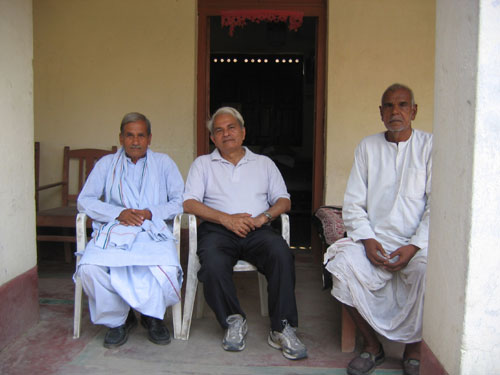
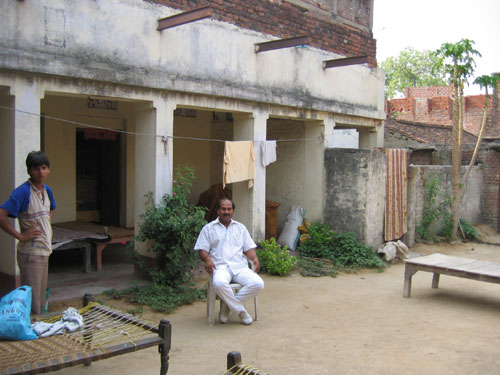
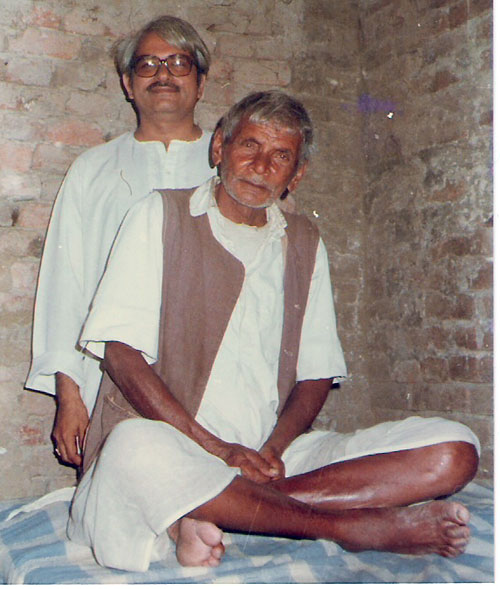
Pipra, my village in police station Karahgar in district Rohtas (part of the old district Shahabad, as we knew it then) is known as Mardan Rai ka Pipra. It was also identified by many as Pipra of Jamuna Rai, when he was alive and active. Jamuna Rai was the younger brother of my grandfather, Lakshmi Prasad Rai. As my grandfather left the village for Bengal just after his schooling in search of employment, Jamuna baba managed the family land and cultivation starting at very early age right after his father’s death. He was soft spoken and very generous. He loved me a lot. Jamuna baba had two sons and daughter. The eldest was late Mukteswar Rai who lived with my grandfather at Birlapur, got schooling and worked there till end. His son Pradeep still works with one of the division of Birla Corporation

I remember some uniqueness of Jamuna baba. He never went and sat with any other persons in the village. In morning after milking the buffaloes, he would leave our house at Pipra and go straight for Rampur, the next village where we had the major landholdings and a house. I found him responding to any sound in the night or whenever I got up to go out for urinal. I wondered if he at all slept. He was early riser too. We never saw him on his bed after we got up in the morning. He used to go out in the fields for defecation as was the practice in rural India in those days, but no one in the village had seen him going.

I found in my childhood Jamuna baba as the most respected person in the villages all around and sometimes beyond too. Every night we used to see quite a few unknown guests from distant villages taking shelter at our place and getting bed and food. The story of hosting and feeding the whole marriage party going to a nearby village on a hot summer afternoon became famous as legend for his mannerliness. Once Mangla Rai, the famous wrestler of Joga in eastern UP came for marriage of his son in a nearby village. The name of Jamuna baba was so well-known in those days that he called only baba in his tent and met him. I had seen baba sending gift to Mangla Rai, as he started getting invitations from Magla Rai after the meeting.

Baba never wanted to seek any favour from others in the village. In those days in crop time, there used to be a lot of feuds for sharing the water of the canal for irrigation. He bought or exchanged his land, got trenches dug in such a way that he could take water to his fields without asking anyone’s favour. The family had lot of landholdings spreading in at least three villages from south of Pipra to Rampur at the centre and extending up to Pipri, covering about 4-5 kilometers, even after the abolition of zamindari system in 1952. Ours was a peaceful joint family but for his wife. He himself was pretty shore about it. He loved my uncles as they lived in the village with him. His own son, Mukterwar chacha was living with my grandfather for schooling. It was he who arranged and negotiated marriages of all my uncles. My grandfather never interfered with him. And Jamuna baba had immense love and respect for his brother. Unfortunately, few years after the death of my grandfather in 1965, Jamuna baba got the family divided because of his younger son. My youngest Uncle Nand Kishore ji was looking after the affairs at that time. I feel he would not have agreed for that during his life time.

Unfortunately because of the poor yield and very low prices of the produce, our farming was never making much money. None of the family members really worked but for supervision as per the prevalent practice in those days. Expenses were totally uncontrolled. Jamuna baba kept on selling some land. Ultimately that became the shore point and the charge of running the affair was given in younger hand of my uncle, Nand Kishore chacha. But that led to division soon.

I remember vividly the way Jamuna baba cared about my conveniences and food when I used to go there in school holidays. He even drew water from the well and rubbed my back while I took bath on the well or later on tube well. He will arrange a person to give me massage in night when I used to go to bed for sleep. He will keep on talking about the political happenings in the country and even technologies that surprised me many times. Jamuna baba had once visited me in Hindu Hostel when I was in Presidency College. He had come to my grandfather for treatment for his piles. Next time he came along with his personal aid Dukhi accompanied by my mother and a couple of Bodarhi to go for pilgrimage to Ganga Sagar and then to Puri. I arranged them to visit Ganga Sagar by my car. Yamuna accompanied them there and later on to Puri too. Baba was very much impressed by Yamuna and kept on talking about smart way she managed everything in their Puri trip.

I wish I would have done more for him.

Posted in bihar | Tagged | Leave a comment

Nano: Disgusting! Shocking!

All these years, I have been seeing the evolution of a reliable quality control and management system that prided me. Auto sector was the leader in making the system fool-proof. While the zero defect concept started with project such as launching of satellites, the mass production required in auto sector made the practices of Total Quality Control or Management (TQC/TQM)getting matured with certifications such as Deming Prize with many other techniques such as Poka Yoke.

But it seems either the evolution of quality system did stop before the maturity or the system installed gets complacent causing the erratic mishap. The engineers and managers will still have to work to find a better way to ensure the reliability that is required with the cars of contemporary design. Another question also requires some pondering. Are the electronics and digital devices integrated the cause or can it be used to avoid the uncertainly or misses leading to mishap?

A brand new Nano catches fire and so also perhaps the brand. The burning Nano above is a dream on fire for at least me, if it is not so for the managers and employees of Tata Motors. How can a company remain complacent with such happening when a new car catches fire and turns into ashes? Will Tata Motors including Mr. Ratan Tata do sufficient to go for damage control before going with global dream? the story appeared few days ago, but the national media din’t publish this. Is something fishy?

I still think it as human failure at some point during design and manufacturing in the make-shift plant of Pantnagar or in workshops of some vendors. Tata Motors had plenty of time courtesy Mamta before launch for checking the design. But the prospective car buyers has the right to know the correct story from the horse’s mouth before taking the plunge in unswum water.

Unfortunately the car manufacturers and its network that extends up to the actual users world over have become insensitive to certain extent. It is pretty clear from a story in New York Times about a ‘Japan I Never Knew.’

Feeling her Toyota Mark X station wagon lurch forward at a busy intersection, Masako Sakai slammed on the brakes. But the pedal “had gone limp,” she said. Downshifting didn’t seem to work either.

Her car surged forward nearly 3,000 feet before slamming into a Mercedes Benz and a taxi, injuring drivers in both those vehicles and breaking Mrs. Sakai’s collarbone.

As shaken as she was by the accident, Mrs. Sakai says she was even more surprised by what happened after. She says that Toyota – from her dealer to headquarters – has not responded to her inquiries, and Japanese authorities have been indifferent to her concerns as a consumer.

Mrs. Sakai says the Tokyo Metropolitan Police urged her to sign a statement saying that she pressed the accelerator by mistake – something she strongly denies. She says the police told her she could have her damaged car back to get it repaired if she made that admission. She declined.

“In Japan, there is a phrase: if something smells, put a lid on it,” said Shunkichi Takayama, a Tokyo-based lawyer who has handled complaints related to Toyota vehicles.

Is not the story appears to be one from India, if the name are made Indian?

Posted in industry, manufacturing | Tagged | Leave a comment

Presidency: From College to University

I don’t know why but I have my own reason of extreme excitement over the Presidency University Act passed by West Bengal assembly recently. The institute originally founded as Hindoo College in 1817 and renamed as Presidency College in 1855, is getting an upgradation as University. I am among that huge lot of living alumni of Presidency College who can’t excuse the left government that did everything to pull down the College from its top position to a mediocre level. Many parents shied and eminent teachers deserted because of excessive government intervention. Fortunately, the left failed. Presidency College continued to retain its unique place.

Unfortunately, I don’t know why Presidency College or now Presidency University, the institute of excellence in Kolkata can’t employ the best teachers from all over the country and open it for the competitive admission for students from all over the country. I wish the states and the centre would have agreed to make all the best colleges in different capital cities as cosmopolitan as IITs and IIMs. It would have certainly enhanced its brand.

Presidency College with limited land space to grow will have to go out of the present location or will have to take the route of extension centres in different location. But I dream the birth of the innovation university with the new transformation of Presidency College to Presidency University. Can it have a separate college of each science subject, such as one College of Physics with offering of courses providing courses for honours bachelor degree to conducting post doctoral researches? Similar separate colleges can come up for different subjects, even of vernacular or foreign languages and other subjects in humanities. I am ready to share and expand my proposal with any educationist who can agree with me. Can the media help me in selling the idea of re-engineering of this new type of university?

However, the old building of the college with a history of its own and the Eden Hindu Hostel must be declared as heritage building and maintained for the posterity.

But I doubt if the new university can get the necessary autonomy and freedom to raise fund and decide and administer every academic aspect of educational courses. Otherwise, the Presidency University will remain under the state government and ruling political party that carry on its own political agenda.

I suggest the Presidency University to get benefited through all those who had been associated with this great old institute anytime in life as student or faculty. But still initiative will remain with those who shall be running its administration. Who shall be bringing the change?

Posted in education | Leave a comment

Quality Schooling: Sibal’s Dream Solutions

Perhaps one of the best presentations in India Today’s Conclave 2010 was from Mr. Kapil Sibal, the lawyer by profession but who appears to present himself as the best education reformist India ever got. (Those interested must click for the speech transcript in box)

However, I am hardly convinced about the possibility of speedy implementation of Kapil’s wishes to provide rightful access to every kid of the country to quality education. India still lives in rural India. At least 60 percent of the children in age up to 14 years go to the rural schools that are nothing but few rooms of all specifications with no facilities built in a desolate location outside the villages.

Kapil wishes to ensure quality through infrastructure by setting out minimum infrastructural laws–pupils to teacher ratio. A school ‘should have a playing field, and a classroom of certain dimensions. In the event of particular institutions not having so, a three-year period will be given to the institution to arrange for it. And comply with the norms under the Act.’ It appears to be an impossible task for the state government or the panchayats that are expected to play a definitive role in school administration.

Unfortunately, the rural schools never followed any norms of building design and architecture. Overall condition of schools on average is just pitiable.

I wish each state decides few conceptual designs and specifications for the primary, and secondary schools. I also suggest that all rural secondary school must integrate a skill training wing. Every student must compulsorily learn at least one skill. But the first important task is to prepare an architecturally sound but low cost building design with clear specifications and drawings of various types of school campus to be built. The design must be aesthetic matching with the rural environment preferably modular, so that the building work can be taken up in phases as the school grows in scale and activities. The infrastructure must include creativity centres, laboratories for language and mathematics with computers and other digital gadgets. At some stage a meeting hall may come up. But the campus must have a playground and also a gardening corner where children can grow plants and flowers. It should also have provision for residence of a caretaker teacher and a guard who should be responsible for the buildings and other assets in the campus.

How will it be excuted? There is only one way to make this happen. The main initiative must come from panchayats and the governing body that must be headed by a retired qualified person with missionary zeal selected by the villagers through consensus. The panchayat must be free to use local labour under NAREGA to cut the cost of building. As first task, the existing school must be connected with the village with 24×7 lighted metalled road with plantation on both sides. The school should be allowed to take donations from the alumni or local donors to improve the facilities.

In short, the rural school campus must grow as a showpiece of the community in cluster with panchayat bhawan, knowledge centre or kiosk that is being planned by the government, and the healthcare centre in proximity rather than having each of them in separate locations as is the practice now at least in Bihar.

I don’t know how Mr. Sibal dreams of broadband and last mile connectivity to compliment the shortage of good teachers, when 90 percent of the rural schools are vulnerable for pilferage of even the doors and windows and when the solar plant installed on a panchayat bhawan is taken away by thieves in the night, and when the schools are used by thieves for planning their next victims in night or for celebrating the success of a big prey or to accommodate the marriage party in summer for afternoon break after a long journey to its destination.

Majority of the rural schools at least in Bihar, as much as I know, are in real bad shape with not even a single regular teacher to manage the affairs there. In some places, even the good high schools that I knew years ago hardly have few students with very few teachers with little qualification and no motivation for teaching.

How will Kapil Sibal’s dream get realized? How will the country growth be sustained without good education for the majority of the population?

Posted in education | Leave a comment

प्रभात पाण्डेय की लम्बी कविता ‘उमराव जान’

मैं कविता समालोचक नहीं हूँ, न ही साहित्य का मर्मज्ञ | पर बचपन से कविता में रुचि है, कविता पढ़ना अच्छा लगता है| शायद यह कविता प्रेम विद्यालय में प्रार्थना से प्रारम्भ हुआ, चौक-चंदा गाने में व्यवहृत हुआ, और अंत्याक्षरी से समृद्ध बना| बिरलापुर के स्कूली दिनों में ही भारत भारती, प्रिय प्रवास, साकेत, रश्मि रथी, कामायनी और बहुत सारी कविता पुस्तकों को पढ़ा| कितना समझा मालूम नहीं, पर पढ़ना अच्छा लगता था | अकेले में जोर-जोर से भी पढ़ता था और दादी को भी सुनाता था, भले हीं उन्हें कुछ ना समझ आता हो| कभी कभी तो वे झल्ला भी उठती थीं|

प्रेसीडेंसी कालेज और आई. आई. टी., खडगपुर में तो किताबें नहीं मिलीं, पर साप्ताहिक धर्मयुग और अन्य पत्रिकाओं के माध्यम से कविता का साथ रहा, पढ़ता रहा और कविता प्रेम बना रहा| हिंद मोटर में काम करते तो अपने ही खरीदना था| ख़रीदा और पढ़ा भी मनबहलाव के लिए जब तक यमुना नहीं आईं थीं | दिनकर की ‘कुरुक्षेत्र’ और ‘उर्वशी’ बहुत भाती रही, बच्चन की ‘मधुशाला’, ‘मिलनयामिनी’ और ‘नीरज की पाती’ को तो यमुना के आने पर समय समय पर उनको भी सुनाता रहा|

एक महाकबि तो हरदम ही साथ रहे| तुलसीकृत रामचरितमानस का पता नहीं कब मासापरायण प्रारम्भ किया था, शायद तीस साल या उससे भी पहले, और आज भी चल रहा है| गाँव में एक रामायण यज्ञ कर इसकी पूर्णाहूति कराना चाहता हूँ| अब सत्तर पार करने के बाद यही सहारा है और कुछ समय भी कट जाता है| शायद मुक्ति भी मिल जाये| और कबिताई में तुलसी बाबा का कहाँ मुकाबला|

पर इसी बीच अपने हीं स्वजन प्रभात पाण्डेय की लम्बी कविता पुस्तक ‘उमराव जान’ के बारे में सुना| फिर उसे प्रकाशक से मंगाया और तबसे पढ़ता रहता हूँ खाली समय में , क्योंकि अच्छी लगती है|

तुम्हारी कब्र पर जाकर
मैं उदास नहीं हुआ
खुश भी नहीं |

चुपचाप देखता रहा
नहर का पानी
जिसका बहाव रूका-रूका
और
झुका-झुका हरसिंगार
तुम्हारे सिरहाने|
……
तनिक सच-सच बतलाना तो उमराव जान
क्या तुम्हें प्यास नहीं लगा करती इन दिनों |

और अच्छा लगा पाण्डेय जी द्वारा उमराव जान के साथ सीता और अम्बपाली की ब्यथा का समावेश, शायद कुछ इसका विरोध भी करें| पर कविता की दुनिया में संकरीं गलियों नहीं होतीं |

इसी लक्ष्मण टीले पर
रूका था लक्ष्मण का रथ
झंझावातों के बीच..

गंगा का फूट-फूट कर रोना
लहरों का टूट-टूट कर बिखरना
बिलखना बूँद-बूँद घटाओं का
बिलखना पेड़-पौधों-लताओं का
क्या धरती – क्या आकाश
व्याकुल-विह्वल बाहुपाश
सीता की खातिर
सब उदास
सब उदास

और अब अम्बपाली की छटा –

लहराता वैशाली का सभागार
लटक-लटक रंग-रंग की पताकाएं
मस्त-मगन होकर लहराएँ
लहराएँ पुत्र बलपतियों के
लहराएँ पुत्र धनपतियों के
लहराएँ वैशाली का जनपद
अम्बपाली को नगरबधू का पद |

….
तुमने देखा तो उमराव जान
हतप्रभ सब के सब
अम्बपाली ने जब
नगरबधू होना तो स्वीकारा
पर वज्जीसंघ के रिवाज को सरेआम धिक्कारा |
उसके अंग-अंग कम्पन
रूप-यौवन पर यह कैसा बंधन
कैसा गणराज्य
कैसी सरकार
कहलाये जो नगरवधू
वहीँ बीच बाजार |

और फिर

तनिक करीब जब हुआ तुम्हारी कब्र के
बांध टूट से गए तमाम सब्र के
देखा वहां तो
महज पत्थरों का था हुजूम
चुपचाप उनके नीचे दबी पड़ी थी तुम
जिस्म दाहिना तुम्हारा
उस पर से वो सड़क
या खुदा!
दिल तुम्हारा कभी रहा था धड़क |

पूछा तो
कुछ न बोला
सिरहाने का हरसिंगार
शाखों से टपका दिए उसने
फूल दो-चार ।

या खुदा, जाने क्यों तुम कुछ को क्यों इतना दर्द देते हो । पता नहीं उमराव जान कैसे सही होगी सब| पर उसकी व्यथा पाण्डेय जी की जबानी कितनी दिलों को दुखायेगी, रुलाएगी और तुम फिर भी वैसे ही करते जावोगे उमराव जानों के साथ | और हम कुछ न कुछ बहाना बनाके अपनी बिद्व्ता बघारते हुए तुम्हें बचाते रहेंगें|

मुझे कविता पाठ का पुराना शौक है और कबिताई का भी| इसका प्रारम्भ स्कूल में हुआ, प्रतियोगिता के द्वारा| कभी कभी आजकल भी कुछ लिखता हूँ स्वांत:सुखाय, क्योंकि लिख कर आनंद पाता हूँ | शायद मेरे संस्कृत शिक्षक भट्टाचार्य जी का मुझे विज्ञान धारा में न जाने की सलाह कहीं ठीक थी | जहां एक तरफ इंजीनियरिंग और मैनेजमेंट के विषयों पर अपने अनुभवों को लिखता रहा, पर कभी हिंदी में कुछ छपाने का प्रयास नहीं किया| काव्यप्रेम काव्य-पुस्तकों को खरीदने और पढ़ने तक सीमित रहा| मानसिक रूप से थकने के बाद अकेले में या पत्नी के साथ उसका आनंद ले पाता हूँ यही क्या कम है|

पाण्डेय जी की कविता में उर्दू शब्दों की बहुतायत है पर पढ़ने में बहुत आनंद आता है | बड़ा नाजुक और भावुक व्यक्तित्व भी है उमराव जान का|

उमीद है पांडेयजी की कबिता यात्रा चलती रहेगी| भगवान उन्हें लम्बी उम्र दें, यश दें|

Posted in Uncategorized | Leave a comment

Indian Farmers: New Breed

Perhaps my rural origin excites me with the good news of changing India, and so I try to share my feelings when I get some.

Today’s Crest that Times of India publishes on every Saturday has an inspiring story about how some hard core urbanites shifted to their roots and are happy with their endeavours in farming. They did not only find peace but also even prosperity, among the melons and the bees. Farming with a mission and perseverance can succeed.

Kailash Mehta started out with barely Rs 25,000. After many years when he scarcely raked in a penny, his application of logic (growing what agreed with the soil and climate), and method (drip irrigation, 90 per cent manure – 10 per cent NPK fertilizer; turning weeds and dry grass to compost; alternating between high and low extraction crops; eschewing ploughing for digging holes) earned him an income of Rs 5 lakh last year, of which he managed to save Rs 2 lakh.

Amrish Patel established VIGO Bio-Tech Dairy Pvt Limited, bringing out a brand of cow’s milk called Zeal, from an ultra-modern ‘tabela’ in Nurpura village – Asia’s largest 80-unit rotary milking parlour. 700 Holstein-Friesian hybrid cows are milked using Irish technology, and bathed the traditional Indian way, in ‘neem’ water. Late last year, the Ahmedabad-based Anil Group – a food and bio-industrial conglomerate – acquired a 90 per cent stake through a deal estimated at Rs 25 crore. Now Patel is about to make money out of honey.

Michael Aruldoss Ratnam: “I’ve gone back to farming methods 80 years old, when people grew what the land was amenable to and did not force an untenable crop on the soil. Back then they wanted to make food from the land, not money, as they do today.”

Ashok Kumar in his farm at Kottapalayam village, 60 km from Tiruchi, now raises watermelons on a 2.5-acre patch, and musk melons on a 1.5-acre area. He buys only hybrid seeds and uses technology like drip irrigation and sheet mulching for higher yield. “These sheets maintain moisture in the mud as well as warmth around the plant. At least, 80 farmers visit my farm every week to learn my techniques.” This year his third crop has been pre-booked by a Delhi-based trader. Ashok plans to buy an additional 20 acres and cultivate niche crops like sweet corn and cherry tomato.

There must be many more in India with similar success stories. I wish media cover them to inspire those who endeavoured to get into farming that many feels are fast becoming unviable.

I feel I didn’t have that fire so I sold all my rural landed properties in two of the remote but fertile villages of Bihar. Sometimes, I envy such people with fire, as a fire can only make one succeed.

I wish the story will provide inspiration to many more join the group of the few urbanites who have preferred a difficult rural life and change the fate of rural India. Unfortunately, the government didn’t consider Former President’s PURA concept that would, in all probability, have resulted in sustained changes in the rural India.

There are another lot of Indian farmers who have become affluent as byproducts of the expanding urbanization. The recent story by Jim Yardley on March 18, in New York Times about the India’s newly rich farmers is one.

I wish the Goddess Lakshmi would have smiled on those who could use it well.

Posted in agriculture | Leave a comment

My Reasons to Seek a Long Life

I am already above 70 years. I don’t know how long will be my life span. But the body that undertook the pain and agony of heart trouble and surgery psychologically may not last the very best that I wish.

But let me tell why I wish a long life. My liking of food and drinks can’t be the reason, nor do I spend a lot of time in travelling to exciting destinations. I do also neither live in a big happy joint family.

But still I sometimes wish to see 2039 when I shall be 100 years of age. Do you know the reason? It’s because I came across a book ‘India 2039: An Affluent Society in One Generation’ edited by Harinder S. Kohli and Anil Sood, and published by Sage Publications. I dream to see with my own eyes an affluent India. Surprisingly, the prediction is doable but for the integrity of the politicians. And this can happen with a growth rate of about 8%, and the task becomes easier and faster with double digit GDP growth rate that the economist Prime Minister and his finance Minister promised in course of India Budget Speech 2010.

India has already strong fundamentals: neighbourhood effects of Asian growth, increases in savings and investment rates, growth of manufacturing, demographic divides, increasing urbanization, the middle class fuelling consumption and entrepreneurship and changes in values. And even the constraints in infrastructure, health, education and governance can be debottlenecked.

According to the book, India can easily reach a per capita income of $5,500 in 2039, and an overall gross domestic product of $8 trillion. However, a determined India can also take India to a per capita income of $22,000 in 2039 and a GDP of $36 trillion.

Is it not exciting enough reason to live a life of 100 years?

But even at 80 and 85, I can expect to see a great India and a country with excellent manufacturing strength. Manufacturing had been my weakness. And so the CII-Boston Consulting Group report made me wish to see year 2025. According to the report, India can match, and even surpass, the best performing manufacturing economy in recent years-China. The report provides roadmap for India to become the fourth largest manufacturing economy in the world by 2025 from the current ranking of 13th.

And if I go by media reports, many things are happening to make it possible:

The world’s largest truck maker Daimler on Thursday promised to invest Rs 4,400 crore over the next five years to set up a manufacturing plant on 400-acres in Chennai with an initial capacity of 36,000 units in the first phase that will be scaled up to 72,000 units finally, and almost all big commercial vehicles manufacturers are setting up their shops. And other auto manufacturers from Japan and Europe are coming in India.

http://www.thehindubusinessline.com/2010/03/12/stories/2010031253360701.htm

The continued buoyancy in the country’s industrial production in the current fiscal has got appreciation from the UN Industrial Development Organization (UNIDO). In its latest Yearbook of Industrial Statistics 2010, the Vienna-based UN body said in 2009 India overtook developed countries such as Canada and Mexico and emerging economies such as Brazil to move up to the ninth slot among the world’s top-10 industrial countries.

Even, the government is trying to do it best through its policy.

And so there is lot of exciting reasons to live a long life. Kapil Sibal has given me one more reason. India in 2030 will be most educated in the world.

Posted in Uncategorized | Leave a comment

Growing India, Rising Hopes

Corporate India is expected to invest $250 billion over the next three years.

India Inc will create 9, 17,000 new jobs in 2010-11.

The index for industrial production has risen 16.8 per cent from a year earlier in January, after expanding by 11.8 per cent in November last year.

With an annual production of 2.3 million units, the Indian automobile industry is the ninth largest in the world.

With a high saving rate of 33 per cent, low urbanization levels and a young population, India will consume a lot more than all other economies and this will sustain growth in the labour force, capital stock and productivity over the next decade, says Credit Suisse, and the per capita income will triple from $1,050 to $3,400 by 2019.

India’s consumption is a mere $700 billion, leaving enough headroom for growth. (US consumes $10 trillion worth of goods and services, China consumes $1.4 trillion.)

India is expected to be a $4-trillion economy by 2019.

Real GDP growth is expected to average 8 per cent per year from 2010 to 2014 and 7.5 per cent per year from 2015 to 2019.

The Indian Government is planning to pump in $100 billion into infrastructure development.

The manufacturing sector’s rate of growth has shot up between 9 and 12 per cent in recent years.

The consumer electronics sector has grown by 10 per cent. Refrigerators and washing machines have grown by 17 per cent in terms of volume.

The auto industry today employs around 13 million people in direct and indirect jobs. As estimated, the Indian automobile industry will create another five million direct and indirect jobs by 2012 and will employ around 25 million by 2016.

NASSCOM estimates that the Indian IT-BPO industry is slated to record 5.5 per cent growth and reach $49.7 billion in the year ending 2009-10.

India is expected to add about 15,600 hotel rooms in 2010. And by 2011, 40 new international hotel brands will be operational in India. Add to this, close to 415 projects or 68,480 rooms are under various stages of development and 41 per cent of these projects may start adding to existing inventory from 2010.

Hospitality in India is likely to generate $121.4 billion of economic activity by 2015 and will earn $24 billion in foreign exchange. By 2018, the market for the hospitality industry is expected to double in size.

Over the next five years, the cumulative demand in the residential sector will be about 75.43 lakh units.

India has the largest student population in the world with 13.5 crore children in primary schools. The country faces a shortage of at least two lakh schools.

Health-care has been growing at 15 per cent. By 2012, medical tourism is expected to contribute $5 billion in foreign exchange earnings. Healthcare employs four million people at present.

The healthcare industry was $38 billion in 2008-09 and is expected to be close to $76.4 billion in 2012-13. By 2012, it is expected to generate employment for 9 million people

In the coming years, over one million beds need to be added to reach a ratio of 1.85 per thousand. Over the next five years, $1 billion is expected to be invested in the healthcare sector.

If the industry is to achieve a doctor-patient ratio of 1:1,000, it would need six lakh doctors and one million nurses. And if the industry continues to grow at this rate, it has the capacity to create employment for 9 million by 2012.

With all the hopes rising sky high, how can ‘the three real idiots’ hold the country behind? Where is the need of reservations of any type? Let the barriers and restrictions of castes and communities get broken. Let us save for the nation. Let the investment increase and capacities expand. Let everyone get education and skill. Let everyone from a janitor to a scientist participate in innovation innovate. Let everyone positively contribute in the task of taking the nation ahead and out of poverty by hard work and not by loan waivers and subsidies.

Posted in economy, governance | Leave a comment

Women Empowerment: Education Only Answer

In my Presidency college days, I found gradually the girl students surpassing boy students in topping various honours courses in humanities as well as science subjects. Unfortunately, in IIT Kharagpur at our time there was no girl student. At that time, engineering and technology was not the preferred interest of girl students. However, as informed, there are today about 36 girl students for 100 boys in engineering and other technical branches of education. The number of girl students per 100 boys is at its best about 90 in medicine today.

I am seeing this happening even in my own family itself. The girl children of my cousins in the extended family are performing excellently. Kushboo after engineering is already in job with multinational and recently got married with an engineer. Jyoti has joined Master in HR. Babli for whom I was doubtful has also taken admission in a private engineering college in NCR. Boys also have done well. But the performances of the girls are better as on today. It really excites me and I wish Emma and Anvita to raise it to higher level.

Unfortunately, the overall literacy in India still remains pretty low. Women’s literacy is around 60 per cent now. Over 200 million women still can’t read and write, the largest such number in any country in the world.

The traditional belief has changed. Women are joining workforce in every sector. Girl education even in rural India has improved. Enrolment in elementary education is almost equal for boys and girls, dropout rates are also nearly the same at primary stages, and the proportion of girls passing Class V is fractionally higher than that of boys. Girls match boys in academic performance, to the extent it can be measured by our examination system.

However, a recent NSSO survey found that by the time they are 19 years old, 41 per cent of girls drop out of school. This is apart from the 19 per cent who never attended school, compared to just 9 per cent of boys.

The primary reasons given by girls for leaving their studies are, essentially, that education is not considered necessary by elders in the family. Surprisingly, even many educated parents also are equally biased against the girl child.

My brothers-in-law are financially better off. One of them was with me in Hindustan Motors. Unfortunately, none in the family could do well in education. Perhaps they were content with whatever they were to get in inheritance. I helped one of the engineers of my village from one regional engineering college to get employment in Hindustan Motors. Unfortunately, he couldn’t encourage any of his many children to get properly educated. I feel so bad about it. The story convinces me that education or affluence of the parents don’t assure necessarily that their children will do well in education.

It is because all the programmes of adult education have miserably failed. If parents don’t appreciate the need of education, how can they encourage the girl child for higher education? So, even the girls in so called forward castes and community of the society don’t get the necessary support for education, particularly for higher education.

A lot of effort is on for education, but perhaps more massive campaign may be needed.

Can we hope that the women reservation bill will usher in a new era for the girl education too in the country? Will the elected members appreciate the need of good and universal education, particularly for girl child and work for it?

Posted in education | Leave a comment

Prospective Indian Car Manufacturers

India has just one passenger car manufacturer now with dying Hindustan Motors that manufactured Ambassadors for many decades and at one time monopolized Indian market and almost extinct Premier Automobiles that produced Padmini that were the only public taxis in Mumbai.

It is unfortunate that the third generation of the family owned Hindustan Motors that pioneered car manufacturing and helped building the infrastructure of auto components manufacturing messed it up. It still manufactures some Ambassadors in its parent plant near Kolkata. The management of Hindustan Motors never wanted its name associated with its manufacturing Mitsubishi cars at its Chennai plant. Hardly few in the country know that Mitsubishi Lancers are Hindustan Motors built cars. Many who were associated with the projects and the plants may feel bad about it but can hardly do anything. This is the way a family company runs and meets the end.

Tata Motors came from behind in car manufacturing but today it is at the third place behind Maruti Suzuki and Hyundai. It has a place of pride in the Indian manufacturing sector and is almost set to be a really global auto manufacturer with its range of products from Nano, Indica, Indigo and Sumo besides being the largest commercial vehicle manufacture of the country. Nano has all the potentials to be the world’s only ‘people car’ in real sense. Its forthcoming launches with higher end technologies, as well as the diesel and electric/hybrid version in the markets world over will be worth watching with increasing consciousness about the effect of passenger cars on climate.

In country as big as India, there would have been some more domestic players in car manufacturing, but somehow very few dare to enter this business because of its competition. India has few potential manufacturers who can enter the sector.

Mahindra is trying for many years to be a significant player. It started with Ford, and today manufactures just one model of Renault, Logan. It has all potential, but its intention to focus on car manufacturing is not very clear. It will have to decide about its collaborator and its own role in that collaboration.

Bajaj Auto has already gone ahead with its promised launch of an ultra low cost car that may compete with Tata’s Nano with some real differentiating technology. I don’t know if the Gen Next CEO will really get into it seriously and soon, though he still keeps a date in 2011. The project has the blessings of legendary Auto Czar Carlos Goshn who is very much sold about India’s superior frugal engineering.

But there are two more players whose names keep on coming for starting a project for car manufacturing: Hinduja’s Ashok Leyland and Munjal’s Hero Honda. Nissan recently showed interest in building its cars with Ashok Leyland. I don’t find the two players showing a real zeal to enter car manufacturing. But both have money power and potential to get into it, but as car manufacturing requires much more than money power, perhaps it is too early to make any guess.

Posted in industry, manufacturing | Leave a comment