Will Anna Hazare’s Movement End Corruption?

I have been watching Hazare’s movement, hype or drama against corruption closely. I was very much enthused once. But it appears that it is not the battle against corruption. It’s for a limited purpose to get the Jan Lok Pal Bill that can’t prevent corruption that has spread to all levels and in every field of governance.

Will Lok Pal Bill prevent the commission considered almost legal now in every work that’s undertaken through tenders?

Will the Bill prevent the doctors’ commission and benefits coming out from pharma companies or pathology labs for prescribing medicines or recommending the lab?

Will the Bill advise government to have all payments through cheques and cards?

And above all, how will it eliminate the corruption related to India Inc.A recent study by research firm Marketing and Development Research Associates (MDRA) showed that 9 out of 10 employees working in private firms feel that corruption or fraud is a common phenomenon in corporate India.

The nation requires a change of mindset of the people in the civil society that must encourage only honest way of creating wealth.

I was perhaps expecting a little too much from Hazare Movement. But it appears it’s for getting some particular individuals in committee that will draft the Bill and head the committee. It has been perhaps more for getting the attention and publicity of some individuals. Why is the movement giving so much of prominence to Arvind Kejriwal and swami Agbivesh? How have they become the right and left hands of Hazare? Interestingly, even many in India don’t know sufficiently about Hazare. Is it not another loss of face for the already tainted government that had already agreed to most of the demand? The government hardly looses anything by accepting the remaing. The 72-year-old activist who claimed it as “India’s second freedom struggle” is likely to end his four-day hunger strike tonight.

Why can’t there be a special session of parliament instead of waiting for monsoon session to finalise and adopt the Lok Pal Bill if the country unanimously agrees that it will end corruption and if it is so critical for inclusive growth by no less than an important person such as Pranab Mukherji?

Is it not too little out of such a highly hyped mass movement?

What is more important- Lok Pal Bill or the end of corruption?

The brokers of the government have perhaps again won the battle that was never there at all.

Should Indians not dream for the time when no one will ask or expect a bribe for getting something legal done?

And finally Anna Hazare ended fast after 97 hours.

Posted in social issues | Tagged | Leave a comment

Can Activists Make India Corruption-free?

Veteran social activist Anna Hazare on Tuesday began a fast unto death in the capital demanding enactment of a comprehensive Lokpal Bill to give wider powers to Ombudsman to check corruption. Many or all of India but the ruling party are with him. But there are many questions and doubts too. Will he be able to or be allowed to carry it on till he achieves the goal- the Second Independence war of Indians? Why is even a non-political prime minister so insensitive to the critical issue?

I have few alternatives or additional points to Anna’s prescription. Can the government of India give an open commercial order to five of the major IT companies to make all the system of government working transparent, even if it means an investment of Rs 1,00,000 crore? Can some like Nandan Nilekani be given the responsibility of its execution in a time frame of two years?

Will the political parties agree to avoid taking any person with any charge as it happened in CVC case? Will every person be asked to clear himself from the charges through fast judicial processes without any official immunity?

Will the industrialists such as Anil Ambani and Ratan Tata and their peers take an oath in public for not doing anything to get the unethical business advantage with under table means and make all their dealings with the government and its officers transparent? Can they say convincingly that they can’t succeed in their business without the foul means? Should not the bribers, particularly the biggies, be treated as equally responsible as the bribed?

Let the industrialists participate and make the country what it can become without following corrupt means. If they don’t, the people will force them to do that. After all they are in business for the society in which they survive. They would not have any existence if the society or the majority of it in trouble.

The benefits of growth can’t spread widely among India’s 1.2 billion residents with such a high top level corruption that breeds it in every nook and corner of every day working.

It’s certainly ‘the national calamity’, as Premji says and the nation must get over it by all means.

With the media feed, aspirations are increasing and those left behind are no longer content to live out their lives miserably. And those who matter must realize its disastrous consequences.

The euphoria of win of world cup can’t help those in government or waiting to be in government to sit on accountability, reforms and transparency for very long.

The nation will discard any system that ensures benefits to about 200 million people with more than about 800 or more million just watching and waiting. Every time I visit my village I get a feel of it.

I wish Anna an effective win.

Posted in governance, social issues | Tagged | Leave a comment

Bihar: Roadblocks to Girls Education

I wished to help educating my village folks, the children particularly girls in pursuing higher education. During my last visit I talked with the headmaster of the only Girls High School near the village, Pipra that caters to the girls of the village. It’s a private school. Teachers were not getting any remuneration for years. Nitish Kumar has arranged some lump sum aids based on its performance in board examination.

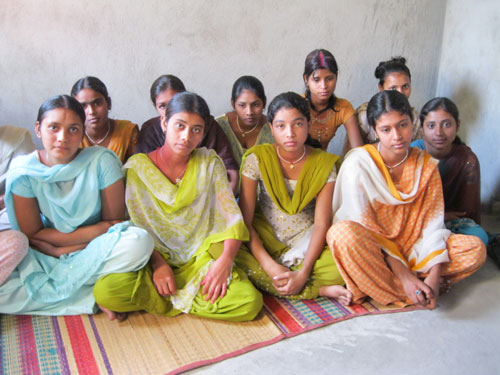
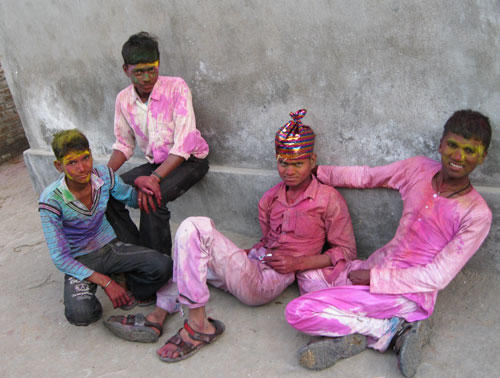
It was difficult to communicate to the girls because of Holi. Those in class X had already completed the school. Now they if at all come, they would have come for transfer certificates to him. But then the headmaster used his informal channels.He called them.

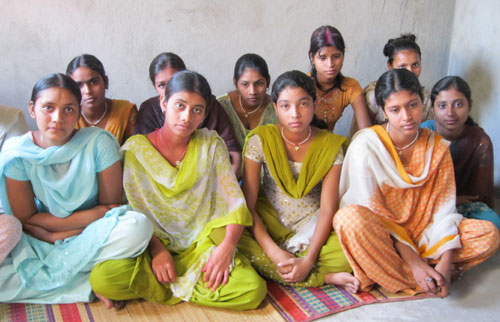
One morning I met with a group of girls who are expected to score good first class marks in the school final examination in which they have already appeared. They appeared to be confident and wished to go for higher education. The village school doesn’t have facilities for the higher classes- XI and XII. If they wish to pursue higher education, they will have to go to the town, Sasaram. Either they commute to Sasaram every day or they lodge there.

Getting admission for these girls in some college wouldn’t be difficult. But I was surprised when I was told that they will have to resort to compulsory private coaching, mostly by the same professors who are actually on the roll of the college. But they neither teach nor complete the stipulated academic course that they are expected to and paid for by the college. A student can’t appear in the examination with just self study from the text books. So the students besides getting enrolled to a college and paying its fees regularly must attend a private coaching to get his or her course completed at pretty heavy cost. For most of the farmers or the under-priviledged of the villagers, it is impossible to bear the cost that is about Rupees four-five thousand a month or more for a student for both lodging and coaching.

I talked to the girls and some guardians who had come. It appeared as if they had come for an interview and once successful I would offer them whatever the financial assistance they would ask for from some charitable institutions. It smelt fishy. Might be that the organizers of the meeting might have be having some vested interest.

I suggested some way out. For some of the selected ones, certain amount of financial assistance could be provided after thorough screening. But at the end it appeared that they wanted the money as they are getting today for the cycle that the whole family uses or the lump sum that is used for family expenditure. I don’t have that sufficient a fund to satisfy their expectations. I have not succeeded as none from the family participated. I was at fault for not involving them. I shall try again. Unfortunately Nand Kishore Chacha is not that active now.

But the government education system must clear the mess. The intermediate colleges or higher secondary schools and its teachers must start teaching in the schools for the money they get. The students can’t go for an education system that is totally dependent on coaching system from class VII to graduate level and even thereafter too for employability. What is this education if the pre-entrance coaching and for entrance coaching have become must. Does it mean that even for higher education of engineering or other subject the students will have to go for coaching beside the normal class lectures or lab work?

For me, it is shocking as neither myself nor my children went for any such coaching in school final and higher secondary stage. We didn’t even attend any coaching to get admitted in the engineering colleges. For inclusive education, the system must cut the coaching out.

PS on April 6: Hundreds and thousands of these girls or, for that matter, boys too of rural India will never be able to get the education they wanted. Is it not criminal? Can’t something be done? It is only the urban issues or rather issues in metro are getting attention, whereas the numbers in the rest are many more times higher. It’s a shocking failure of the governance that talks of equity. But more surprisingly even those who have come from the rural India such as Nitish Kumar don’t focus on the real problem of education in rural India where the majority lives. Can’t every Panchayat have a higher secondary school? Can’t every block have professional colleges? Can’t the boys and girls of rural India go straight to IITs and NITs or coveted law schools? I really feel bad, as I can’t help it out.

Posted in bihar, education | Tagged | Leave a comment

Sasaram: Why Meira Kumar Can’t Help?

Meira Kumar has been winning the parliament seat from Sasaram. His father legendary Jagjivan Ram also kept Sasaram as his constituency for the parliamentary election. Would not they have done something for this very old city with history extending into very ancient prehistoric India?

Since my childhood when my grandfather had introduced me with Sher Shah Mausoleum, I tried to visit the monument every time I visit Sasaram. My grandfather took me to every nook and corner of the monument, showed huge stone pieces used in the construction and queried how some 500 years ago, this would have been done. He did tell also a story too about the reason of the water of the tank and how it became undrinkable. I started photographing it since 1967.

Every time I vested I expected some improvement. But I got morose. I thought some politician or local rich man would take some interest its heritage and get it a status of world heritage site. It has not happened till date.

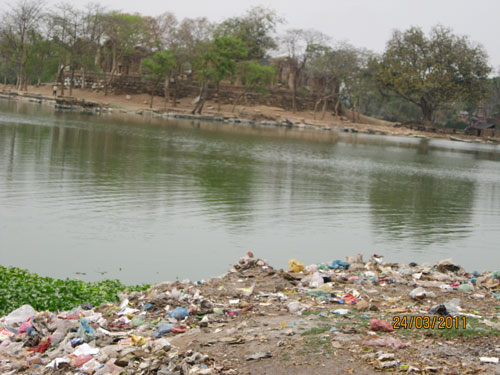
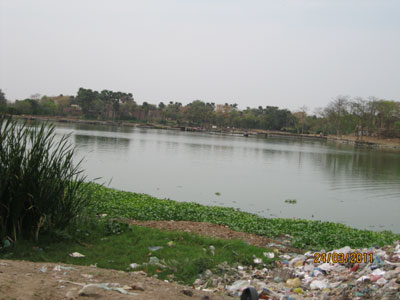
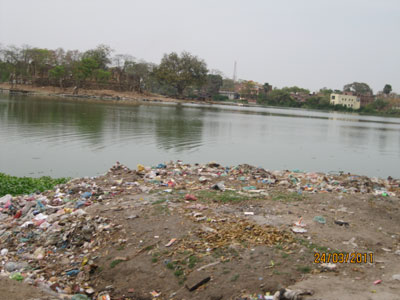
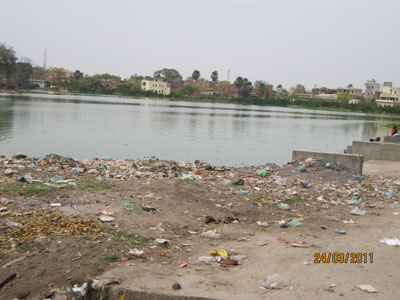
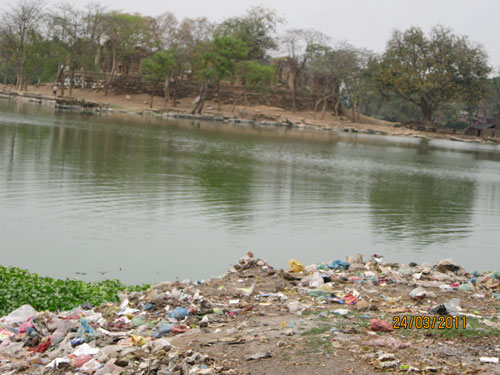
On the bus route to my village I used to pass through a locality of this old town that is called Takia. Takia has been a mandarin had been seeing the huge water body almost similar to the water tank of Sher Shah Mausoleum. But I never went near it to get the full view of it. When I talked with the local people I knew, I hardly got any information. This time I had made up my mind to see it from near quarter and photograph it. It is in very poor condition rather in a filthy condition. It has a potential to be a big tourist attraction. As I know now this the tomb of Islam Shah (commonly known as Salim Shah, who was the son of Sher Shah Suri. Islam Shah planned a tomb of considerable size around 1550. Naturally with the fall of Sher Shah, it would have been difficult to take up such a project. It remained incomplete.


Will the Bihar government do something for cleaning up the place and make it worth visiting it? I also appeal to Meira Kumar, the speaker of the country and MP from this constituency with this letter to do something concrete to save this heritage site. With all her connections and being a poet at heart, I wish she comes forward to give back to Sasaram something that is overdue. The surroundings of Sher Shah Mausoleum are also poorly maintained. There is encroachment all around.

Can’t the DM and SP of the district take it up as an additional task? As Sasaram is on the route that connects Sarnath with Buddh Gaya for the tourists, it can easily be promoted as tourist destination.

I do appeal to the affluent persons of Sasaram to save the two great attractions of Sasaram. Sasaram deserves to a heritage city.

Posted in bihar, economy | Tagged , , | Leave a comment

Mamaji, I Adore: A Tribute

It was sometime in mid-February only. I had called Mamaji to let him know about my impending visit to Pipra in this Holi to ensure that he remains in Sasaram that time. I also wanted his opinion on the project ‘Over the Years’. With wonderful memory, he could have also added some new information about the family and its individual members. I expressed my wish if he could write down some of his own reminiscences about our family.

I had visited Sasaram and Pipra in 2010. I had met him. Mamaji was getting frail. It was certainly worrying. This time it was for a function organized for Yamuna at Pipra. I arrived on March 16, 2011. On railway station itself my cousin, Alok informed me that Mamaji was in ICU in Varanasi. As per the practice of years I went to his house on Premchand Path in Gaurakshini. Surendra, his youngest son gave me the 4 pages of his written document he had prepared before leaving for Varanasi and instructed him to hand it over to me. I was amazed. Perhaps he was doubtful about his returning back to Sasaram to meet me as he used to do always.

In Pipra, I came to know that there was a little chance of his recovery. On Saturday March 19, we went to Ram Nagar to see him. Ramesh, his eldest son lives there. He was brought there from the Heritage Hospital. We reached in time. Mamaji recognized me with a broad smile on his face. After a few seconds, he started speaking and continued for almost 5-6 minutes. I tried to take the help of Surendra to understand. But neither I nor Surendra could understand anything. But he to his satisfaction had said whatever he wanted to convey to me. He got tired and soon he was quiet. And there was hardly any expression on his face. Krishna arranged a drip feed. He co-operated with no resistance.

We left the place at 4 PM to return to Pipra, about 100 km or so from there. In the early hours of March 20 around 3.30 AM Mamaji breathed last time. A great soul went into eternal rest.

I was not having any blood relation with him from maternal side, but our relation was more intense than one with that. I just liked him and he loved me. Chandramani Mama was the eldest brother-in-law of my eldest uncle Raj Kishore Chacha. I started meeting him as a school boy while going to Kolkata or coming from there with my grandfather. He had started practice as advocate in Sasaram. Pretty soon Mamaji became an icon for me and grew as a father figure for me since the death of my grandfather. Mamaji earned reputation as successful advocate. But the best part was that he was a highly versatile and well-informed person with an opinion of his own on almost all contemporary issues and subjects. As advocate, it was he who pleaded and won the legal cases that got me the right on my maternal property in Bodarhi. Since school days, his Sasaram house has been my transit camp to stop, rest and go whenever I traveled from anywhere outside to Pipra or Bodarhi and back. I kept him involved in everything I did and sought his blessings.

I remember him making a statement on my selections of educational streams and career path at various stages. “You would have gone for arts with humanities; instead you selected to study science after school final. After intermediate in science, you would have chosen medical science, but you decide to pursue engineering. In engineering, you would have picked up civil instead you took mechanical. While getting into professional career, you would have entered government job instead you preferred private.” Today I find some truth in his conclusion but I consider that whatever happened was my destiny. Sometimes, I feel bad about those decisions that were not always mine. But it was through my hard work I could get what I deserved.

I do also remember his advice against building a very big house in village Bodarhi. He was very right. I had to dispose of almost free as I could not have lived even for few days in that village of rogues and uncultured lot. Mamiji died many years ago. And Mamaji was around 87 and lived a totally retired life, moving between Sasaram and Ramnagar near Varanasi. His eldest son, Ramesh has built his house at Ramnagar and lives there. And the youngest one, Surendra continues living in the house that Mamaji built at Sasaram. Surendra is also advocate.

In 1990s Mamaji was with us in Hind Motor for few days when he had to undergo surgical operation. He attended the marriages of Rakesh as well as that of Rajesh.

All the sons of mine loved him and got shocked to hear about the end.

Mamaji has today become the part of history. With him gone, I have lost the last person to whom I could look to seek some advice. He offered it without any reservation. I still remember his exemplary acceptance of Anand’s decision to marry Shannon or of my deciding to sell the landed property of Bodarhi and Pipra and then Salt Lake.

The best homage to Mamaji will be hard work and success in whatever we do in life.

I am sure he was called back as there was dearth of good people over there.

Posted in personal | Tagged | Leave a comment

Bihar Changing Fast, But..

With the Maha Bodhi Express chugging on the outermost platform of Sasaram on March 17, I got the first glimpse of the works on development. Ludhiana-Kolkata freight corridor is getting executed fast. Sasaram comes on the route. One more overhead bridge on the railway track is under construction


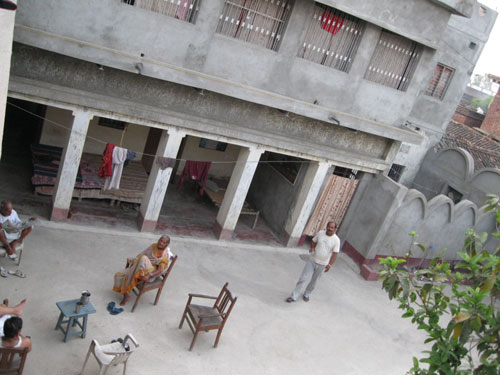
I found Alok has almost totally transformed the family house under his control. It’s almost like an urban house. It has good toilet and water connection. Unfortunately Alok couldn’t do much about power. As per the board displayed at the entrance of the village, Pipra has been electrified by a scheme of the central government. We never got electricity after Holi till we left. It will be the test for the centre and Nitish or both if they wish to keep its promise of ‘electricity for all by 2012’.And without grid power, one can’t think of a major improvement in the quality of living.

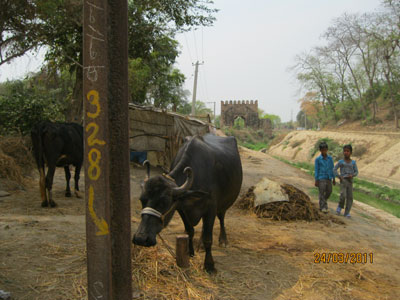
With every passing year, I find the prosperity of Pipra is getting better. Pipra with a population of about 300 families is today having almost all pucca houses, TV in every house. It has 10 harvester-combines each costing about Rs 16 lakh, 35 tractors, and about 10 passenger vehicles. Mahindra’s Balero and Scorpio are very popular, but one can see even Logan. Every house has one or more motorcycles.

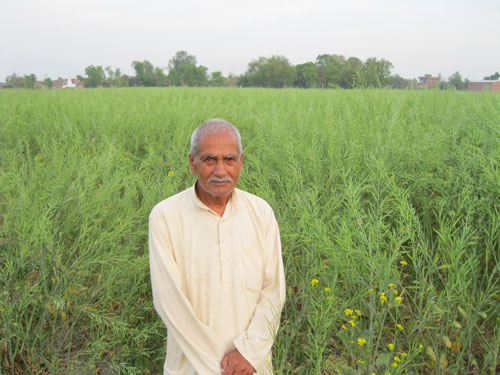
The good crops of wheat and mustard in fields allover really excited me. The village had good yields in paddy too this year. The younger generations has entered the farming and are trying to emulate the best from the local success stories.


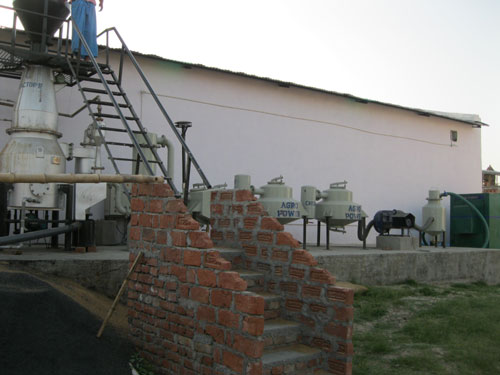
The village has two rice mills with at least one more in planning. Each has a capacity of one ton an hour. One is using the husk for cutting the consumption of diesel in the generator set. I wish one of the PSU banks would have opened a branch and provided the credit for these entrepreneurs. May be, soon someone uses the huge quantity of paddy husk to generate electricity for power generation as it is already being done in North Bihar. Can someone innovate a simple way of briquetting the husks for easy transportation and better efficiency of heat generation? Even the rice bran dusts get sold to those who are using it for getting edible oil or cattle feed from it.

I saw every villager better dressed. The girls are going to schools. I talked with a group of them who have appeared for the final examination. Unfortunately, there is no school for class XI and XII in or near the village. Most can’t afford to send the girls to Sasaram for higher education. It’s because the colleges don’t teach anything in normal college hours. Students are forced to go for coaching even for the basic courses. Education provided by government colleges have failed because of unscrupulous teachers. Private schools are unaffordable for most of the farmers. Nitish Kumar and his government will have to work hard to clear the mess in education. Teachers must ensure good education for their students or get out. The government and the people must not tolerate them anymore.

And with the prosperity has come the bad habits. Every family has one or more habitual alcoholics and the so-called pouches are available easily. I was really shocked that even kids are getting into the habit.

On the day of return I visited one heritage site of Sher Shah Era for the first time that could have been developed and saved. It’s a huge water body with an island in the centre and a pathway almost on the same pattern of Sher Shah Mausoleum in Sasaram. Unfortunately it remains neglected till date. A good government could have created a paradise out of it. Instead it is full with filth all around.

Sasaram Railway Station presented a pathetic picture. After seeing the people at the platform sometimes I wonder if even in next 100 years all Indian would cross the poverty line.

Posted in bihar, economy, social issues | Tagged | Leave a comment

PM: An Inefficient CEO

Main opposition party is just short of blaming Man Mohan’s integrity or asking for his resignation or replacement

However, I am more concerned about the performance of the country’s development needs and Man Mohan as CEO not getting anywhere near the targets. I consider four sectors- Power, roads, irrigation and ports, as the most important and critical ones.
Performance of Eleventh Five Year Plan is the performance report of UPA and more so of Man Mohan Singh. As he was a technocrat administrator and not politician, many like me expected him to focus on these performance indicators. After all he had hardly to contribute much to the intrigues of politics.

Power: Man Mohan’s government in 2007-08 targeted to add 78,577 MW in the11th Plan by March 2012. It then revised the target downward to 62,374 MW. But by December 2010 only 32,012MW had been added. How much can be added in one year? Has he got some Aladdin to add the remaining 40%? How will the promise of Power for all by 2012- be attained? Will his nuclear power or that from Sun be of help? However, his finance minister prayed only for Indra and Lakshmi and not the Sun and wind god. By putting a target of 100,000 MW additions in Twelfth Plan, is he not setting an unachievable task for the next government when he or his party will or may not be there?

Road:
Kamal Nath had set a target to build roads at 20 km a day or a length of 35,000 km in five years, increasing it from the earlier pace of around three km a day. According to the first work plan, NHAI was to award 122 projects covering around 12,000 km by the end of 2009-10 and 96 projects by the end of 2010-11. NHAI was able to award only a little over 70 projects. And the daily performance was dismal. The average length added each day was 4.6 km in 2007-08, 6 km in 2008-09, 7.4 km in 2009-10 and 3.9 km in the first nine months of this financial year. Can Joshi do what Kamal Nath couldn’t? Did Man Mohan change his minister for 15% cut rate? What is the going rate?

It is only with power and road that manufacturing sector can grow and flourish. Who can know it better than Man Mohan, the economist Prime Minister? How can Man Mohan take credit of being a great CEO prime minister with this dismal performance?

Irrigation:
For irrigation to grow, irrigation is must. No other doles to farmers can make up for the absence of water. In the dismal Rs 45000 cr allocated for 283 canal projects under Accelerated Irrigation Benefits Programme since 1996-97, 90% projects are delayed by 2-8 years leading to 28-916% cost overrun. Why couldn’t the CEO devise a close monitoring of these critical infrastructure projects that can sustain his plan of universal food security?

Port: On port too, the capacity additions have been hardly 40% of the target. Can’t the Indian port engineers create deep enough ports? Why much of the containers destined for the country and carried by large vessels have to be trans-shipped at ports in Colombo, Singapore or Dubai? Why does the backup infrastructure such as connecting roads, railway lines and storage space at ports and at warehouses remain grossly inadequate?

Can the economist Prime Minister deny the failures? Should Man Mohan not resign as a failed CEO on some pretext and allow some younger ones to take charge?

Does he not hear the voice of the time coming in media? It is evident from the Chetan Bhagat’s column in Times of India where the names of Man Mohan Singh and Rajesh Talwar have appeared together.

Even Peter’s Principle demands that Man Mohan resigns before it’s too late.

It will be wise for Man Mohan Singh to hand over the responsibility to the Queen who can then pass it on again to one of her loyal chamchas.

Posted in economy, governance | Tagged | Leave a comment

Pigmy Prime Minister

I was listening to prime minister Man Mohan Singh reply to the question regarding the appointment of tainted Thomas as CVC and clarifications as well promise demanded for building a fool-proof system so that the error does not get repeated on Tuesday Nov 8 in Rajya Sabha.

Man Mohan took the responsibility of the error. But how can that be sufficient? How can Man Mohan be excused by just a statement: “Until I went to the meeting of the selection committee, I was not aware there was any such case of Palmolein and that would involve corruption? I became aware of this case only when the honourable Leader of the Opposition in the Lok Sabha (Sushma Swaraj) raised the issue in the meeting.” Man Mohan was going to attend a meeting as head of the government for deciding a very important appointment. How can the country afford a prime minister who doesn’t prepare and collect information about the subject or persons involved?

Why did Man Mohan not reply to Jaitley’s question- “Why did the government persist that it was Mr. Thomas and Thomas alone who could be appointed and not any of the other two who had a cleaner record? Was it possible to have two views on the subject when the choice was between a chargesheeted official and those with a clean record?”

Why did Man Mohan maintain stony silence and kept on sitting? I felt ashamed for him? Man Mohan compares himself with Pandit Nehru and others. Why should remain as lame duck or proxy prime minister and cause damage to the image of democracy and its people?

And it is not limited to this one issue. Let us look at the next issue where the Supreme asked the Centre to consider invoking anti-terror and other stringent laws against alleged black money offender Hasan Ali Khan over his purported links with arms dealers and terror-related activities. What was the Man Mohan doing all the time with all the investigating and intelligence departments of the government working for him? How long the people of India keep on showing their generosity by overlooking all his errors and negligence of the governance?

But as reported, a DoPT note shows PM knew of charge against ThomasIt appears Man Mohan is shielding someone. Who is he or she?

But surprisingly still all the media and the countries’ intelligentsia is quiet.

Posted in governance | Tagged | Leave a comment

Mystery of ‘The India Story’

India will be 2-trillion economies this year, and as persons such as Mr. MV Kamath and Anil Ambani predict, by 2015 0r 2020 India, may be a 5-trillion economy. Further, Citigroup CEO Vikram Pandit recently in India said, “Whichever way you look — consumers, innovation, spending, globalisation — India is at the centre of the thing.” I wonder what all it constitutes this figure or that of the country’s GDP. And how should we access India story?

Does GDP constitute the hawala money going out of the country every day? Some estimates it to the extent of Rs 3,00,000 crore annually.

Does it take care of the wealth of persons such as Hasan Ali Khan in banks in foreign countries? The government can only assess it correctly. As reported, a Liechtenstein bank has shared a list of 26 Indians who hold foreign accounts there. But how many banks in tax havens are having the stashed account of Indians and what will be the total wealth involved? Can there be a right estimate?

Does it include the wealth such as one discovered from the muth of Puri? Many mutts in Puri or in the whole of India are having such wealth? A similar report also claimed that the gold and other valuables with Jagannath temple are worth Rs 500 crore. The whole of India knows about the wealth of temples in South such as Tirupati. Stories of persons such as Bachchan and Ambani offering crores worth of diamond and gold keep on appearing in media. How much the country’s gold and valuables are stocked with thousands of temples and shrines?

Indians love gold and silver from ages. What will be the gold in India of 1 billion plus population if every family numbering even 30 million posses just 1 once of it?

I remember the news report about MP Birla’s wealth in his house. He had huge amount of gold and silver coins with jewels starting from Chandra Gupta Maurya period. It got reveled because of a legal case. Can someone access the wealth of the thousands of business families in India? Stories of other former kings such as Nizam, Maharaja of Darbhanga, and hundreds like them keep on appearing in media.

If one takes into considerations all the wealth already existing and getting accumulated, India may get much nearer to the top position or even exceed. India may thus be a much larger economy than what it’s officially.

Coming back to other India stories, it is really a great one. In every sector and facet of activities in every corner of the globe the persons of Indian origin are achieving the heights never scaled by their ancestors in that number. It’s something to be proud of. Many Indian companies are today really MNCs. The world recognizes today the role of Indians in R&D. It is evident from the number of R&D centres set up by so many of many Fortune 500 companies in India. In every part of the globe Indians are making their presence felt. Many CEOs are becoming visible worldwide as better managers.

But when MPs like Bimal Jalan or NK Singh and many international agencies start telling the miserable stories of the people of India, one get a shock of life. How can a nation be developed with 60% below poverty line? How can the news of the multi-million dollars residences of Mukesh or Mittal be rightly accepted and assimilated for the aam aadami?

Will ‘aam aadami’ keep on living on the doles of the government, may be through Adhar or UID or be empowered to live his own life with a sense of achievement and enjoy a better quality of life with his hopes and joy?

However, there is some hope too. Many are trying hard to change the rural India that has a much larger canvas. Young men and women are getting involved in it. It was clear from more than 400 of them joining Tata Jagriti Yatra and many such endeavours of individuals and enterprises.

I wish the politicians and bureaucrats change themselves fast enough with their acts to change the popular perception of theirs, otherwise the aam aadami will change them in the way it’s happening in some part of the world today that none had imagined.

Posted in economy | Leave a comment

Budget 2011: My Views

I get confused while hearing, watching or reading budget. Sometimes, it is difficult to believe if the achievement claimed is real. For example, can I believe when the FM claims, ‘the total food inflation declined from 20.2 per cent in February 2010 to less than half at 9.3 per cent in January 2011’?

Does a growth of a sector on low base of previous year provide a clear picture? ‘In 2010-11 agriculture is estimated to have grown at 5.4 per cent.’ What will be the first impression of this exciting number on anyone who doesn’t know that it is mostly due to a very low base figure of the previous year? Should not this figure be an average figure of last five years?

I also wonder why a secular finance minister keeps on seeking the blessings of Lord Indra and Goddess Lakshmi. Let him pour money on irrigation, minor, major, river interlinking, creating water bodies, and storing all that nature gives. Let him cut the wasteful expenditure that Lakshmi expects one to do for getting prosperity.

It also presents dismal lack of mature policy and management, otherwise how can ‘the spurt in prices of onion, milk, poultry and some vegetables’ with ban on the exports of onion, be justified, if just a month ‘prices of onion have crashed in wholesale markets and the government had to remove the ban on their exports’. Why can’t the organized retail be encouraged to buy straight from the producers instead of mandis? Why the selling price can’t be linked somehow with the price paid to the farmer?

Shri Nandan Nilekani may find out a technical way out ‘of direct transfer of subsidy for kerosene, LPG and fertilizers to people living below poverty line in a phased manner’, but will Mr. Pranab Mukherji and his government be able to keep the promise of getting the system in place by March 2012? Further, is there a consensus on the definition of ‘below the poverty line’? That must be a priority. And they must get even Nilekani’s Adhar numbers on priority within a time frame. Further, will a person or family below poverty line remain so for ever? And how many of those below poverty line are farmers and are the buyers of fertilizers?
It’s interesting that the government collects huge sum through say, 3G auction or disinvestment and spends on the social sector. Should it not be invested in empowering the weaker sections by providing education, power and healthcare in more aggressive manner?

Does it take so many years to realize that ‘for sustained growth of GDP and productive employment for younger generation, it is imperative that the growth in manufacturing sector picks up’? Mr. Krishnamurthy, the former MD of Maruti Udyog as the chairman of Manufacturing Competitiveness Council and CII had already made recommendations in his report. However, it a good promise from the FM that he promises to take the share of manufacturing in GDP from about 16 per cent to 25 per cent over a period of ten years. However, I am skeptical if the government will go for sustained necessary focused actions required to make Indian industry globally competitive.

As it seems MGNREGA is becoming a grand social security. It could have been more productive if it could be managed well and if it would have focused on creating permanent assets. Every village must have its own plan document- new projects as well its maintenance that requires the engagement of the people under MGNREGA. Unfortunately, most of the people who are expected to manage it, are unscrupulous and the beneficiaries are not enlightened enough to stop them from getting into malicious way of making money.

Pranab babu has given a big boost to the grass root Anganwadi workers and Anganwadi helpers by doubling their remunerations. I hope that they are regularly trained to carry out their functions more effectively. But will the increase sustain their increasing aspirations?

However, I liked most his proposal of the revised Centrally Sponsored Scheme “Vocationalisation of Secondary Education” that will be implemented to improve the employability of our youth.

But I wish the leadership of the ruling party works hard to have consensus on big ticket things such as GST and FDI in retail. And it should be possible as shown with JPC on 2G scam or Nuclear Bill. Both must appreciate it that the younger generation expects them to go that way. The centre must listen to good proposals from the states. Why should it not look into Nitish Kumar’s proposal to cut down the number of central government projects that run into hundreds?

I have been watching the presentation of the country’s budget every year since Hindustan Motors days. At that time it was to assess the impact of the proposals on the cost of vehicles. Now I feel the process has become almost standardized. And neither the finance ministers nor the administrators have some great breakthrough new ideas. Sometimes, I guess that the task can now be done by a good computer programme automatically. A group of IT experts can come out with a simpler way of making budget removing the burden of the mantriji and babus. Why the government should not use some experts, may be Nandan Nilekani, for this switch over?

Posted in economy, governance | Tagged | Leave a comment