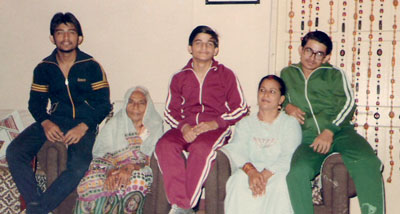
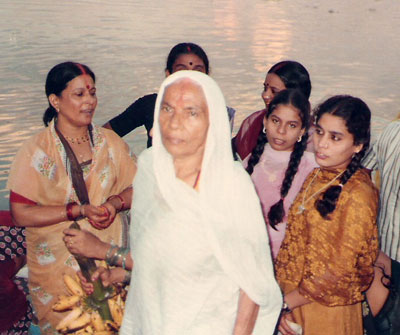
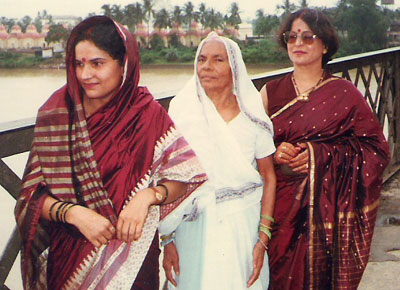
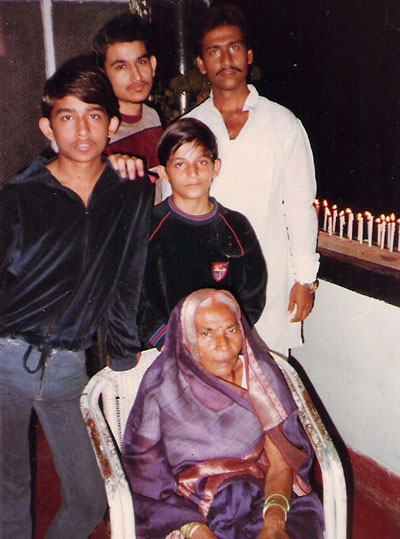
Mother Day- A Tribute to Mai

Mai-My Mother


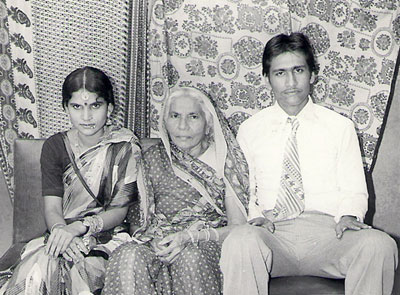
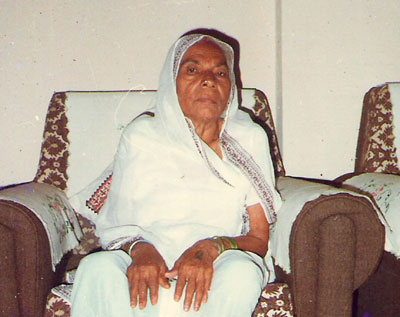
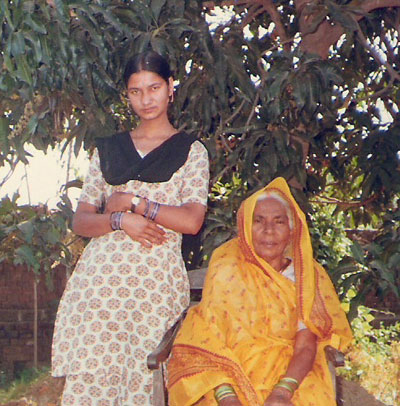
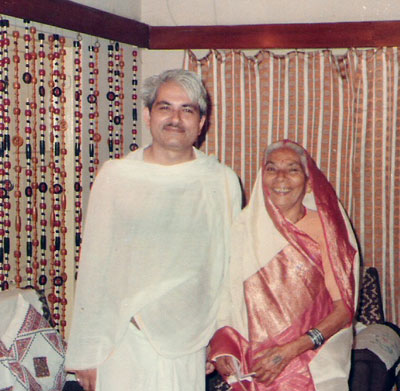
My mother’s name was Subhagi Devi, popularly addressed as Subhago Phua in Bodarhi. I adore my mother for the supreme sacrifices she made for me. I was the only child. I would have inherited pretty good share from the joint family. But my mother wanted for me much more in landed property.

According to my great grandmother and the grandmother, I was a pretty difficult child. I would insist my mother to come and feed me her milk on bed itself in the morning, when she would be busy in household works as the eldest and only daughter-in-law of her generation. Though annoyed immensely, she would come with dirty hands and oblige me. She had to cook. She had to clean. She had to take care of all elderly ladies. That was the practice, and my mother religiously did it all.

My Nanaji, Hari Rai was having six brothers including one step brother too who had separated pretty early and lived in his mother’s village. I had seen three of them: Hari Rai, Jagan Rai, and Brahmdeo Rai, and one of the aunties of my mother.
My mother’s aunty was the sister of my Nani, and thus my mother’s Mausi. She was terminally ill. My mother and I went to Bodarhi, my maternal village when I was just a kid in a bullock cart. It took almost the whole day for a distance of 20 and odd kms. As mother said, I didn’t miss Pipra and started enjoying living there. My Nanaji brought everything that I wished. After some months, the village had shown symptom of an epidemic that was very common in rural India those days. My Nanaji and my mother got concerned. A message went to my grandfather who happened to be in Pipra on holiday in Pipra. My grandfather came with three other persons, got me in the mango garden in the eastern part of the village and took me to Pipra, my paternal village. He had a mention of that in his diary. In Bikramgunj we had to stay for the night as we had missed the last train. I had cried for my mother while in sleep that night. Thereafter I came to my maternal village only rarely mostly accompanied by my grandfather. I never stayed for more than two-three days. When I grew up and started living in Birlapur (near Calcutta), I went to Bodarhi as she would give me a lot of money. She used to insist on me to stay for some more days with her. But I never found the village congenial for me. My mother kept on telling a story. Once my Nanaji asked me, “Whom will I love and play with if you go away.” I bluntly told him, “Love Gopal, the son of Shri Sankar Dyal Rai”. Goap was a little younger than me. The old house of Nanji in Bodarhi shared a common courtyard with him. I preferred to spend most of my holidays in Pipra where there were many including my Sadhuain Aaji to love me and many of my age group including Nand Kishore Chacha to play with. I am sure Mai would have been feeling bad, but she never expressed it. She thought I was away from her only for schooling and to achieve bigger goal that was good enough a reason for the sacrifice.

My mother couldn’t return to Pipra to live there. My mother’s Mausi died first, and soon after that my Nanaji got an attack of paralysis. He wanted nursing that my mother could only provide. He remained bedridden till his death. She rarely came to Pipra. It was in my marriage in 1955 that she came to Pipra with Hari Nana for few days. And just after the marriage, she returned to Bodarhi. Hari Nana had gifted his share of the landed property to us. But even after the death of Hari Nana, my mother remained in Bodarhi for her uncle, Jagan Nana, as she had assumed the responsibility of the household.

My father remained in Pipra. After the death of Jagan Nana in 1960s, my father joined her in Bodarhi, but he remained dormant. She mainly controlled all the land related matters. She remained the ‘malkin’ of the family. I liked very much one aspect of her behavior. She would appear to be very angry and annoyed with my grandfather, uncles, and even the tenants of her land or workers. But after some time, she would become very kind and generous and give whatever they asked for, the money or grain.
When I got employed and started earning from Hindustan Motors. I tried to do what my mother wanted even against my wishes. She had some land in eastern side of the village that didn’t have any irrigation facility. In one annual holiday, though I didn’t have any experience I got a well dug for using the Persian wheel (Rehant) for irrigation. No one helped me. I searched for the labour (nonias). Sometimes, I myself worked physically too to expedite the completion. I could see the happiness that mother got out of my interest in getting the work done. The well got ready. She got pleased and that I cherish. And then she wanted a house to be constructed on the outskirt of the village where we had our land. Our old house was inside the village and too cramped.

I started the construction of the new house after getting bricks made a year earlier. I wanted a big enough modern house, built with all facilities with a hand operated pump inside the bathroom and toilet inside the house itself. I had to invest all that I had saved for the education of the three kids. I really worked hard and Yamuna too. Cement was scarce in those days. The trouble in building the house can be appreciated only by those who had experienced it. I went up to the cement factory at Banzari near Rohtas Garh alone in search of cement, but failed in the mission. I bought suspect quality in small lot from different places. I reached many a times pretty late in night carrying the stone chips or other building materials. My mother would not like it and worry about my safety. But in my youth I did never care about anything to happen with me. My mother got completed the house.

My mother was very happy and I was happy to see her happy. I planned and arranged a seven days Yagya with Siva as the main deity at Bodarhi after the completion of the house. That was the time when our car with me in driving seat overturned and toppled near Asansol, while we were going to Bodarhi. Yamuna with the three sons, a servant and late Gauri Sankar Rai was in the car. We got some injuries. The car got badly damaged. Every one seeing the damaged car with no front glass would ask if any one survived. But we could start our Ambassador and reach Bodarhi on the next day afternoon. My parents performed the Yagya. I made all arrangements. On the last day, it was big feast with many relatives and all the village men and women whom I had invited by personally going to their house. My father had gone very weak because of the fast. My mother was very happy to see perhaps the first major function in her village. Unfortunately, it became the last one too. I took her to Varanasi also in my car one year from Bodarhi. Chandramani Mama and his wife accompanied us. I had myself driven her. I took her also to Pipra in my car to attend the last function when the wife of Jamuna Baba died. She would keep on talking about it with whom so ever she met.

My mother came to Hind Motor for the first time after the birth of Rakesh. Thereafter, my mother started coming more frequently. Many a year, Mai would be with us to take the lead in Chhuth. Yamuna went to Dev, a small village in Gaya to perform Chhuth. Mai joined us there from Bodarhi. She was the favourite of my sons. The call of duty and the attraction of Bodarhi would make her leave us and go to Bodarhi. I still remember the real touching scene with tears in my mother’s eyes before boarding the train.
In 1982, I went to UK with Yamuna and stayed there for almost two months. Rakesh was appearing for School final. My mother took charge of the house and my ailing father and her grandsons in Hind Motor.

It was only in 1988 that we made her leave Bodarhi to come and live with us in Hind Motors permanently. My father was with us because of his bad health. He couldn’t go back. There was no point to leave my mother alone in Bodarhi. It used to be real worrying days and nights with no facilities of telecommunication in those days. With the presence of my mother at Hind Motors, I found my worries about her gone.

Unfortunately, I failed to understand that she really loved to go back to Bodarhi with all the problems. In late 1980s, we were constructing our Salt Lake residence, AJIRA. My mother was very happy about the AJIRA project. She had been to Salt Lake house in Diwali to light the lamps and had stayed overnight.

Mai was also very happy as we have been working on to find a bride for Rakesh who was getting graduated from IIT, Kharagpur and going to US in few months. One could see her excitement whenever someone came with a proposal.

It was February 28, 1989. Yamuna had left for Salt Lake. I was fortunately in factory board room in a meeting of Corporate Project Planning. The news reached the office. My mother suffered a severe cerebral attack. I rushed home. I lifted her in my hands and came down the staircase. I called SK Roy Chaoudhry, my colleague who was passing by. He took us to Hind Motor Hospital. We sent message to Yamuna in Salt Lake through Mrs. Santi Singh. She returned and came straight to Hind Motor Hospital. But by that time, my mother had gone in coma. She never recovered. The same night she left us. My father took the news very boldly. A big crowd joined her last rites on Sivatalla Ghat. The saddest day had come for me. I had to face it. I did everything for the last rites whatever my father wished in Hind Motors itself.

After the death of my mother, I had to sell the landed property of Bodarhi that she had owned with a lot of personal sacrifice. It became essential, as I couldn’t have managed it from Hind Motor and saved it from the rogue relatives in the village who claimed to be the nearest to my maternal grandfathers by blood. None from the sides of Yamuna or my own family was ready to help me in keeping the property with me even after I had offered all sorts of incentives. They perhaps wished it to be handed over to them free. They didn’t even help me in selling the same to get the best price or even the right price. I had to sell it myself sitting in Hind Motors for my own safety.

From Autobiography- ‘Over the Years’

Posted in personal | Leave a comment

Bihar: Need of Urbanization

Bihar is much behind in the race of urbanization. Even Uttar Pradesh is better off than Bihar. Uttar Pradesh has the advantage of satellite urbanization because the nearness of the capital Delhi. Mayawati with project such as Yamuna Expressway is encouraging urbanization along the expressways.

Bihar has two expressways- New Delhi to Kolkata and East West corridor- covering north and south. Bihar government could have encouraged 10-20 planned townships on these expressways. I am confident about its commercial viability. These townships would have come up with education hubs or university town with all sorts of educational institutes to cater to its rural hinterland. Additionally, the townships could have industrial clusters for specific industrial sector such as food processing.

The present boom in housing sector is concentrated in the capital Patna. Patna as such is overpopulated. Instead, Patna requires planned satellite townships such as Greater Noida, Noida and Ghaziabad or Indirapuram.

I was amazed to read a news report that talked about the preference of the present government for Nalanda and adjoining area for all development projects. It sarcastically called the move as ‘back to the older capital of the ancient Magadh’. The report might have a political bias against Nitish Kumar who comes from that region. But the successful implementation of the project of Nalanda International University and making it a world class one is good enough to Nitish’s credit, if it comes up fast and if it could attract the best educational foundation have one of their institutes there.

Nitish Kumar could think of creating a World Buddhist City between Nalanda and Bodhgaya where the people of the entire Buddhist countries can come for meditating or living. Many in these countries aspire to live in Buddha’s land in last days. This idea can be made viable by some great planner.

Urbanization is already going on for years, but it should not be just building a house in any nearby town. Urbanization must provide all facilities to make the quality of life better. And if the right products are provided in well conceived and designed townships, there will be no dearth of customers in Bihar to make it commercially viable.

Bihar must think of planned urbanization as an opportunity and an apolitical priority.


PS: One must appreciate the role of planned urbanization in improving the overall economy of the region. Bihar must emulate townships as Noida in NCR or those coming up on Yamuna expressway between Noida and Agra. It has separate industrial and shopping areas with residential sectors. It has today all sorts of educational institutes and healthcare centres. Construction creates a lot of employment.

Every block in sector employs lot of unskilled persons such as vendors for household requirements, cleaning and security and the skilled ones employed in its parlours and boutiques as well as those working from street side.

Interestingly, Noida must be engaging and employing thousands of persons of Bihar origin as entrepreneurs, executives, workers, and students. Bihar must think of urbanization as a necessity and not live perpetually in its ancient system of living.

But it will be for Nitish Kumar to get the policy going.

Posted in bihar, economy | Tagged , | Leave a comment

Childhood Crisis in Capital

Now there is an overwhelming opinion against the image of Prime Minister Man Mohan Singh. Many letters are circulating through e-mails. Face book, twitters and other social networking sites are full with it. I have written about my agony against his failures earlier too. I am morose as I expected a technocrat who had saved the economy of India in 1990s, at least that’s what most of the columnists and economists proclaim, to bring about some sustainable changes in the system without much getting into politics.

I have three parameters that could have been solved or significantly improved in last six years of Manmohan rules.
Manmohan could have put a better project monitoring in place that could have saved thousands of crore going down the drain because of delay in implementation. Basic infrastructures, be it road, electricity, railways, port provide plenty of the examples. India could build a world class airport in 34 months but not a single railway station in last six years.

The farmers all over the country worked hard and intelligently and have improved production of food grains. However, the government failed to take up major irrigation projects to reduce significantly the dependence on the good monsoon. Finance Ministers have only kept on praying rain god, who have obliged. More importantly Manmohan Singh failed to get created safe storage facilities in last six years and the food grains under government control are still stored in gunny bags covered by a tarpaulin on railway platform and rot in poorly managed godowns.

But more importantly Manmohan has failed to be humane or make his ministers humane. Almost all the ministers, MPs and bureaucrats live for most of the years in capital New Delhi, everyone had gone blind. Otherwise how can they not see 51,000 street children in Delhi; 20% are girls. How can with all the Bharat Nirvan Schemes and sarv siksha aviyan, 50.5% of these street children remain illiterate, 67% are to earn for living, 20% are ragpickers, 15.8% are working for street vendors and 155 are living on begging. Furthermore, over 50% have suffered verbal, physical or sexual abuse. Why should not Nandan Nilekani’s ADHAR provide a card to these street children on priority for getting the benefits of the schemes in plenty?

Would not Manmohan, the economist and his gang have done something visible to remove these national maladies? Why the NGOs, opposition parties or the rich temple foundation fail to see these?

How can Manmohan escape from his responsibility and accountability against these failures?

Posted in governance, social issues | Tagged , , | Leave a comment

Bihar Requires Many Educational Institutes

The decision to have the Central University outside Patna is right one. I don’t know if the decision of Motihari is just by a person such as the chief minister or by a group who has decided it on certain transparent technical or social criteria. I strongly feel that it must be done in the later way.

Let there be no criticism about the location of these educational institutes. If properly established and administered each one can be pride of the state.

However, it will be prudent if Bihar develops at least four five of its cities in different part of the state for a balanced development. All the basic infrastructures, be it an airstrip or railway or expressway connectivity, must be ensured in advance.
The first IIT came up at Kharagpur in 1951. There was hardly anything around the campus that was started in a jail building (HIJLI). Kolkata was the nearest big city but it took many hours to reach.

The location of Central University may be at Motihari or Muzzafarpur, but it must be connected with Patna by a six lane highway.

Since the takeover of Nitish Kumar many educational institutes have come in and around Patna. IIT Bihar and AIIMS are coming up in Patna. Besides all the older institutes such as NIT, Patna (Former Patna Engineering College) and university such as Patna University with many famous colleges such as Science College, the new ones such as Chandragupta School of Management and Chanakya Law University have already started functioning. Perhaps one of the urgent needs will be to discourage the indiscipline and encouraging competing with the best in its categories in India and abroad.

With insufficient capacity in the institutes of higher education, Patna can have many more. But it will be against the overall interest of the state and its student community.

For the population of Bihar, every district headquarter requires an education hub to have a number of institutes for professional studies of engineering, management and medicine besides good colleges of science and humanity subjects but with preference for making the students employable with applied knowledge, skill, soft power and research. Every collector of the district must be assigned with this task as special assignment.

Should Bihar not envy states such as Andhra Tamilnadu, Karnataka and Maharashtra and very soon Uttar Pradesh with many hundred professional institutes that cater even the requirement of the students from Bihar?

Will it not save the outflow of the money that the students from Bihar are spending? Will it not reduce the financial burden of the students studying outside Bihar? Will the educational institutes that get set up not create employment too in a state that hardly has any industry?

However, I still think the state government must focus in establishing minimum of one higher secondary school with trade training facility in every panchayat. If it needs fund, it must go for PPP mode for the project and ask the society to participate. The government can’t keep million of students both girls and boys of rural areas, particularly of underprivileged categories (who can’t afford going out) away from the higher education. Rural Bihar needs priority in education as in urbanization, Bihar is at the bottom. Private entrepreneurs are taking care of education in urbanized regions, metros, in tier I to tier IV cities and even small towns. Competition will force them to improve. But schools in rural areas need the sincere government interferences. If the government fails, millions of rural youth will just remain literate but never get higher education in proportion to its population and contribute. The dream of taking advantage of demographic dividend will never be realized.

Panchayat Administration must focus on education and healthcare. The wonderful school buildings in Bihar must be electrified and provided with security arrangement for full utilization, if necessary in shifts, for adult education, for skill training and imparting knowledge about newer techniques of agriculture.

Posted in bihar, education | Tagged , | Leave a comment

Relevance of Chanayka, Chandragupta and Ashoka

During my last US visit I could get a wonderful book by Bruce Rich ‘To Uphold the World- A call for a New Global Ethic from Ancient India’, distilling the timely message of Ashoka and Kautilya.

And recently I came across another book, a fictional biography, ‘Ashoka the Great’ by Wytze Keuning Translated by J E Steur’. Interestingly more than the book and its hero, the story about the author and even the translator are equally fascinating.

Wytze Keuning was a school teacher in the obscure town of Groningen in the Netherlands. Keuning wrote the book rather a trilogy on the life of Ashoka-“Ashoka: The Wild Prince”, “Ashoka: The Wise Ruler” and “Ashoka: The World’s Great Teacher” between 1937 and 1947. Interestingly like the famous Max Muller, Keuning also hadn’t visited India.

While teaching at the local school, Keuning came to know about Ashoka, developed an interest in the character, then researched and wrote the book. He wrote in Dutch. For decades, the book was not visible in European bookstores.

And then J E Steur, the former child psychologist got hold of a copy and translated the book in English. She discovered that even Keuning’s d e s c e n d e n t s were unaware of his monumental work.

Equally interesting is the story of another Briton who might be credited for Keuning’s knowledge of Ashoka. James Princep had arrived in Calcutta to work at a mint of the East India Company. Princep was a coin collector, developed an avid interest in the script on the Ashokan coins. It was the extensive work of Princep that established a link between the script on the coin and the many rock inscriptions found across the subcontinent. In 1915, Princep deciphered the script and found that the reference to “Beloved of the gods, King Piyadasi” on the rock edicts meant Ashoka.

It was only after Princep’s discovery, led to huge western interest in Ashoka. Hundreds of western scholars and historians started to collect information on Ashoka and wrote their treatises. Without these Europeans, be it Princep then or Keuning and Rich and many others, Indian history would have been the poorer.

In his book “The Buddha and the Sahibs”, Charles Allen tells the story of British officials, engineers and archaeologists who roamed the hot and dusty Indian countryside in the 19th and early 20th century, examining rocks, stones and caves to join the dots that “recreated Indian history”.

As I roamed around Nalanda, Rajgrih and then visited Kumhrara in Patna (Patliputra), I always wondered that many stories of the era that can bring pride to the nation are still covered under mounds and forests.

Why can’t Indian researchers, writers and historians produce work as Keuniing and Rich did?

Interestingly, according to Rich, the first major work in Sanskrit on Ashoka was the Asokavadana, presumably written in the second century AD in northwest India. The Asokavadana was translated into Chinese in AD300, and became well known in Japan, Korea, and central Asia, (but not in India). We must ponder over why it happened so. I tried to find if it is available in Hindi, but failed. Can someone tell me if we have a good translation in Hindi of Chanakya’s ‘Arthshastra’ and ‘Asokavadana’?

Ashoka and Chanakya remained forgotten for almost a thousand years in India.

Will it not happen to Gandhi but for the writers and researchers of western countries?

Interestingly, a new serial ‘Chandragupta Maurya’ is being shown on ‘NDTV Imagine’ every Friday and Saturday at 9PM. I eagerly wait for it and enjoy it, though it’s just fictional.

I wish the above two books are read by those who are ruling the people of India today.

Posted in education | Tagged | Leave a comment

Why China Sells more to India?

Prime Minister Dr. Manmohan Singh during his recent visit to attend BRICS Summit, at Sanya, China, expressed his concern about the trade deficit between India and China and pitched for more Indian exports to China. I don’t understand why he could not take the necessary action as economist prime minister to keep the gap within the right limit. Should it not be his priority and responsibility? Does not his statement provide a hint of helplessness?

India’s trade deficit with China widened 28 times from merely 0.67 billion dollars in 2001 to 19.20 billion dollars in 2010 (includes 7 years of UPA rule that Man Mohan headed). It has been increasing over years. In 2009, it was USD 15.87 billion while in 2008 the trade deficit was USD 11.18 billion.

Interestingly, if India can export to so many of developed countries, why doesn’t it do to China to bridge the gap? In simple word, the Chinese government doesn’t like it and allows it to happen. It wants to project that India doesn’t have high-tech wares that the Chinese need to import. And this is after the world institution considers India as one of the top 10 most industrial nations of the world. Why can’t India emulate at least something from the Chinese that almost everyone understands? Indian companies require the government’s support to compete with and export to China. The companies of the developed countries today have understood that ‘they are competing not with individual Chinese competitors but rather China Inc—an industrial ecosystem consisting of the companies, the government and academic institutions with none playing by the rules, in particular, on intellectual property rights’.

I don’t have the data to prove but I believe that most of the Chinese import by value must be in the government sector. The Chinese takes advantages of the weakness of the corrupt Indian administrative system and pays a lot of bribe to those who assist for the purchases of the Chinese goods. I still remember a Chinese visiting my office for selling an EDM for die sinking. I was stunned when instead of explaining the stronger features of the machine he offered straight the money that he could pay me. I came across the story of electricity boards becoming vulnerable to this attraction in Chinese purchases of items such as household electric meters.

Why can’t Indian government put a condition of setting up manufacturing facilities in India for getting big orders, as the Chinese themselves do?

Recent onslaughts of the Chinese power equipment manufacturers in selling their equipment to new power plants must be looked into for a possible scam involved. The deal serves the interest of few at top of the public and private companies in power business through illicit payments by the manufacturers backed by the Chinese government. The Chinese can go to any extent to sell their goods. The active cooperation and encouragement from its government makes it easy for the Chinese vendors to obtain orders. It would have been interesting to know the actual benefits going personally to Anil Ambani in billion dollars worth of power equipment for his power plants. Interestingly, Ambani could grab the order for the most of ultra mega power projects. Each of them will have 4000MW capacity.

Unfortunately, Indian traders are unscrupulous too. They buy all short of junks rejected by the developed countries at much cheaper prices, and get them in India to sell to the Indian consumers who get easily allured to buy the stuffs. Many of the Indian traders are providing samples of saleable goods of household use and get the fakes produced in China and import. Should it go on in the name of free trade?

It will be difficult if not impossible to bridge the gap if the economist prime minister along with the Indian manufacturers and exporters can’t get a strategy in place to attain the desired goal.

Posted in economy, industry | Tagged | Leave a comment

Will Anna Hazare’s Movement End Corruption?

I have been watching Hazare’s movement, hype or drama against corruption closely. I was very much enthused once. But it appears that it is not the battle against corruption. It’s for a limited purpose to get the Jan Lok Pal Bill that can’t prevent corruption that has spread to all levels and in every field of governance.

Will Lok Pal Bill prevent the commission considered almost legal now in every work that’s undertaken through tenders?

Will the Bill prevent the doctors’ commission and benefits coming out from pharma companies or pathology labs for prescribing medicines or recommending the lab?

Will the Bill advise government to have all payments through cheques and cards?

And above all, how will it eliminate the corruption related to India Inc.A recent study by research firm Marketing and Development Research Associates (MDRA) showed that 9 out of 10 employees working in private firms feel that corruption or fraud is a common phenomenon in corporate India.

The nation requires a change of mindset of the people in the civil society that must encourage only honest way of creating wealth.

I was perhaps expecting a little too much from Hazare Movement. But it appears it’s for getting some particular individuals in committee that will draft the Bill and head the committee. It has been perhaps more for getting the attention and publicity of some individuals. Why is the movement giving so much of prominence to Arvind Kejriwal and swami Agbivesh? How have they become the right and left hands of Hazare? Interestingly, even many in India don’t know sufficiently about Hazare. Is it not another loss of face for the already tainted government that had already agreed to most of the demand? The government hardly looses anything by accepting the remaing. The 72-year-old activist who claimed it as “India’s second freedom struggle” is likely to end his four-day hunger strike tonight.

Why can’t there be a special session of parliament instead of waiting for monsoon session to finalise and adopt the Lok Pal Bill if the country unanimously agrees that it will end corruption and if it is so critical for inclusive growth by no less than an important person such as Pranab Mukherji?

Is it not too little out of such a highly hyped mass movement?

What is more important- Lok Pal Bill or the end of corruption?

The brokers of the government have perhaps again won the battle that was never there at all.

Should Indians not dream for the time when no one will ask or expect a bribe for getting something legal done?

And finally Anna Hazare ended fast after 97 hours.

Posted in social issues | Tagged | Leave a comment

Can Activists Make India Corruption-free?

Veteran social activist Anna Hazare on Tuesday began a fast unto death in the capital demanding enactment of a comprehensive Lokpal Bill to give wider powers to Ombudsman to check corruption. Many or all of India but the ruling party are with him. But there are many questions and doubts too. Will he be able to or be allowed to carry it on till he achieves the goal- the Second Independence war of Indians? Why is even a non-political prime minister so insensitive to the critical issue?

I have few alternatives or additional points to Anna’s prescription. Can the government of India give an open commercial order to five of the major IT companies to make all the system of government working transparent, even if it means an investment of Rs 1,00,000 crore? Can some like Nandan Nilekani be given the responsibility of its execution in a time frame of two years?

Will the political parties agree to avoid taking any person with any charge as it happened in CVC case? Will every person be asked to clear himself from the charges through fast judicial processes without any official immunity?

Will the industrialists such as Anil Ambani and Ratan Tata and their peers take an oath in public for not doing anything to get the unethical business advantage with under table means and make all their dealings with the government and its officers transparent? Can they say convincingly that they can’t succeed in their business without the foul means? Should not the bribers, particularly the biggies, be treated as equally responsible as the bribed?

Let the industrialists participate and make the country what it can become without following corrupt means. If they don’t, the people will force them to do that. After all they are in business for the society in which they survive. They would not have any existence if the society or the majority of it in trouble.

The benefits of growth can’t spread widely among India’s 1.2 billion residents with such a high top level corruption that breeds it in every nook and corner of every day working.

It’s certainly ‘the national calamity’, as Premji says and the nation must get over it by all means.

With the media feed, aspirations are increasing and those left behind are no longer content to live out their lives miserably. And those who matter must realize its disastrous consequences.

The euphoria of win of world cup can’t help those in government or waiting to be in government to sit on accountability, reforms and transparency for very long.

The nation will discard any system that ensures benefits to about 200 million people with more than about 800 or more million just watching and waiting. Every time I visit my village I get a feel of it.

I wish Anna an effective win.

Posted in governance, social issues | Tagged | Leave a comment

Bihar: Roadblocks to Girls Education

I wished to help educating my village folks, the children particularly girls in pursuing higher education. During my last visit I talked with the headmaster of the only Girls High School near the village, Pipra that caters to the girls of the village. It’s a private school. Teachers were not getting any remuneration for years. Nitish Kumar has arranged some lump sum aids based on its performance in board examination.

It was difficult to communicate to the girls because of Holi. Those in class X had already completed the school. Now they if at all come, they would have come for transfer certificates to him. But then the headmaster used his informal channels.He called them.

One morning I met with a group of girls who are expected to score good first class marks in the school final examination in which they have already appeared. They appeared to be confident and wished to go for higher education. The village school doesn’t have facilities for the higher classes- XI and XII. If they wish to pursue higher education, they will have to go to the town, Sasaram. Either they commute to Sasaram every day or they lodge there.

Getting admission for these girls in some college wouldn’t be difficult. But I was surprised when I was told that they will have to resort to compulsory private coaching, mostly by the same professors who are actually on the roll of the college. But they neither teach nor complete the stipulated academic course that they are expected to and paid for by the college. A student can’t appear in the examination with just self study from the text books. So the students besides getting enrolled to a college and paying its fees regularly must attend a private coaching to get his or her course completed at pretty heavy cost. For most of the farmers or the under-priviledged of the villagers, it is impossible to bear the cost that is about Rupees four-five thousand a month or more for a student for both lodging and coaching.

I talked to the girls and some guardians who had come. It appeared as if they had come for an interview and once successful I would offer them whatever the financial assistance they would ask for from some charitable institutions. It smelt fishy. Might be that the organizers of the meeting might have be having some vested interest.

I suggested some way out. For some of the selected ones, certain amount of financial assistance could be provided after thorough screening. But at the end it appeared that they wanted the money as they are getting today for the cycle that the whole family uses or the lump sum that is used for family expenditure. I don’t have that sufficient a fund to satisfy their expectations. I have not succeeded as none from the family participated. I was at fault for not involving them. I shall try again. Unfortunately Nand Kishore Chacha is not that active now.

But the government education system must clear the mess. The intermediate colleges or higher secondary schools and its teachers must start teaching in the schools for the money they get. The students can’t go for an education system that is totally dependent on coaching system from class VII to graduate level and even thereafter too for employability. What is this education if the pre-entrance coaching and for entrance coaching have become must. Does it mean that even for higher education of engineering or other subject the students will have to go for coaching beside the normal class lectures or lab work?

For me, it is shocking as neither myself nor my children went for any such coaching in school final and higher secondary stage. We didn’t even attend any coaching to get admitted in the engineering colleges. For inclusive education, the system must cut the coaching out.

PS on April 6: Hundreds and thousands of these girls or, for that matter, boys too of rural India will never be able to get the education they wanted. Is it not criminal? Can’t something be done? It is only the urban issues or rather issues in metro are getting attention, whereas the numbers in the rest are many more times higher. It’s a shocking failure of the governance that talks of equity. But more surprisingly even those who have come from the rural India such as Nitish Kumar don’t focus on the real problem of education in rural India where the majority lives. Can’t every Panchayat have a higher secondary school? Can’t every block have professional colleges? Can’t the boys and girls of rural India go straight to IITs and NITs or coveted law schools? I really feel bad, as I can’t help it out.

Posted in bihar, education | Tagged | Leave a comment

Sasaram: Why Meira Kumar Can’t Help?

Meira Kumar has been winning the parliament seat from Sasaram. His father legendary Jagjivan Ram also kept Sasaram as his constituency for the parliamentary election. Would not they have done something for this very old city with history extending into very ancient prehistoric India?

Since my childhood when my grandfather had introduced me with Sher Shah Mausoleum, I tried to visit the monument every time I visit Sasaram. My grandfather took me to every nook and corner of the monument, showed huge stone pieces used in the construction and queried how some 500 years ago, this would have been done. He did tell also a story too about the reason of the water of the tank and how it became undrinkable. I started photographing it since 1967.

Every time I vested I expected some improvement. But I got morose. I thought some politician or local rich man would take some interest its heritage and get it a status of world heritage site. It has not happened till date.

On the bus route to my village I used to pass through a locality of this old town that is called Takia. Takia has been a mandarin had been seeing the huge water body almost similar to the water tank of Sher Shah Mausoleum. But I never went near it to get the full view of it. When I talked with the local people I knew, I hardly got any information. This time I had made up my mind to see it from near quarter and photograph it. It is in very poor condition rather in a filthy condition. It has a potential to be a big tourist attraction. As I know now this the tomb of Islam Shah (commonly known as Salim Shah, who was the son of Sher Shah Suri. Islam Shah planned a tomb of considerable size around 1550. Naturally with the fall of Sher Shah, it would have been difficult to take up such a project. It remained incomplete.


Will the Bihar government do something for cleaning up the place and make it worth visiting it? I also appeal to Meira Kumar, the speaker of the country and MP from this constituency with this letter to do something concrete to save this heritage site. With all her connections and being a poet at heart, I wish she comes forward to give back to Sasaram something that is overdue. The surroundings of Sher Shah Mausoleum are also poorly maintained. There is encroachment all around.

Can’t the DM and SP of the district take it up as an additional task? As Sasaram is on the route that connects Sarnath with Buddh Gaya for the tourists, it can easily be promoted as tourist destination.

I do appeal to the affluent persons of Sasaram to save the two great attractions of Sasaram. Sasaram deserves to a heritage city.

Posted in bihar, economy | Tagged , , | Leave a comment