Auto Industry: Trends over the Years

The country intends of raising the share of manufacturing in its GDP or in its economic output to 25% from the existing level of 14% in next twenty years.

As estimated, one sixth of Indian manufacturing is connected with automobiles.

Over the years, the two Indian car manufacturing companies that had once the monopoly of the car business have almost eclipsed. Manufacturers from all major car producing nations, be it American GM and Ford, German BMW, Mercedes, VW or Audi, French Renault or Italian Fiat, Japanese Suzuki, Toyota, Honda and South Korean Hyundai have set up its manufacturing plants in India. Suzuki was the real pioneer to come with Maruti Udyog in 1982

Interestingly, Suzuki that was skeptical even in as late as 1990s in manufacturing the gears for its transmission in India are not only manufacturing gear boxes and engines but putting in all the critical components manufactured by Indian auto components’ vendors.

Most pf the MNCs have now established its research and development centres in India. Some are developing its platforms in India that are meant for global market.

Some like Hyundai, Suzuki and Ford are exporting from India in pretty large quantities.

Surprisingly, from among the Indian manufacturers, Tata Motors and Mahindra and Mahindra have entered in the passenger car manufacturing and competing well with the MNCs. Tata’s Nano made all the global auto experts to rethink about India’s potential.

Almost seven out of every car manufactured in India are still petrol ones. But the demand of diesel cars is on increase with integration of better technologies making its driving experience closer to that of a petrol car and its superiority related to emission. Further today a diesel car travels 25 to 30 % farther for the same amount of fuel. Many manufacturers such as Hyundai and Suzuki have set up seaparte facilities for manufacturing diesel engines.

The growth of Indian passenger car business was very good till May this year.

Society of Indian Automobile Manufacturers (Siam) estimated the extra addition of 5 million new employees between now and 2012, to support the ever-increasing demand for new vehicles. But sudden upheaval in the global economy and the increase of interest rates and fuel prices may cause a slowdown and revision of growth story. However, that may only be a temporary one.
Labour is still 10 to 20% of the overall cost of manufacturing. While cheap labour has gone in favour of India as manufacturing destination, labour problems including its militancy are the irritants that require careful handling with collective understanding and long term consequences in mind.

MNCs such as General Motors intend to bring in Chinese auto manufacturers through back doors. I think there are already too many players. Following Chinese, further entries must end.

As Americans, Indian younger generation is increasingly buying bigger cars and more SUVs. Inside the habitations, the parking is getting more and more difficult and so is the congestion in market areas.

Cars still remain the status symbol. Perhaps that is one of the reasons for Nano not generating the expected demand. Is it not a malady that a huge SUV or a big car is seen to go for buying few loafs of breads or a bagful of vegetables in this time of energy crisis?

M& M will launch a smaller Xylo and Maruti Suzuki may come out with a mini SUV to satisfy the need of customers who are also to commute on rough roads. Maruti could have used Gypsy platform with a better body work and a little more powerful drive trains.

India is still far behind in hybrid or electric cars. Mandatory and challenging targets for the fuel efficiency of the cars on the line of American may also be coming soon. It, however, may put Indian domestic manufacturers at certain disadvantages.

India’s contribution in innovations and auto design is still limited. I wish there would have been at least two more players in the car manufacturing. I still feel morose about Hindustan Motors disappearance from the race. And that was just because of poor management.

Let me hope India becomes a leader in the auto industry.

Posted in Uncategorized | Leave a comment

Auto Industry: Trends over the Years

The country intends of raising the share of manufacturing in its GDP or in its economic output to 25% from the existing level of 14% in next twenty years.

As estimated, one sixth of Indian manufacturing is connected with automobiles.

Over the years, the two Indian car manufacturing companies that had once the monopoly of the car business have almost eclipsed. Manufacturers from all major car producing nations, be it American GM and Ford, German BMW, Mercedes, VW or Audi, French Renault or Italian Fiat, Japanese Suzuki, Toyota, Honda and South Korean Hyundai have set up its manufacturing plants in India. Suzuki was the real pioneer to come with Maruti Udyog in 1982

Interestingly, Suzuki that was skeptical even in as late as 1990s in manufacturing the gears for its transmission in India are not only manufacturing gear boxes and engines but putting in all the critical components manufactured by Indian auto components’ vendors.

Most pf the MNCs have now established its research and development centres in India. Some are developing its platforms in India that are meant for global market.

Some like Hyundai, Suzuki and Ford are exporting from India in pretty large quantities.

Surprisingly, from among the Indian manufacturers, Tata Motors and Mahindra and Mahindra have entered in the passenger car manufacturing and competing well with the MNCs. Tata’s Nano made all the global auto experts to rethink about India’s potential.

Almost seven out of every car manufactured in India are still petrol ones. But the demand of diesel cars is on increase with integration of better technologies making its driving experience closer to that of a petrol car and its superiority related to emission. Further today a diesel car travels 25 to 30 % farther for the same amount of fuel. Many manufacturers such as Hyundai and Suzuki have set up seaparte facilities for manufacturing diesel engines.

The growth of Indian passenger car business was very good till May this year.

Society of Indian Automobile Manufacturers (Siam) estimated the extra addition of 5 million new employees between now and 2012, to support the ever-increasing demand for new vehicles. But sudden upheaval in the global economy and the increase of interest rates and fuel prices may cause a slowdown and revision of growth story. However, that may only be a temporary one.
Labour is still 10 to 20% of the overall cost of manufacturing. While cheap labour has gone in favour of India as manufacturing destination, labour problems including its militancy are the irritants that require careful handling with collective understanding and long term consequences in mind.

MNCs such as General Motors intend to bring in Chinese auto manufacturers through back doors. I think there are already too many players. Following Chinese, further entries must end.

As Americans, Indian younger generation is increasingly buying bigger cars and more SUVs. Inside the habitations, the parking is getting more and more difficult and so is the congestion in market areas.

Cars still remain the status symbol. Perhaps that is one of the reasons for Nano not generating the expected demand. Is it not a malady that a huge SUV or a big car is seen to go for buying few loafs of breads or a bagful of vegetables in this time of energy crisis?

M& M will launch a smaller Xylo and Maruti Suzuki may come out with a mini SUV to satisfy the need of customers who are also to commute on rough roads. Maruti could have used Gypsy platform with a better body work and a little more powerful drive trains.

India is still far behind in hybrid or electric cars. Mandatory and challenging targets for the fuel efficiency of the cars on the line of American may also be coming soon. It, however, may put Indian domestic manufacturers at certain disadvantages.

India’s contribution in innovations and auto design is still limited. I wish there would have been at least two more players in the car manufacturing. I still feel morose about Hindustan Motors disappearance from the race. And that was just because of poor management.

Let me hope India becomes a leader in the auto industry.

Posted in economy, industry, management, manufacturing | Leave a comment

Land Acquisition Act- Some Serious Ticklish Issues

Jairam Ramesh’s draft bill has proposed a three-in- one bill for land acquisition, compensation, rehabilitation and resettlement, and is known as The National Land Acquisition and Rehabilitation and Resettlement Bill, 2011.

The bill provides compensation not only to the landowners but also for those whose livelihoods depend on the land up for acquisition such as agriculture labour or artisans.

Mamta brought this third dimension of compensation in Singur. Land compensation normally would have gone to the land owners only. But in Bengal the left government had given the land to actual tillers through its famed land reform. But the government didn’t change the ownerships to those tillers and the zamindars, the original land lords, remained as its land owners in the government records. Many zamindars, who had lost their land many years ago, got a good amount of money.

Even today, many states have neither updated the land records nor put it on internet. With India’s might of IT, the records must be digitized as priority. Now the land owners must press for it.

Another problem will also be with getting the consent of 80% of the land owners or perhaps all affected. With land holding becoming marginal around one hectare or less, the number of persons involved will be pretty large. Unscrupulous will become middle men and play havoc with this situation.

I fail to understand how effectively the livelihood losers can be enumerated. Will the government be able to create an effective data? With many villagers following varied means of earnings in different places, it will be next to impossible. It will again create ghost list of livelihood losers and thereby benefiting the middlemen or officers with unscrupulous intentions and expertise of manipulating the system. How will the government control it or should we conclude that the government intends to get their men benefited?

Land acquisition policies that have come out from some states, be it Gujarat, Haryana and then Uttar Pradesh have tried to outdo each other. Will the states when a new party comes in power again make it more attractive and pay from backdates? Will it be part of manifestos of the political party? Will Jairam’s bill supersede all the state’s policies?

Jairam must try through the bill the acquisition transparent, as it involves a lot of black money changes hands. It mustn’t make the acquisition a bottleneck in the overall process of country’s development through industrialization and urbanization process as it is today when around $ 300 or more worth of projects waiting for getting the land in hand for the projects to start.

It’s good thing that Jairam makes it a feather in its government cap. His compensation proposals in the bill are really attractive and will be liked.

But will the bill make the compensation a onetime deal and no demand for additional compensation be allowed through collective protest? The bill must also provide a strict timeframe for using the land for the project to put a pressure for speedy implementation.

And the private companies must not be allowed to dispose of the land acquired for the public purpose at any time in gainful manner that has been observed.

But under the present system of working of the parliament, when can the people of India expect the land bill to be implemented?

Posted in economy, governance | Leave a comment

Land Acquisition Act- Some Serious Ticklish Issues

Jairam Ramesh’s draft bill has proposed a three-in- one bill for land acquisition, compensation, rehabilitation and resettlement, and is known as The National Land Acquisition and Rehabilitation and Resettlement Bill, 2011.

The bill provides compensation not only to the landowners but also for those whose livelihoods depend on the land up for acquisition such as agriculture labour or artisans.

Mamta brought this third dimension of compensation in Singur. Land compensation normally would have gone to the land owners only. But in Bengal the left government had given the land to actual tillers through its famed land reform. But the government didn’t change the ownerships to those tillers and the zamindars, the original land lords, remained as its land owners in the government records. Many zamindars, who had lost their land many years ago, got a good amount of money.

Even today, many states have neither updated the land records nor put it on internet. With India’s might of IT, the records must be digitized as priority. Now the land owners must press for it.

Another problem will also be with getting the consent of 80% of the land owners or perhaps all affected. With land holding becoming marginal around one hectare or less, the number of persons involved will be pretty large. Unscrupulous will become middle men and play havoc with this situation.

I fail to understand how effectively the livelihood losers can be enumerated. Will the government be able to create an effective data? With many villagers following varied means of earnings in different places, it will be next to impossible. It will again create ghost list of livelihood losers and thereby benefiting the middlemen or officers with unscrupulous intentions and expertise of manipulating the system. How will the government control it or should we conclude that the government intends to get their men benefited?

Land acquisition policies that have come out from some states, be it Gujarat, Haryana and then Uttar Pradesh have tried to outdo each other. Will the states when a new party comes in power again make it more attractive and pay from backdates? Will it be part of manifestos of the political party? Will Jairam’s bill supersede all the state’s policies?

Jairam must try through the bill the acquisition transparent, as it involves a lot of black money changes hands. It mustn’t make the acquisition a bottleneck in the overall process of country’s development through industrialization and urbanization process as it is today when around $ 300 or more worth of projects waiting for getting the land in hand for the projects to start.

It’s good thing that Jairam makes it a feather in its government cap. His compensation proposals in the bill are really attractive and will be liked.

But will the bill make the compensation a onetime deal and no demand for additional compensation be allowed through collective protest? The bill must also provide a strict timeframe for using the land for the project to put a pressure for speedy implementation.

And the private companies must not be allowed to dispose of the land acquired for the public purpose at any time in gainful manner that has been observed.

But under the present system of working of the parliament, when can the people of India expect the land bill to be implemented?

Posted in governance, indian politics, industry | Leave a comment

Anna Wave: Dissenting Voices and Worries

Posted in Uncategorized | Leave a comment

I wish Anna or some other of his stature, may be Shri Shri Ravi Sankar go for fast and that too immediately. However, I want it for a different reason.

Parliament monsoon session has started. But even on the second day MPs didn’t work. Many urgent bills must go through fast because most of them are of national importance.

Corruption and land acquisition are two very important issues. The government and opposition must come out with the bill that sort out the problems that are holding up the growth of the country and damaging its image globally. Similarly, some other bills related to the accountability of judiciary, education sector and finance are also equally important.

Media has already made the Lokpal Bill, Acquisition and Rehabilitation Bill and Women Reservation Bill country wide known. Eleven education-related bills pending in Parliament include the Foreign Educational Institutions (regulations on entry and operation) bill, prohibition of unfair practices in technical educational institutions, medical educational institutions and universities bill, and the educational tribunal bill. Four important and pending finance-related bills are Banking Laws Amendment Bill, Factoring and Assignment of Receivables Bill, Pension Fund Regulatory and Development Authority Bill, Insurance laws Amendment Bill and Life insurance Corporation Bill.

Break the convention, let the parliament work for 16 hours and all days of the week till all the bills are cleared and that too in a manner that the experts don’t call it hasty junks. Let all those parliamentarians who can contribute must participate.
Can the parliamentarians for a change prove that they can work to efficiently and effectively?

If they are not ready to work and solve the problems that are so critical to the nation, let the people make them do that through any innovative way through Gandhigiri or hero of the parliament or even through mass fast.

Let the Prime Minister and the leader of opposition realize that the country men are not interested in knowing whose cupboards are having more skeletons or whose quivers are having more and sharper arrows. They want them and their colleagues in government and parliament to solve the gigantic problems the nation is facing. They want them to take the country ahead.

Let them appreciate they are not being paid by the nation for excelling over each other by being argumentative but to solve the bottlenecks of the country that is holding the country back to compete with other developed and developing countries.

People are getting restless. Please don’t test their patience any more.

Posted in Uncategorized | Leave a comment

Vinod Rai, CAG or Santosh Hegde: Will They Bring Change

How many in India knew Vinod Rai or Santosh Hegde even a year ago? Today the whole country knows them. Many are afraid of Vinod Rai. Many envy him. For some, he must be enemy number 1. Even a PM, who intends to be out of Lokpal Bill, is scared of CAG and warns him not to go beyond mandate. Every Indian must adore him. It’s also a proof that there are still some fearless admintrators in the government that can make the country change.

The political heads of the country on the other hand are still hesitant to take some steps that can change the destiny of the country a little faster. Land Acquisition and Rehabilitation Bill would have got the top priority as it is holding up the projects worth more than $150 billion. Just one example of South Korean POSCO steel plant in Orissa is good enough. It has not been able to start even construction and patiently pursuing since 2006. Can’t the politicians understand the consequences of not finalizing urgent national policies?

And that makes a person such as NR Narayana Murthy to make a statement on the issue such as working of the government with two power centres- the prime minister and the head of Congress party.

Why do the politicians not listen and act, or sometimes take an exit?

But coming back to the findings of Vinod Rai and Santosh Hegde, what happens, if no action is taken against the accused because of political reasons? Why the former chief minister of Karnataka, Yeddy and Reddys or if found guilty even Dixit, shouldn’t be barred from contesting the election? Why can’t people do something against those who are corrupt or inefficient?

Surprisingly, the government silenced Ramdev for raising a very important issue on black money for declaring the money stashed in foreign banks as national wealth. It has also been successful in making Anna’s fast threat for a strong Lokpal loose a lot of its steam. BJP is busy in making their presence felt only by getting parliament adjourned time and again.

Will the government in power be allowed to overrule every institution?

Will the opposition be allowed to be ineffective?

Posted in economy, governance | Leave a comment

Vinod Rai, CAG or Santosh Hegde: Will They Bring Change

How many in India knew Vinod Rai or Santosh Hegde even a year ago? Today the whole country knows them. Many are afraid of Vinod Rai. Many envy him. For some, he must be enemy number 1. Even a PM, who intends to be out of Lokpal Bill, is scared of CAG and warns him not to go beyond mandate. Every Indian must adore him. It’s also a proof that there are still some fearless admintrators in the government that can make the country change.

The political heads of the country on the other hand are still hesitant to take some steps that can change the destiny of the country a little faster. Land Acquisition and Rehabilitation Bill would have got the top priority as it is holding up the projects worth more than $150 billion. Just one example of South Korean POSCO steel plant in Orissa is good enough. It has not been able to start even construction and patiently pursuing since 2006. Can’t the politicians understand the consequences of not finalizing urgent national policies?

And that makes a person such as NR Narayana Murthy to make a statement on the issue such as working of the government with two power centres- the prime minister and the head of Congress party.

Why do the politicians not listen and act, or sometimes take an exit?

But coming back to the findings of Vinod Rai and Santosh Hegde, what happens, if no action is taken against the accused because of political reasons? Why the former chief minister of Karnataka, Yeddy and Reddys or if found guilty even Dixit, shouldn’t be barred from contesting the election? Why can’t people do something against those who are corrupt or inefficient?

Surprisingly, the government silenced Ramdev for raising a very important issue on black money for declaring the money stashed in foreign banks as national wealth. It has also been successful in making Anna’s fast threat for a strong Lokpal loose a lot of its steam. BJP is busy in making their presence felt only by getting parliament adjourned time and again.

Will the government in power be allowed to overrule every institution?

Will the opposition be allowed to be ineffective?

Posted in governance, indian politics | Leave a comment

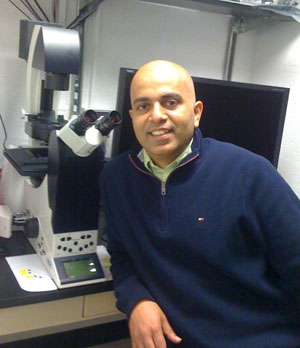
Rajat, Dr. Rajat Singh: The boy from HM Colony

Late in the evening of August 4, Mrs. Lakshman Singh called us and informed that Hindustan Times, New Delhi, has some news about the research of her son, Rajat, now Dr. Rajat Singh on page 17. She wanted if I read HT. I don’t, but then I promised the excited mother that I would find out and inform. I could locate the news report: ‘Dieting can force you to eat more:
‘An Indian-origin scientist has come up with an explanation to one of the most sought-after questions of obese people why it is so frustratingly difficult to stick to a diet?’

Dr. Rajat Singh of Albert Einstein College of Medicine has been able to find the answer. I couldn’t understand the rest of it. However, the research has found mention in mediawirh many reports and blogs including one in Los Angles Times.

Rajat Singh, M.D., M.B.,B.S. is also Assistant Professor, Department of Medicine (Endocrinology) and Assistant Professor, Department of Molecular Pharmacology at Albert Einstein college of Medicine.

If you can understand, here is how it will be made possible. ‘The new findings in mice suggest that treatments aimed at blocking autophagy may prove useful as hunger-fighting weapons in the war against obesity.’

Rajat was born in Hind Motor Hospital and grew in Hind Motors colony. He was the second son of Mrs. Bina Singh and Lakshman Singh. Mrs. Singh was the senior most teacher in the HM’s Nursery school and Lakshman Singh was in Engine plant of M/s Hindustan Motors Ltd. at Hind Motors plant.

Rajat did his MBBS from Calcutta Medical College and MD from AIIMS, Chandigarh.

The success story of the children from HM Colony always provides me a nostalgic happiness. I wish I could get more such reports.
I can only request Rajat to find a usual obesity that is pretty common and related to having only big pot belly

Posted in education, personal | Leave a comment

Inflation- Some Lateral Dimensions

I don’t know why MPs in parliament are playing a friendly match on inflation. At the end they all will vote in favour of the resolution expressing concern over price rise. And they have played this game a number of times just to show the concern without taking any effective steps to curb inflation that affects the poorest the maximum.

Even with the average annual incomes having doubled to an estimated $1,664, the inflation has only worsened the quality of life for more than 70% of the population.

Over the years since I started working for a salary after my IIT with a dream of wonderful life style, I have experienced that. I hear nowadays, the salaries are pretty high, but I am sure the salaried persons must be facing the same agony.

As the price increases, a house wife or whosoever manages the budget of the house gets into only one exercise of cutting down on the quality of the commodity to switch over to that of lower prices or of reducing unit consumption. For example, one shifts over to coarser grains such as rice of lower unit price or reduces the amount of milk in tea or add some more water in it. These are areas that are under one’s control. But what happens if the price of the services get escalated that normally happens and that too without any notice? That is the lateral dimension of inflation. With the first report in media, the service provider increases his charges. The other day, Yamuna called someone from the nearby chemist shop to measure her blood pressure. Unfortunately, she is in trouble these days because of the age and it is very difficult for her to walk. After the young man did his work, I asked the amount I must pay. She said, ‘Please give Rs 10-20’. The young man intervened, ‘What can that money buy these days? Sir my charge is now Rs 50’. I gave Rs 40. Here at least I could give a little less. But I was totally amazed when we visited our general physician, when the lady at the counter asked me to pay Rs 400 instead of Rs 300 as consultation charges. When I expressed my surprise, she pointed her finger towards a computer-printed notice about the change. I didn’t dare to negotiate. We are to go there twice a month. Still, without telling the consultant the reason, we have started visiting him after 30 days instead of every 15 days.
Inflation shocks turn into a self-reinforcing price spiral. As reported, ‘the fee of most of the surgeries has doubled in the past five years.’ The experts attribute it to better and safer healthcare facilities. But where from one creates the resource to afford the care?

The worst thing of inflated price is that once increased, it never returns to the base value. The reduction if at all is just minimal. How do you control the price rise of service functions? How do you reduce the prices that once have been raised?

That makes me believe a report of the Asian Development Bank that said, ‘half-a-million Indians were pushed below poverty line because of the food inflation in the past three years’.

And the parliamentarians hardly bother. Most of them don’t shop themselves with the money they get as salary or allowance. Someone else or some agencies do that.

Unfortunately, today too, they didn’t come conclusively to some steps to curb inflation and a time frame for it. Why do they enact the drama in parliament? Perhaps it is only for the vote bank.

I will agree with the content of a very good and rare article from Jaswant Singh: One reason that Indian prices are rising is that infrastructure growth remains sluggish. Progress on roads, railways, and power projects – all of which could prevent food from perishing prematurely, and energy and commodities from being unnecessarily wasted – is essential to stabilizing prices.”

The government must ensure the supply side and remove the controls such as one that don’t allow free movement of agriculture produce from one state to the other.

Inflation above 3% is not acceptable for a poor India. Unfortunately, we are not seeing it coming.

Posted in economy | Leave a comment