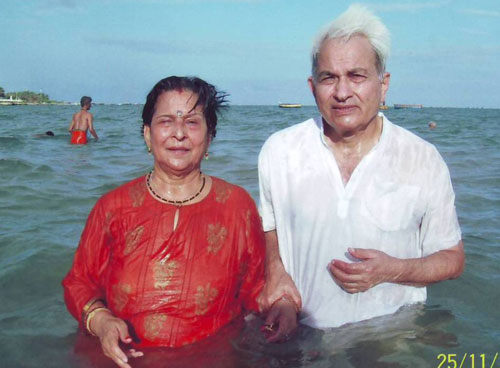
Tamil Nadu Tourism: Some Suggestions

We undertook its ‘10-days rail-cum-road tour’ starting November 21, 2009 from New Delhi and returning here on December 4. Most of the co-passengers were from and around Delhi. With some improvements, the tour could have been a memorable one for the rest of the life. Here are some suggestions. I wish Tamil Tourism takes it positively and seriously and implement it.

Facilities of Internet: Though some Tamil Tourism Hotels such as one at Mamallapuram or Thanjavur were having Internet facilities, on enquiry it was found as not working. In this era and when some or the other member of every family of the tour group remain on-line, the Internet is essential to keep in touch and for sharing ideas and experiences. Why can’t a developed state such Tamil Nadu and its tourism department provide this essential communication facility for social networking in its hotels? It can always outsource the facility to a private party if it can’t maintain it on its own.

Franchise restaurants
: Some Tamil Nadu Hotel doesn’t have restaurants of its own. The worst experience was that at Tiruchirapalli. Tamil Nadu Tourism must have approved franchised restaurants or hotels on the way that must provide clean safe food for breakfast, lunch and tea and ensure to maintain clean toilets and washrooms for gents and ladies. It must cater at least snacks such as dosa, idli, upma, aloo paratha, and sandwitches of good quality at all time. How hotels worth any name can’t provide sandwiches in any place that the guide took us in the tour? Tamil Nadu Tourism must plan and specify the name of these hotels or restaurants in the tour plan provided. It should never leave it to sweet will of the guide who can be unscrupulous to dictate and decide the restaurant.

Alternatively, the Tamil Tourism must provide packed breakfast and lunch instead of using roadside hotels that may cause food poisoning as it happened with me. And Tamil Nadu government must create restrooms on the routes of its tour plans.

Language Training: Tamil Tourism must initiate a language training programme for all its employees as well as those working in restaurants. They must be conversant with both English and Hindi. It will go a long way in improving the national integrity. But the main intention is to make the client tourists feel at home and convenience. In some places, it was really difficult to carry on. One feels miserable in his own country. Even the accompanying guide must be trained one with good knowledge of the places and its history.

Transportation: Tamil Nadu Tourism would have used its own Volvo coaches for the tour. For a journey above 3-4 hours at stretches the commonly used buses tire the passengers badly. Naturally, it’s more so for elderly persons, particularly when the tour is of more that 3-4 days period. 10 days period was too long. It was highly undesirable for Tamil Tourism to use a private company bus that had not paid its taxes and that caused the passengers to get stranded for hours. Tamil Nadu Tourism would have checked all its documents well in time. Further, we had to change to Volvo coach while going from Kanchipuram to Tirupathi, as the bus had not paid Andhra Pradesh tax.

Tour Design: This tour must have an additional rest day at Kodaikanal dropping Tirchy all together. Sightseeing such as Bryant’s Park and the poorly maintained Lake was unnecessary and waste of time. Even Tirupathi could have been made optional.

Finally, I wish Tamil Tourism would have arranged an evening with typical cultural programme with South Indian dance and music to make the tour enchanting in real sense.

Posted in Uncategorized | Leave a comment

रामेश्वरम के अग्नितीर्थ में


है अग्नितीर्थ सागर में
यह सोच था मन हरसाया
दर्शन की आश लिए फिर
मैं जर्जर तन से आया.

यह एक अरब का भारत
अपने पापों से
तेरे जल को
काला कर देता
और पापमुक्ति की शक्ति
पर प्रश्नचिन्ह उठ जाता

फिर तट पर खड़े अकेला
एक स्वप्नलोक पा जाता
वह रूप तुम्हारा मनहर
अनंत लोक तक फैला
मन को पुलकित कर जाता

मेरी आँखों के आगे
फिर दृश्य बहूत से आते
गर रामायण सच है
फिर राम यहीं थे आये
और आकर मिले बिभीषण

हे अग्नितीर्थ,
उस दिन से कितने अरबों
को तुमने
पापों से मुक्त किया फिर
तेरे तट को कलुषित कर
क्यों लोग चले हैं जाते.
तेरे जल में डुबकी को
था मेरा मन घबराया
पर आँख बंद कर हमने
फिर पॉँच बार कर डाला.

Posted in Uncategorized | Leave a comment

Traumatic Tirupathi

I do very well realize that many will not like or agree with my viewpoints related to my Tirupathi visit. However, I am 100% convinced that no religion or trust has any right to create a situation that becomes traumatic to person/s visiting a religious place with total faith and dedication in deity to get some solace. No religious ritual necessity allows any authority to create a situation when a person may feel suffocated in a waiting queue and still can’t come out. I was week, sick and felt like leaving the place and come out but there was no way out and no one from the authority to help there. Trauma of Thirumala darshan is a typical Indian case of mismanagement, even though it is a government managed temple with a senior IAS heading it.

Marketing of its power to fulfill the wishes has been excellent and the temple is known world over for its wealth and its gold. Donations of celebrities and rich men keep on hitting the headlines of media. Its annual Hundi collection must be the highest that makes it the richest temple in India.

Right on the first day, the guide of Tamil Nadu Tourism collected Rs 200 more per person from this group of Delhi. According to him, the Devasthanam has increased its entrance fee from Rs 100 to Rs 300 after we booked, and it’s for a special darshan avoiding the crowd that comes in for free.

The whole temple appears to be permanently barricaded. All the railings and enclosures for the visitors are now of well finished brass material. Anyone can see the way gold has been used or misused (as the quality of workmanship is hardly of a good standard) to make it cover it. I wonder the whole attention of the authority is on making more money from the visitors. For example, Yamuna wanted 6 extra ladoos. I had to pay Rs 450.

One can hardly appreciate the architecture and sculptures in the temple with these barricades covering the main areas for crowd management. One can hardly pray, confess, bow or see or touch even the door step of the sanctum sanctorum.

Most of the great Indian temples are under-designed to handle such a huge crowd that visits these days. Perhaps India over years have mastering the science of under-designing its facilities, be it its new multi lane highways or flyovers, railways stations or ports.

Fear of terrorists has been the reason for banning photography that makes every tourist morose. I don’t know how golden temple of Amritsar manages it and why can’t others follow it. Perhaps the Hindu shrines don’t get the right support from the community as Sikh shrines do.

Can the authority of the Thirumala shrine allow or invite some real reputed crowd management consultants to study and come out with the solution?

Right investment in some facilities with modern technology (against gold covering) in and around the temple, such as sky walks, may make the visitors enjoy the beauty and grandeur of the shrine and the visit more memorable.

Can some students of IIMs and IITs or any other institutes instead of joining political parties, be it BJP, Congress or any other, take up the study of stupendous crowd management problems at many shrines that we visited in Tamil Nadu trip? If Thirumala was the worst, Rameshwaram, and Meenakshi also need a close look.

All these Indian heritages require better attention and upkeepment. At least Thirumala shrine has so much money and cash that it can be developed on the basis and concept of swarga (Heaven).

Is someone listening? Will the Hindus priests and pandas or the politicians with eyes on the riches of the shrines allow anything better to come? And how many Hindus will go against them or support the move?

Let me tell them that the conditions at Thirumala will only make the younger Hindus that are creating the new image of India keep them distancing from the religion and these shrines.

I know the trauma of a visitor at Thirumala will continue. I shall not like to hear any news of any serious stampede and casualties at Thirumala.

My trauma at Thirumala reached its peak with the loss of my camera that had all what I collected for my acquaintances. It happened while transferring from the Andhra Pradesh state bus to Volvo coach of Tamil Nadu Tourism. It was entirely my fault. I wish Balaji can get my camera back, and I promise I shall return again to Thirupati.

Posted in Uncategorized | Leave a comment

October 31, 1984: As Rakesh Remembers

In a letter to my sons with a copy of my blog entry under the heading- October 31, 1984, I had requested them to write what they remember of the day. The day was mentally torturous for the family. Here is one from Rakesh, the eldest from Danville,

I was in Narendrapur when Indira Gandhi was slain by her own bodyguards.

It was a time of utter grief and despair for a nation that had prided itself as having the Mahatma as its Father – a beacon of non-violence the world over. The irony is written all over – the Iron lady of India had Gandhi in her name too.

News were hard to come by on that day – and whatever was coming out was spotty and full of dark, sometime gory details.. This bit was clearn – Several among us.. Hindus.. had turned murderers en-masse. We had turned againt our own kind – our brothers.. and sisters – The Sikhs – at the instigation of a small, well coordinated minority of thugs and killers.. politically or otherwise motivated. Sikhs – who had through some of the toughest and brutal test of history – stood up with valor and courage to defend the pride and the Motherland of India.

Indira was no more.. India..as I knew it was to be no more..

Young, impressionable, passionate.. mercurial.. we held debates.. our college – RK Mission, Narendrapur – was closed. We had a fast and prayer session. Then.. the memory gets spottier … One memory is clear – Rajeev Ranjan galvanized us all – in 11th grade – to fast, as a mark of PROTEST.. Thinking about it .. it was most DETEST and repungance at the actions of these so-called ‘Hindu majority’ for turning against their own.. subjecting even the children and women to indignities that I heard second and third hand. It was a day of national shame, if not national calamity..

May the brave lady .. despite her blemishes .. rest in peace.. may we NEVER rest until we have wiped out the seeds of discord that made us stoop to such depths of inhumanity on that day.

Rakesh Sharma

Posted in Uncategorized | Leave a comment

Mobile Phone: Liberator for Rural India

One can see the ultimate of technology competition rather war to win or survive in the business of cell phones, be it design or application. And why should not it be, if the market is so big with conversance of many technologies in just one gadget. Be it Apple, Microsoft, and Google, all have some sweet desire to lead the technologies.

Those with i-phone may be enjoying watching movies, or listening the choicest songs, and now using it also as pocket library good enough to serve the individual taste. And most of the functions are available on affordable phones with nominal prices for services. However, here I am trying to dream cell phone as the universal gadget for every Indian poor or rich in rural India that may one day bring the desired prosperity and may help in alleviating the poverty.

India reached the 500 million population of cell phones one year before the time targeted and is adding 10-15 million or more cell phones every month and most of it in rural areas. Telecom companies are busy raising towers to cover the remotest part of the country. According to Manoj Kohli, chief executive of India’s biggest mobile phone group Bharti Airtel, India could have more than one billion mobile phone users by 2015, with the bulk of that growth in rural areas.

As claimed, these small cheap gadgets will bring knowledge and through it the prosperity in many ways.

The necessity of these gadgets has forced the telecom companies and many innovators to make it possible and affordable for Indian conditions. For example, the villages without electricity that were hesitant to buy it have got over the problem of charging with innovation of a solar lamp that can now charge the cell phones.

According to a recent study, adding an extra ten mobile phones per 100 people in a typical developing country boosts growth in GDP per person by 0.8 percentage points. Should it not make Manmohan Singh and UPA-2 happier that too without any effort from their side?

Many service providers are showing up to participate in the business. For example, Reuters Market Lite, a text-based service has now 125,000 users, mostly farmers who pay 200 rupees ($4.20) for a three-month subscription, which provides them with local weather and price information four or five times a day. And the farmers pay as their profits have gone up as a result.

Tata Consultancy Services offers a service called mKrishi that allows farmers to send queries and receive personalized advice. ITC through e-Chopal and a tie-up with Nokia is also aiming for useful two way communication with farmers and experts. Nokia launched its own information service, Nokia Life Tools, this year. In addition to education and entertainment, it provides agricultural information, such as prices, weather data and farming tips that can be called up from special menus on some Nokia handsets. The basic service costs 30 rupees a month.

Another company Handygo has tied up with Airtel and may even rope in Tata indicom and Idea to provide an array of services to farmers covering weather, seed prices, fertilizer doses and best irrigation management practices and that too in 17 different local languages all on basic mobile sets.

And it will not only address the needs of farmers but provide services to around 200 million rural youths too. Mobile phones will be a learning device that will give them knowledge and information, teach them new things, even functional English and management.

As reported very truly, ‘in the grand scheme of telecoms history, mobile phones have made a bigger difference to the lives of more people, more quickly, than any previous technology. They have spread the fastest and proved the easiest and cheapest to adopt. It is now clear that the long process of connecting everyone on Earth to a global telecommunications network, which began with the invention of the telegraph in 1791, is on the verge of being completed. Mobile phones will have done more than anything else to advance the democratization of telecoms, and all the advantages that come with it.’

Posted in economy | Leave a comment

Engineers vs. Managers

A recent news report in Business Standard conveyed the same message that I had been trying to propagate: “Master technology first; be a manager later“. All freshers joining Infosys will have to compulsorily stay focused on technology for the first six years of their career. Only after the period, they will have to choose to either grow vertically as a techie or take up managerial responsibilities.

I strongly believe that those selecting engineering as their profession must focus on mastering the technology and do everything to learn as much as possible to enhance the domain knowledge backed up with practical training in the industries of the relevant technologies.

I think one of the main reasons for this thrust is the gradual shift of the IT companies of the country in higher level of outsourcing works that that it aims at now. Major automobile companies have already established their shops and many have their R&D centres too. Even new customers, including automakers Renault, Volkswagen and Harley Davidson, are seeking to outsource their complex design engineering projects to India.

The engineering services outsourcing (ESO) industry in the country is set to achieve $55 billion in revenues by 2020. Indian companies are becoming outsourced providers of critical R&D in sophisticated areas such as semiconductor design, aerospace, automotive, network equipment and medical devices.

As reported, Both the Palm Pre smart phone and the Amazon Kindle, two of the hottest consumer electronics devices on the market, have key components designed in India. Intel designed its six-core Xeon processor in India .

Many startups are also focusing on innovations with huge demand in developed market too.

Under these circumstances, the quality of education as well as skill expectations mainly related to domain knowledge from the candidates will have to be higher. Degrees will be worth nothing, if the knowledge is missing.

It will require appreciation and attention from all involved. The government must encourage. The institutes and its faculty will have to compete to provide the best to its students to get selected. The companies must interact to keep the institutes abreast with the knowledge demands of the industry for entry level. Perhaps the main task for the institutes will be to get its faculty keep on upgrading their knowledge to remain relevant and contemporary to the demand of the industry, otherwise how can they prepare the students to the expectations of the industry.

Posted in Uncategorized | Leave a comment

China and Dam on Brahmaputra

China today is afraid of only one country and that country is India. And perhaps that is the reason that China keeps on doing something to irritate India, be it its intrusions in Indian territories or the dam over the Brahmaputra and perhaps to test its strength and strategy to deal with China’s extremely superior military power.

Alarming news appeared on last October 15 that said, ‘strong evidence has now emerged to suggest that China has begun constructing a dam on the river which it calls the Yarlungzangbo (better known as Yarlong Tsangpo to the Tibetans). The dam over Brahmaputra will certainly be extremely damaging for India. The National Remote Sensing Agency (NRSA) confirmed the start of construction at the Magnum site on the Brahmaputra.

Indian Prime minister raised the issue with his Chinese counterpart, but he denied any construction. And unfortunately instead of finding the actual position by its own sources, the Prime Minister of India believed the Chinese information. Isn’t the NRSA version reliable enough to pursue the matter further with the right international agency if it’s going to affect the economy of a region of the country? Why the government or the Prime Minister is keeping the whole country in dark on the issue? What has been the preparation of India as the news started appearing years ago on such possibilities? According to a report in 2007, ‘China was preparing to build a dam on the Tsangpo (Brahmaputra) to have twice the hydroelectric output as the Three Gorges.’

The whole of Himalayan range that feeds all the rivers of India is under China and Nepal. Should Indians be made to believe that if China wishes and develops a technical capability, it can demolish Himalaya and transform India into a desert?

The whole nation anxiously wants to know what the country’s strategy will be to face some serious situations if China resorts to what is reported. Is not the Prime Minister obliged to clarify it? Or should the country men wait till the water flow stops and some patentable excuses are discovered?

Posted in governance | Leave a comment

Bihar: My Expectations and Nitish

We don’t have electricity in my village, Pipra near Sasaram yet with all the drive in Bihar for rural electrification. And the village is waiting for it since 1967. We saw poles getting erected all around, but then they disappeared too. With news of thrust on infrastructure by Nitish government, I thought at long last we can have the electricity in the village. I have a plan to gift a computer setup for Alok, my cousin who heads the household affairs and get him the Internet connection. He is PG in agriculture and computer-literate too. I also had convinced my sons in US to donate some five computers to the village school. But it’s not possible yet. And talking about some healthcare facility in the village is perhaps distant or may be impossible dream for me. Why is it not happening? I think the present system doesn’t involve the people and its panchayat. The system can’t make the panchayat accountable for providing good education and healthcare even if it means beg and borrow. I shall still not recommend stealing.

Perhaps Nitish and his men are too busy with Patna and they just can’t think of anything beyond that. Nitish claims to have “made progress in e-governance in the last few years – from Remington typewriters to online access” and have even sought the help of Nandan Nilekani to expand the mission of e-governance that was started after an advice from the former President Kalam. Who can judge his performance about the e-governance in the state?

I am really shocked to know that Bihar doesn’t have yet an IT Policy and IT sector doesn’t have an industry status in the state. I can’t digest the engineer Nitish taking four years to just promise to go for it in the last year of his tenure. Who will ensure this policy continuance, if he doesn’t survive in the next election? I also don’t know what happened to the software park that was supposed to be set up in Patna.

I have some suggestion for simple things that he can get done, if IT and computer are something that he as engineer didn’t learn during his days in engineering college.

Let him participate in making India green. He must have been told about the alarming rate of the growth of emissions in India that, as estimated, could reach anywhere from 4 billion to 7.3 billion tonnes by 2031. Every Indian would have to plant about 18 trees a year to offset that damage, according to Carbonify.com’s carbon dioxide calculator. Can Nitish get his people in the state appreciate the cause and make them achieve the target? There has been some wonderful work in some pocket. Why can’t those be replicated in the whole of the state?

Nitish has been talking about his thrust on the primary education in Bihar. Why is he not involving the retired headmasters and teachers who are taking a lot of pension money to get over the scarcity of teachers?

In a recent article, ‘The future of Bihar’, NK Singh who leads the ‘Think Tank’ of Nitish appears to be optimistic about the Future of Bihar: “because given continued good governance; its demographic advantage, and improving agricultural productivity can make Bihar the granary of India and also an educational hub.” According to him, ‘the future of India is linked with the future of Bihar’. Does anyone in Delhi who matters believe that Bihar can do that?

I wish NK keeps focus on Nalanda International University. With a support from Manmohan, the project that is being financially supported by Japan and Singapore must get going. But as usual for any project, this one too will require a lot of push and luck too. Nalanda International University may become a showpiece of Bihar as a centre of modern education centre and abode of the students from China, Japan and other Asian countries. It will improve the brand image of Bihar.

I do believe that Nitish has tried his best to get the government machinery restarted that had almost stopped working. But Nitish has failed to make a real impact in any area. Bihar in last four years or so of his rule couldn’t improve any of its ranking. And I think Nitish will have to hire some outsiders to make a breakthrough. Let him and Modi not focus so much on the local talents that are rare in any field including the business initiatives.

Bihar needs hundreds and thousands of Kaushalendra, Irfans, Anita Kushwahas, Lalmuni Devis, Raj Kumari Devis, Subodh Guptas, Charles Ransler, and many who are the real change agents in the state. Can’t Nitish Kumar provide the encouragement to these young men and women and make other emulate them? Why can’t Nitish invite Dr. Devi Shetty and provide him with all that he wants to set up the first 5000-bed health city in Patna or near Boddh Gaya for the masses? Many entrepreneurs from Bangalore and Hyderabad may be interested in setting up rural BPOs in Bihar? Why can’t they be invited to do that? Why can’t Bihar focus on ITC and Airtel to get the best of its rural initiatives for Bihar? Bihar will have to take few very big projects in education and health care to show the country that Bihar can do anything that it needs. I still remember the blood donation by the people of Bengal to build Bakreswar thermal power plant when the centre was behaving funny with it.

Can Bihar and specifically Nitish Kumar do something recognizable by the people world over?

Posted in bihar | Leave a comment

Imagining The Enchanting Tamil Nadu Trip

Since our visit to Port Blair, Andaman in March, we had been contemplating to visit Rameshwaram to complete our Char Dham Yatra to ensure salvation as Hindu scriptures prescribe. Earlier I thought to go to Rameshwar via Bangalore. I took the assistance of my helping friend OP using car. I wanted to do Hampi too that is among dream plans. Unfortunately both of my friends who had been accompanying me in my trips usually failed me at the last moment. But then I came to know of this tour that is conducted by Tamil Nadu tourism department through an ad in TOI. I preferred it as it was a Delhi-to-Delhi package. The tour covers Chennai, Mamallapuram, Punducherry, Thanjavur, Rameswaram, Kanniyakumari, Madurai, Kodaikanal, Tiruchirapalli, Kancheepuram, and Tirupathi starting on Nov 21 from New Delhi railway station and returning on Dec 4. We shall be accommodated at Hotels of Tamil Nadu Tourism. For the total package for two I paid Rs 34,300 because of the discounts as senior citizens. The charge for woman tourist is further discounted.

I visited Chennai during HM days very frequently in connection with Mitsubishi Project. But after I left HM, I never visited Chennai. I am sure it would have undergone a total transformation with so many global companies making it a destination. I would have loved to visit Hindustan Motors Plant in Chennai that manufactures few Mitsubishi vehicles. Let me see if I can make it.Perhaps with the itinerary fixed well in advance, it may not be possible.

I have decided not to blog during my tour this time and shall be leaving behind the laptop at Noida to wait for the return of the old man safely to provide his story of the days. And I imagine, one need not even need a camera unless he/she wishes to himself/herself in the frame of pictures. I was surprised with the numbers of pictures that I could see on Google image (You can see yourself by clicking the place).

With failing health, I pray the trip goes well.

Posted in Uncategorized | Leave a comment

Kapil Sibal’s Arduous Task for Education Reform

An article in ‘India Today’ names Mr. Kapil Sibal as Mr. Loudspeaker. In his new role in UPA as HRD minister, Kapil had been hyperactive at least in announcements of his wishes. Every Indian will like all these reforms to get implemented in next five years. There can’t be any politics with education with its dismal condition.

Only about 12 per cent of the 220 million children who attend schools in India reach college level. Sibal has set a target to increase this to 30 per cent by year 2020. And that will require more than 27,000 additional institutions of higher learning that includes 14,000 colleges of general higher education, 12,775 additional technical and professional institutions and 269 additional universities.
Is it not a disgrace that only around 12 per cent of India’s 509 million young employed Indians are equipped with the right skills?

Further, India is ranked 102 out of 129 countries, immediately below Kenya and Nicaragua, in UNESCO’s 2009 Education for All Development Index that scores nations on the spread, gender balance and quality of primary education and adult literacy.

http://www.business-standard.com/india/news/shyamal-majumdar-when-mbas-aspire-to-become-clerks/376143/
According to Nasscom, software firms reject 90% of college graduates and 75% of engineers who apply for jobs because they are not good enough to be trained. Infosys increased its training of employees to 29 weeks, that’s seven months of training. Why do they need so much training? And why is the quality of applicants so poor? Many are skeptical about about the large number of MBAs and engineers that are passing out from a large number of mushrooming institutes in India..

Will Sibal be able to take care of the numbers as well as the quality demanded by the industry?

Sibal is trying to change everything and fast enough. Everyone will be with him if he could get it done. Many things are getting announced.

Will the passing of the Right of Children to Free and Compulsory Education Act make the change happen? Can a bill or act make the millions of children (an estimated 160 million), who are presently out of school, access to quality education possible? How does Sibal get 1 million good teachers and arrange about Rs 1.5 lakh crore for the project?

Will the whole lots of bills that Sibal is trying to get through significantly change the situation of education fast enough for him to see and the country to reap the benefits?

Sibal is putting a lot of efforts. Sibal visited USA recently and met the presidents and other functionaries of Harvard, Yale, Massachusetts Institute of Technology (MIT) and Boston University to invite them to India or to have active collaborations with Indian universities. But I doubt Sibal can dictate his terms to US universities.

Manmohan Singh and Sibal are talking loudly about new IITs, IIMs, Indian Institutes for Science Education & Research, Indian Institutes of Information Technology, world-class central universities, degree colleges in all educationally backward districts, and model schools in every block of the country.

But why are not institutes such as the BHUs, Aligarh Muslim University, or BITS, and BIT, Mesra getting set up in larger numbers? Why not the top 100 big business houses that are now headed by the younger and better educated CEOs participate in building one world class institute each? Why can’t the school complex in every village be made the place of pride for its residents? Why can’t the people at large participate in building and maintaining the school and other educational institutes?

Posted in education | Leave a comment