Can India Inc Educate Deprived India?

I go back to my school days in Birlapur. Our school, Birlapur Vidyalaya, was in the factory campus and Birla Jute Manufacturing Company (presently known as Birla Corporation) financed it. The company had a scheme for the educating the children of factory employees. Two of my own uncles went for education in Birla’s educational establishment in Pilani. Unfortunately, they couldn’t continue because of the fault of their own. But many availed it fully. Manorama Shrivastava (Pandey), the eldest daughter of my assistant headmaster and her uncle, Rajendra Sharma, son of an employee in mill, Jharkhandey Singh, the younger brother of another teacher, and many availed the facility and continued up to master level. It was a totally free education including even pocket money and clothing. I am sure there might be many other companies doing that.

I am not sure if the scheme exists any more. Perhaps the decline of the group or the cost cutting exercises caused the death of the scheme. But I am sure if the group could afford that in 50s, many other industrial houses and professional companies could do that even now with the advantages coming after liberalization in industrial policies and death of license raj. If I am to believe the balance sheets, websites, and media reports, most of the big companies in India are involved in the education and other tasks in name of corporate social responsibility, but it’s not focused and the impacts are not visible.

Today Indian corporate in large number must get into the philanthropic task of educating the deprived India to help effectively in the inclusive growth that the country badly needs. It will be more efficient in managing the institutes and ensuring the quality education and learning for the students as against the same by government schools. The prime minister and the education minister can take the initiative to bring the industry, both private as well as public, in the fold to help the country becoming a knowledge power.

Think of at least 100 (number can be much bigger) Indian big industrial corporations setting up and promoting a large education city each to impart education of all levels to the children of the deprived classes and the impact it will make. The city can have a university with number of engineering and medical institutes, science colleges, along with a larger number of schools that will provide the input for the colleges. And the education city can also have facility for large scale skill building too. It will also improve the employability of the graduates with the input from the companies who ultimately engage them. Will not the education from a university set up by Infosys, TCS, or Wipro be better oriented for IT sector? Tata, L&T, M&M, or for that matter Reliance Group can certainly create an educational institute that can be something like MIT of India. Unfortunately, the big brands of Indian industry have not, very lately shown interest in setting up educational and research institutes that can become globally known as pioneer its fields.

I get excited with the news emanating from the rural development ministry. As reported, nearly 100 companies had responded positively to a notice issued last month inviting “expressions of interest” for implementing the Provision of Urban Amenities in Rural Areas (PURA) scheme under a public-private partnership (PPP) framework. I am sure it will include education centres coming up in rural India. Fortunately, companies like Tata Power, Tata Realty & Infrastructure, Jindal Steels & Power, cement manufacturer ACC and Reliance Energy have sent proposals.

According to another report, the government has decided to allow corporates, non-profit companies and societies to open 2,500 schools across the country. The Public Private Partnership (PPP) model allows the government to fill 1,000 of the 2,500 seats in each school with children from the deprived sections. The scheme must be able to screen out unscrupulous entrepreneurs in education that have come in huge numbers.

I wish the corporates with a mission for the inclusive growth must take on the responsibility of the quality education of the deprived class, both in rural as well as urban regions, otherwise the country can’t think of having its largest youth population as advantage over the aging countries. This can be the only way to bring the death of the poverty and the menace of Maoism. Can’t CII take up the task?

Posted in education, industry | Leave a comment

Ganga: From Mother to Untouchable Status

Ganga must be cursing Bhagirathi to bring her down to earth@. And the most to be blamed are the Hindus who call her Mother Ganga. Each one starts polluting it from birth and in death too.

And I feel like blaming Vishnu who made Garga descend on earth giving a divine power to her water to absolve all the sins.

Does not every Hindu put all his sins and filths that he generates including his ashes after death and even the carcasses of his pets in the water of Ganga for getting easy salvation?

Where is Vishnu and where is his Chakra? Why is He not getting incarnated again to save Her?

I wish and wonder if all the religious leaders come out with a fatwa to save Ganga that has become a national necessity today. What will be the values of the temples in Varanasi or elsewhere if the rivers become a sewerage drain or die?

Why do BJP and VHP still talk of building the Ram temple? If the party wishes to unite the Indians of all hues, it must put all its resources and propaganda machinery to save the River Ganga.

Shadus and intellectuals must come out to do everything to save it. All the industrialists must take vow to stop draining their pollutants of their enterprises that cause the maximum damage. And let them remember if they don’t do that all their charities and donations to Balaji and other Gods will not save them from the curse of Mother river to get a hell for hundreds of lives to come.

The government that proclaims itself secular has failed to clean the rivers. Can the people of the country do that?

Can we ponder over our actions as Hindu to save Ganga? Can we ask our heirs not to immerse the ashes after our death for our salvation? I refuse to go to Heaven, even if there is any and even if it’s true, if it contributes to the death of mother river. —————————
@”The myth goes that when King Bhagirath asked Ganga to come down to earth, she put her foot down and said no. Then Vishnu intervened. He promised that all the sins accumulated by mortals would dissolve the moment sages entered her waters for ablutions. Finally, Ganga relented.”

Posted in governance, social issues | Leave a comment

Hurdles of Higher Education

India may soon attract a lot of good foreign universities to set up its shop. And if it happens, naturally that may force IITs and other top technical institutes to compete with the best of the world.

But naturally a question crops up in mind. Will the foreign universities come with the same quality level of education or will it dilute its standard for India for the prices that it may fetch for its education? I am sure the present semester charges of many of the top class American universities as charged in US dollars will be too high for the Indian parents. Though many banks are providing easy education loans, the Indian parents still like to bear that expenditure, as they don’t wish to burden their children at that age.

Will the foreign universities use the localization as route for cutting down their cost? Naturally, they can poach on local teachers, train them and use them to cut the cost of teaching. After all, as reported, the teachers in the institutes of national importance are pretty lowly paid. “Saudi Arabia paid its professors the highest on an average – $6,611, followed by Canada at $6,548 and United States at $5,816 per month. India pays only – $1,547”. They can use the teaching materials from the faculty of the parent institute either digitally or through local printing.

Will the local teachers come up to the efficiency level of those in the best of the foreign universities?

I don’t know if they commit to set up the research laboratories, but they may decide in favour of doing that taking a clue from all the MNCs that have set up R&D centres in India. And who knows after some time they may bring the American students to work in the Indian laboratories.

In fact, according the University Grants Commission’s data, there are 156 foreign providers, including 90 universities and 20 colleges, who have collaboration with Indian institutions.

Some universities have been already trying to enter India. As reported, Georgia Tech and the Schulich School of Business already tied up with some Indian investors and bought huge tracts of land in Mumbai and Hyderabad respectively, when the real estate market was in the slump.

But main thrust must be on the quantity and more so the quality of secondary and higher secondary education that will decide the quality of the input to the higher education. It primarily means quality and dedicated teachers and facilities, particularly in government schools that provide the major portion of the output for the higher education.

Many things are happening and fast too in education sector. Many reforms are on anvil. Enrollment in primary level has seen tremendous rise. Sarv Sikhsha Aviyan is now ready to cover secondary education too.

Will India see that light in education sector that can make it the leader in the world? I wish the corporate India would have participated and invested in the task in big way as it did in setting up of some of the best educational institutes in the past.

Posted in education | Leave a comment

A Bad Sad Sunday: Meeting Eternity

An early morning unexpected telephone from Beena Lakshman Singh on cell gave the sad news. I had not taken the call myself as perhaps somehow I could sense the bad news. The cell was in bed room and we were in the lobby. I had just returned from my morning walk and Yamuna had joined me. I rushed, picked up the cell, after seeing the caller, horridly walked back and handed over to Yamuna.

Lakshman Singh passed away on May 6 itself. We had talked in between with Beena but she didn’t reveal the news, perhaps to save us from the mental agony that the news would have given. She with Burmans (Dr. Burman and his sons) and some close relative from Lucknow carried out all the rites. Rajat couldn’t be called, as he was in Spain for an interview. Beena bhabhi came to Lucknow for the religious ceremonies.

It was perhaps only after completing all the tasks and returning to Kolkata, Beena bhabhi called us.

Hat off to Beena, the brave lady who faced the whole problems at this advanced age herself! It is really difficult to appreciate this.

Lakshman Singh worked for me in Hindustan Motors. He must be around 80.

Let his soul rest in peace and God gives Beena all the strength to face the life after him. She has another duty- a handicapped son who is still with her. I wish Rajat or some kind soul helps Beena in finding a good place for him where he can be cared for the rest of his life.

Beena bhabhi! You are great, but I never thought you to be so brave and tough to conceal the news for so many days when we were almost everyday talking.

Show equal toughness to live the rest of life. Let God give the agility to face the situation. We all are with you.

Posted in personal | Leave a comment

Railway Projects: Bihar’s Doorway to Prosperity

I have been advocating for some railway projects that can bring Bihar on the map of industrial India. At Harnaut in Nitish’s constituency, the Indian railway is building a coach maintenance plant. Nitish as railway Minister had initiated that. As per report, ‘the cost of the project, which was initially Rs 98 crore, has jumped to Rs 224.51 crore’. If the railway handles the project professionally keeping a good future plan, the project will have a good potential for employment and skill development.

I wish Nitish’s government gets some infrastructure facilities in Harnaut that can make it an industrial town worth living for even the senior employees and executives of the workshop. The state can get some good private schools in Harnaut. It must set up an industrial skill training centre that will cater to the requirement of the workshop. It should also encourage a satellite residential facility that can attract people from the hinterland and help in urbanization of Bihar.

With expansion of the workshop, many other ancillary industries with potential investment and employment may also get in the town. And that will improve the economy of the region.

Bihar and its ministers in cabinet of the country had been focusing on the expansion of railway linkages. I believe the thrust in modern era must be on roadways. Railway connectivity is better for already industrialized region, while roadway connectivity improves the economy of the far flung unindustrialized region much better.

I wish Nitish uses his clout with Mamta and railway ministry to expedite the setting up of already approved Diesel Engine plant at Marhowrah and Electric Locomotive workshop at Madhepura. It will require a lot of follow-up and all sorts of pressures along with support such as one in land acquisition and local infrastructure from the people and the government of Bihar to get the projects executed fast.

The manufacturing plants in Bihar will usher a new hope of industrializing Bihar with huge number of ancillary units getting set up for the projects. However, the Bihar government will have to change its industrial policy to become more entrepreneur-friendly. It must reform the labour laws in line with those prevalent in SEZs of the country to attract the industrialists. It is obvious that Bihar must present some lucrative incentives for making it an attractive destination for investment.

Nitish has certainly brought about many improvements in Bihar, but it is still to take effective steps to get investments in the state. It must look into the reasons why even the big players in education sector are not coming to Bihar even though the students of Bihar are the biggest source of revenue for professional institutes all over India.

Bihar website has proposals of, as reported, more than Rs 1, 00, 000 crore, but I doubt the quality of the projects and the seriousness of the entrepreneurs after going through the big listing.

Let Bihar get into real manufacturing sector with the railway projects.It is an opportunity that must be used in the best possible way.

Posted in bihar, industry | Tagged | Leave a comment

India inc.: Real Rural Social Responsibility

Bill Gates visited Amethi in this punishing Indian summer. Why is this romance with India’s remote villages? Perhaps after getting at top in wealth creation, Bill is genuinely working to reach and help the deprived lot of the world. As reported, Rahul Gandhi even tried to convince Gates to stay in Amethi for the night and wanted to take him to the same village where he spent a night along with British foreign secretary David Miliband in a ramshackle hut belonging to a poor Dalit woman Shivkumari Kori. But it didn’t happen because of the time constraint.

Bill Gates also visited the remote villages of extremely backward in Bihar, sat with mushahars-the rat eaters, the most deprived people of the state and tried to understand their problems. He used an ordinary boat just like the common people to cross River Kosi.

Why can’t the Indian Gates and Milibands take some lessons? I have been pleading to all the elected members of legislatures to stay in the villages of their home constituencies at least for some nights every year. That would have made them understand real problems of rural India better. It would have made them understand the necessity to improve the quality of life in rural India. Unfortunately, most of them just can’t stay for a night in the villages because of the changed life style after succeeding in political career rather political business.

Indian business leaders must also develop and show their real love for the Indian villages where the majority of Indian lives in totally different and adverse condition before it’s too late. That would have given them an opportunity to innovate for the mass of population that makes the bottom of the pyramid. It would also help ultimately their business and its revenue besides enhancing their public images.

The business leaders such as Ambani brothers and Mallya must start spending for the millions of god’s men and women in rural India rather than donating hundreds of crores in gold and silver for covering of the abode of these Gods sculpted in stones or metals and on good looking and influential lobbyists in government. If they keep on pursuing the humiliating distance from these people of the country, increasing number of the population will go on getting disenchanted with these business leaders and gradually protest against everything they propose as project, be it a university, steel mills, or power houses.

India Inc must unite, genuinely take interest and responsibility and participate on large scale in providing world class primary education and public health faculties in six lakh and odd villages of India and not for enumerating it as CSR activities in balance sheets and on its websites. If the industrial houses can create wonderful institutes of higher education and healthcare facilities for business in urban areas, why can’t the expertise be extended to poor rural regions? I can assure them it may very soon start getting profitable too just like the marketing of their products in rural India.

Let India Inc changes its mindset, innovate and initiate on mass scale the activities that can change the faces of rural India and make it livable by creating job opportunities and all necessary facilities. And it’s doable.

I wonder if the business icons of India need some sort of pilgrimage programme to get to know the rural India. Why can’t some young men of IIMs start this business as iVolunteer is doing for city youth?

Posted in industry | Tagged , | Leave a comment

Bihar: The Fear of Uncertain Future

Bihar has clearly swung into poll mode. Nitish is on ‘Biswas Yatra’. Congress is dreaming to make a comeback through a discredited leader of 1982 Delhi massacre fame. Lalu and Ram Bilas Paswan are busy in discrediting Nitish. They hardly have a strategy to take Bihar into the league of developed states of the country. Their past performances have been dismal pushing the state decades behind in the race of development. Nitish has lost some of his earlier friends too, ‘dost dost na rahe’. And they are mostly the disgruntled leaders of so called forward castes. They wanted those favours from Nitish which perhaps was difficult for Nitish to accommodate. They have come out a single point agenda and that is to defeat Nitish in the coming assembly to teach him a lesson for not agreeing to their demands. They call him a “despot”. According to them, Nitish and Lalu two sides of the same coin. Nitish created sharp divisions in society with his “blatant caste politics”.

I have few questions to the organizing Heroes at Kisan Mahapanchayat in Patna. If for a moment the people of Bihar agree that Nitish has not done anything, will any of these leaders tell the people what are the achievements in their kitty? Have they not cashed on the best what the politics can provide? And what is the perception of people about their integrity? Let me ask a simple question: Can any one of them be accepted as the chief minister of Bihar?

Why do these leaders, all of so called forward castes, want to derail Bihar from the path of development that had started only in last four years?

Why have they not called the OBC landholders in the Mahapanchayat? They are quite in large number in Bihar. After all, OBC landlords will be equally affected, if the next government of Nitish Kumar would implement Bandyopadhyay Commission report related to the rights of sharecroppers if they were voted to power. Why are they creating the bogey about this policy when Nitish Kumar has been denying it?

Will the ‘aam aadami’ from the castes of these leaders desert Nitish following the call of these burnt out leaders born in their castes? I am sure they are intelligent enough to decide what is more important for the state on their own.

Can the people of Bihar believe that there has been no development in Bihar with Nitish in chair, as these leaders proclaim so?

Do they say that whatever even the seniormost journalists of India and some international reporters have written about Bihar in the national and international newspapers are farce?

As Sankarshan Thakur wrote in Telegraph, “Near the end of its first term in new hands, Nitish’s Bihar is a classical half-glass thing – full or empty is a partisan verdict.” But Thakur would have given Nitish the credit for brought Bihar to this condition from a situation of ‘total empty’.

Thakur very rightly observes: “Bihar is not under the swish of a magic wand. What Nitish has is, at best, a broom. And no matter how furiously he has worked it these past years, he remains overwhelmed by the debris of decades of dereliction. For everything that has happened, there are so much that has not. That’s what is achievable when you have a broom for a magic wand and a calamity house called Bihar to clean up.”

Politicians of Bihar have been confusing and misleading its people for all these years and have kept the state the most backward and poor in the country. Will they succeed this time too?

I am myself not very happy with the performance of Nitish. But the reason is not ‘batai’ bill. The farmers in Bihar need better technical input and marketing support to get the best of yield and price. The state government must ensure that their produce gets sold at the minimum support price.

I can’t predict the outcome of the coming assembly election. But I wish the people of all communities do distinguish between the sincere politician and the black sheep. I hope they do not cast their votes to bring back the misrule of Lalu-Rabri era.

Nitish still remains the best bet. </font

Posted in bihar | Leave a comment

Nitin at Harvard: Father’s Advice

Since Wednesday, the print media is almost euphoric about Nitin’s elevation as dean of Harvard business School. Economic Times, Businessline, Financial Express, and many national newspapers covered the story with good inputs as usual. I liked one report that appeared on the business page of ‘Times of India’ on May 6.

I liked what Kewal Nohria, father of Nitin Nohria said. Kewal Noharia is a former chairman of Crompton Greaves, a pretty known company today and leader in its sector. I liked the statement for a simple reason. Most of the many Indian fathers with similar background of Kewal have similar dreams about their children in US.

I happened to discuss the news of Nitin at the neurotherapy clinic with Mr. Sarin where I take Yamuna everyday these days. Sarin also comes there for treatment. Sarin was in very senior position in Indian Railways. His son is working as scientist in a big hospital group in US. Sarin wishes to see Dhruva, his son to become a Nobel laureate.

Here is what Kewal Noharia had to say:

What did he want Nitin to do when he grew up… what was his advice? ”My advice was to pick up whatever profession he wanted as long as he reached the top. He was studying at the Sloan School in the US back then and had taken up finance. He then came up to me and said he wanted to change and study organizational behaviour, to which I asked why and was satisfied at what he had to say… I’m glad it proved to be the right choice,” Nohria gushed. Nohria was the chairman of Crompton Greaves. ”He had just finished his PhD from Sloan then and was visiting us. I wanted him to be an entrepreneur and had lined up a JV with a company for him. It was all set when he asked me… do you mind if I teach?” I said, “do what makes you happy.” Nitin joined Harvard immediately after.


Let me confess I had not read much about Nitin earlier. As reported, Nitin has almost 16 books to his credit. Nitin is one to moot the idea of Hippocratic Oath for MBAs on line of one done by doctors at the end of their academic course.

I don’t think the idea is a new one. I remember at the convocation Of IIT, Kharagpur in 1962, we also took oath in Sanskrit with almost a similar purpose.

I only wish that Nitin makes management education and training of his prestigious school more meaningful for US with input of some good Indian values. Unfortunately, as pioneer of management education, US managers have failed to present a sustainable business model for the industry. Following US blindly as India does, management education has become a fad in India too.

It reminds me one more thing. Nitin is also one who graduated in engineering and that too chemical, but succeeded in management.

IITs must introduce an aptitude test in its entrance examination. How do we get dedicated hardcore technocrats that India need?

I wish Nitin a great success at Harvard.

Will not an IITian become a Nobel Laureate one day soon for me to get the happiest moment of my life?

Posted in Uncategorized | Tagged , | Leave a comment

Nuclear Family and an Elderly Couple

The story of Mrs. Lakshman Singh will be the story of every old couple living alone in India with children working and living in distant places or abroad.

Lakshman Singh is in hospital now for almost a month. He suffered an acute heart attack on a Saturday night. Mrs. Singh took help of the neighbours and the acquaintances of Hindustan Motors and on their advice, got him admitted in Arogya Niketan, an Uttarpara Nursing home. But after some days, when his condition stabilized and the doctors recommended an angiography, Mrs. Singh took him to BM Birla Heart Hospital. His condition was bad enough and was kept in ICU. The resourceful acquaintances of Hind Motors such as Madhu Lahoti helped her. I felt happy that he was in a safe place and in right medical care.

Rajat also came in from USA. Lakshman Singh got stabilized. As per angiography there was no blockade in arteries. But his heart has gone weak to extent of 40%. After few days, he was moved to normal room.

After Rajat left, it was really difficult for Mrs. Singh to manage with BM Birla heart Institute so far away from the place where she lives. Mrs. Singh wanted to bring Lakshman Singh. After the doctor permitted, she brought him home. They reached home by evening but then Lakshman Singh condition deteriorated. She called the local doctors. And finally she got him again admitted in a local nursing home that night itself. The place is about at 20 minutes by riksha from the residence of Mrs. Singh. In case of Mrs. Singh, the problem gets accentuated because of their handicapped son, Bimi.

And with the treatment so costly and almost hardly any medical care insurance coverage for the old, how worrisome it is for an ordinary middleclass couple?

Can one imagine the agony of Mrs. Singh? She is bravely fighting it out with almost no relatives to help.

And this story is becoming universal with family becoming more and more nuclear with urbanization and globalization.

And the problem is not only for the old couples. It is almost same for the younger ones too. It’s becoming more and more difficult to live without tensions for them too with growing kids. It’s almost miserable to face any eventuality of any mishaps with younger couples too with no one to help. Can the high salary and perks buy the peace and happiness that a joint family living together provided?

Can we forget this negative aspect of globalization?

Posted in social issues | Leave a comment

Album and Autobiography-7

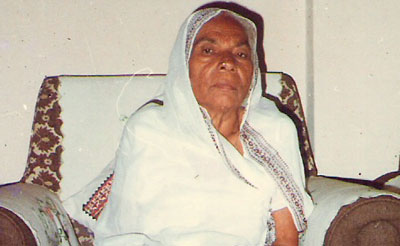
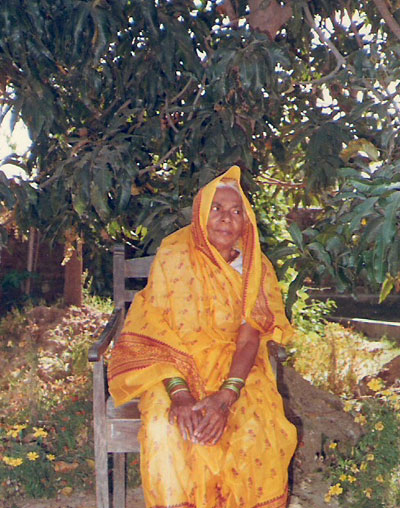
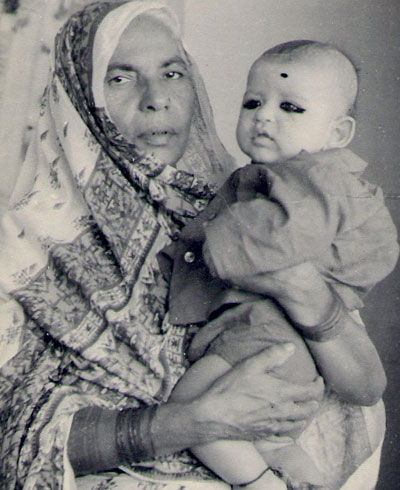
I adore my mother for the supreme sacrifices she made for her father and uncles and then for me. I have mentioned that in my earlier entries too. I was alone of my generation in my family. Nirmal, my first cousin brother was born when I was in the final year of Intermediate Science in Presidency College. I would have inherited pretty good amount of share from the joint family. But my mother would, perhaps, have thought of passing over to me much more in landed property. She agreed to live with her father and then uncle after the death of her mother and aunty. And perhaps that was the reason that I remained the lone child of my parents. My mother visited Pipra, our paternal village only on certain occasions such as marriages.

As my great grandmother and the grandmother told me when I had grown up that I was a pretty difficult child. I would insist my mother to come and feed me her milk on bed itself in the morning, when she would be busy in household works as the eldest daughter-in-law of her generation. Though annoyed immensely, she would come with dirty hands and oblige me. She had to cook. She had to clean. She had to take care of all elderly ladies. That was the practice, and my mother religiously did it all and a little more.

My maternal grandmother was terminally ill. My mother and I went to Bodarhi, my maternal village when I was just a kid in a bullock cart. It took almost the whole day for a distance of 20 and odd kms. My mother took over the household affairs. I got mixed with the kids in the neighbourhood. That was the only time that I liked the village. After some months, the village had shown symptom of an epidemic that was very common in rural India those days with very poor hygiene sense in the people and almost no healthcare facilities. My maternal grandfather and my mother got concerned. A message went to my grandfather who happened to be in Pipra on holiday from Calcutta. My grandfather came with three other persons, got me in the mango garden in the eastern part of the village and took me to my paternal village. He had a mention of that in his diary. In Bikramgunj we had to stay for the night as we had missed the last train. I had cried for my mother while in sleep that night. Thereafter I came to my maternal village only rarely along with someone or the other of the paternal family. I never stayed for more than two-three days. It appears my attachment with my mother also declined and became very formal. When I grew up and started living in Birlapur (near Calcutta), I used to go to Bodarhi as she would give a lot of money. She used to insist on me to stay for some more days with her. But I never found the village congenial for me and preferred to spend most of my holidays in Pipra where there were many to love me and many to play with. I am sure she would have been feeling sorry and missing me, but she never expressed it loudly. She thought I am away from her only for schooling and to achieve bigger goal that was good enough a reason for the sacrifice.

After the death of her uncle, my father joined her in Bodarhi, but all the land related decisions remained with her. She remained the ‘malkin’ of the family. I liked very much one aspect of her behavior. She would appear to be very angry and annoyed with my grandfather, uncles, and even the tenants of her land or workers, but then after just sometime she would become very kindhearted and give whatever they asked for, the money or grain. I remember giving my uncles in cash and kinds that they wanted or they would have spent on coming to her or on her.


I tried to do what my mother wanted from me. She had some land in eastern side of the village that didn’t have any irrigation facility. In one annual holiday, though I didn’t have any experience I got a well dug for using the Persian wheel (Rehant) for irrigation. No one helped me. I searched for the labour (nonias) who were expert. Sometimes, I myself worked physically too to expedite the completion. I could see the happiness that mother got out of my interest in getting the work done. The well got ready. She got pleased and that I cherish. And then she wanted a house to be constructed on the outskirt of the village where we had our land. Our old house was inside the village and cramped too. My maternal grandfather and his brothers with no male child to inherit never bothered and thrust their right to get their due share.

>

I started the construction of the new house after getting bricks made a year earlier. I wanted a big enough modern house, built with all facilities with a hand operated pump inside the bathroom and toilet inside the house itself. I had to invest all that I was saving for the education of the three kids. And I really worked hard and Yamuna too. Cement was scarce in those days. The trouble in building the house can be appreciated only by those who had experienced it. I went up to the cement factory at Banzari near Rohtas Garh alone in search of cement, but failed in the mission. I bought suspect quality in small lot from different places. I used to reach very often pretty late in night carrying the stone chips from Karwandia near Sasaram. My mother would not like it for safety reason. But in my youth I did never care about anything to happen with me. However, my mother got major things done and completed the house. My mother was very happy and I was happy to see her happy. I planned and arranged a seven days Yagya with Siva as the main deity at Bodarhi after the completion of the house. That was the time when our car with me in driving seat overturned and toppled near Asansol, while we were going to Bodarhi. Yamuna with the three sons, a servant and late Gauri Sankar Rai was in the car. The car got badly damaged, but we could start our Ambassador car and reach Bodarhi on the next day afternoon. That was a great experience and every one even today remembers that. My parents performed the Yagya. I made all arrangements. On the last day, it was big feast with all many relatives and all the village men and women whom I had invited by personally going to their house. My father had gone very weak because of the fast. My mother was very happy to see perhaps the first function that large in her village which became the last one too.
Mother loved greenery. She had planted some fruit bearing trees in the courtyard. I too loved to sit in the courtyard. But it didn’t last for many years.

My mother used to visit Hind Motors occasionally after Yamuna came to live with me. After the birth of the kids, she started coming more frequently. She was the favourite of my sons. The call of duty and the attraction of Bodarhi would make her leave us and go to Bodarhi.


In 1982, I went to UK with Yamuna and stayed there for almost two months. Rakesh was appearing for School final. My mother took charge of the house with great Syamal who again remained with us for many years. I still remember some of skirmishes of my mother with Syamal who used to tease her as was the practice in Bengali homes.

Once my mother visited us with a Brahmin priest family of Bodarhi for the pilgrimage to Ganga Sagar followed by vesting Puri. Jamuna Baba with his aid Chandradev from my village also happened to join them. Yamuna took them to both the places. I am sure Yamuna would have got a lot of blessings from the elders.

It was only 1988 that we made her come and live with us in Hind Motors as my father was with us because of his bad health. He couldn’t go back. There was no point to leave my mother alone in Bodarhi. It used to be real worrying days and nights with no facilities of telecommunication in those days. With the presence of my mother at Hind Motors, I found my worries about her gone.

I was fortunate to live for at least some years happily with father, mother, three kids and sometimes my cousins as a big enough family in Hind Motors many years.

Unfortunately, I failed to understand that she would have loved to go back to Bodarhi to collect the outcomes of the land. I went myself with Yamuna. We were constructing our Salt Lake residence, AJIRA. My mother was very happy about the AJIRA project. She had been to the site in Diwali to light the lamps and had stayed overnight.

It was February 28, 1989. Yamuna had left for Salt Lake where we were constructing AJIRA. I was fortunately in factory board room in a meeting of Corporate Project Planning. The news reached the office. My mother had suffered a severe cerebral attack. I rushed home. I lifted her in my hands and came down the staircase. I called SK Roy Chaoudhry, my colleague who was passing through. He took us to Hind Motor Hospital. We sent message to Yamuna in Salt Lake through Mrs. Santi Singh. She returned and came straight to Hind Motor Hospital. But by that time, my mother had gone in coma. She never recovered. The same night she left us. My father took it very boldly. A big crowd joined her in the last rites on Sivatalla Ghat. The saddest day had come for me. I had to face it.

Posted in personal | Leave a comment