AJIRA: Down the Memory Lane

It happened perhaps in 1982. I became the Chief Production Engineer, Mechanical in Hindustan Motors, Uttarpara after working for almost ten years in production shop floor in Engine and Axle Plants. Banerji was working for me in as chief planning engineer. One Banerji asked me to tell Bhattacharya to get allotted a plot of land in Salt Lake for building a residence of my own. Bhattacharya worked as clerk in my office when I was manager in Axle Plant. I never knew that Bhattacharya is so an important person and he had so close contact with the Chief Minister. I called Bhattacharya and expressed my desire. Bhattacharya requested me to put an application requesting for getting a plot of land in Salt Lake to build a house for permanent settlement after retirement and I did. I was surprised when I received a letter dated October 28, 1981, allotting a little more than 4 kathas of land in Salt Lake, sector II on a lease of 999 years at the rate of Rs 100,000 per katha. As I was told, with the salary that I was getting at that time I couldn’t have got bigger plot.

Whatever I had saved since 1961 when I started working for Hindustan Motors, I had spent first in the enterprises of my youngest uncle at Pipra and later on to satisfy the wishes of my mother in building a house in Bodarhi, her village. It ended with a Shiva Yagya at Bodarhi.

However, I wanted to have a shelter in some metro city. I took an Rs 10,000 loan from Provident Fund Account in March ’81for booking a flat in Salt Lake. When I got the allotment of a land in salt lake, there was no other way but to take a non-refundable loan of Rs 50,000 from the Provident Fund Account in November ’81. I deposited a total of Rs 42,959 for the final lease deed of the land. When asked to select a plot, I selected the plot of AJIRA, as it was quiet on a back lane instead of one on the second avenue itself. Later, I requested to refund the advance that I had given for a flat. It became a necessity as I got an opportunity to take Yamuna with me to Europe and UK where I was sent for training cum business trip in 1982. That was the year Rakesh appeared for school final examination.

One day I sent my mother to see the land that I had bought. As I was told, she was very unhappy to see the land and said, “Why did my son select this barren place for building a house. Could not he find a better place?”

But it took almost six long years to start the work of construction of AJIRA because of the constraints of finance. I was also professionally too busy and all the three kids were growing and had gone to engineering colleges increasing the monthly expenditures and parents aging and ailing parents staying with us.

But then one day in my own typical way I agreed with Yamuna to start building work at Salt Lake. I was having my evening walk on the road connecting new flat area of Hind Motor Colony to officers’ flat zone. Yamuna asked me, “How will you manage buying ornaments for the marriages of your daughters-in-law and building the house at Salt Lake?” “Ok, why don’t you start the Salt Lake construction?” I had just Rs, 50,000 or so in my saving. One BANDO was the architect. He got the plan that was of a typical three storied building with 4 bedrooms about 1700 square feet in each storey for each son, sanctioned. Was it not a typical middle class mentality for leaving behind a house for the offspring?

On February 8, 1988, Yamuna went to Salt Lake with Ramji Misra, the family priest, Rita, my cousin sister, and Anand to perform the ritual for starting the construction. It was barren all around. I had appointed a labour contractor. And the foundation was cast on February 25, 1988.

It was in July 1989 that the ground floor got completed. That was the year Rakesh went to Purdue University in USA for his MS. AJIRA made it happen. The second floor took another year. It was in the last quarter of 1992, finally AJIRA was ready for hosting the guests for some of the functions related to the marriage of Rakesh and Alpana. I had organized again a Shiva Yagya with the main priest arranged by my uncle. Raj Kishore Chacha and Chachi did all the rituals and listened to the story from the scripture. The seven day Yagya had finished on the day the relatives of Alpana came and performed the tilak ceremony with a big feast (Brahmbhoj).


AJIRA- UNder Construction


PUJA after completion of ground floor

The construction of AJIRA was slow in bits and pieces but steady. I was almost intoxicated to get it finished. Every roof casting required around Rs 40,000 or so. I had to arrange it through all my savings as well as by disposing off some minor properties in Bodarhi and Pipra. I could also put my relatives to test by asking them for help. I had to face minor troubles with the contractors, the supervisors, and material vendors. But God was great. Anand, Rajesh, Rakesh and Yamuna put their best and worked hard to make the dream realized. While Anand tackled some of the worst contractors that I employed, Rajesh and Shephali could become a savior for me by making the rogue tenant leave the premise. Yamuna provided physical supervision and enthusiasm to arrange the resources to complete the project. AJIRA became a reality.


AJIRA

Today AJIRA has become a part of history, and I can feel the vacuum created. There are many memories good and bad of the AJIRA. How can I forget the nightmarish situation created by the rogue tenant in 1996- 97? AJIRA will live in the memory of all the family members for the whole of life.

AJIRA gave me a respect among the known friends and relatives, a self confidence and security, and a faith in Almighty and destiny.

Posted in personal | Leave a comment

Hindustan Motors- Sick or Dead

Technically Hindustan Motors (HM) is going to BIFR now, as its liabilities have exceeded assets and net worth has become negative. The BIFR has become a mandatory requirement. However, HM has been sick for many years. Perhaps, with the death of BM Birla, one of the pioneers of automobile manufacturing in India and effective takeover of the management by his only grandson CK Birla, the last hope of its survival was dead. The impending end process of HM is typical of a family managed company.

Ashok Desai, Consultant Editor of ‘Businessworld’ has written his column on Hindustan Motors, ‘Steering Into A Dead’ in last week’s issue: ‘If Hindustan Motors continues business as usual, it cannot last more than 5 or 6 years; that is the outer limit’. I think Mr. Desai has not seen HM from nearer quarter. It’s only, perhaps, in India that a company as big as HM survives for so long even with paying dividend to its shareholders only few times so long. I don’t know how the promoters (as the people know them as owners) get the returns on its investment. It must be through unscrupulous means.

I could see the beginning of the end of HM even when I was working on the Mitsubishi projects, that later on came up in Chennai. CK Birla was never serious for remaining in auto business as a leading player with coming competitions after early 80s- Maruti Suzuki, Daewoo, and then Hyundai. HM could have got a very good mini-car in Mitsubishi Minica, that HM also displayed in the Auto expo that year.

With a very good auto part manufacturing at Pithampur near Indore backed by facilities at Hind Motor near Kolkata, HM could have also become a major auto part manufacturer. Mitsubishi tie up would have helped. There were other possibilities too with a great manufacturing facility. But CK Birla had decided to make retreat and go out. He made all that it (or he) could make by selling all the plant and machinery from the Hind Motor plant and as I hear by selling the huge land of the company that the West Bengal government of Dr. BC Roy would have given to HM almost free.

Those who worked for it and put their best of labour and mind in the initial years and brought to a respectable level are bound to feel bad. For many years I worked for the company thinking that I am serving the nation by remaining professionally dedicated. I now realize that that was the biggest of my mistakes in life. I would have moved to other organizations including Tata Motors, where I had conducted many a training courses on technology and management for its technical officers. I am sure I would have contributed and could have been recognized better.

But it’s perhaps my destiny. I still feel bad reading Mr. Desai’s column. HM is dead with no hope of revival. Let us not be morose. I can only write a good obituary. I still remember Late Mr. GC Bansal, the IITian of the first batch and an excellent engineer and my boss for many years, asking me to write about HM once something like ‘HM on a Sunny Day’ on the line of a similar book on GM. Interestingly, that GM is also having the same fate. It’s Obama’s aid that is keeping it going.

HM was a great company at one time and will certainly have place in the history of auto manufacturing in India. Once TELCO (Tata Motors) of those days used to envy HM and sometimes was scared of it. But the professional management of Tatas excelled ultimately and today Tata Motors that got a big boost with initiation of Ratan Tata in it is going to a global Indian company in auto manufacturing. On the other hand, Mr. Birla failed to engage the right people to run HM and to allow the autonomy to the professionals to make it succeed.

Bad Luck HM and those who still remember its golden era! But why should there be any malice? ‘They also serve who stand and wait’.

Posted in industry, management, manufacturing | Tagged | Leave a comment

Rural Education-Islands of Hope

With dismal deterioration in quality of education that the government schools and its irresponsible teachers or shikshamitras are imparting to the children of the parents, who hardly appreciate what his ward is learning and if it will be furthering his career, I find some hope. And I haven’t gone out far away to find that. It has been happening at our village home itself, though I didn’t know. It was again told by Deepak and Prakash when they were here last week. Neither Sulekha nor Alok thought it prudent to let me know, though I keep on talking with them quite frequently.


Sulekha and Alok with Yamuna

Sulekha, Alok’s wife has been teaching the boys and girls of the village for quite some time now. She does it in shifts now for different classes, as the number of her students has gone on increasing. Presently, some 40 and odd are getting tutored. And her quality of tutoring has made the students score better in their examinations. Interestingly, the parents are paying for the tutoring too. I never expected this to happen in my village, as I just couldn’t imagine the farmer families with marginal landholding sparing money for the tuitions. Earlier, I found them hardly interested in educating their children. Paying for tuition that must be done pretty regularly (monthly), was unthinkable in villages with no regular earnings in most families. Has it come because of NAREGA? I doubt at least for my village.

I used to hear about Sulekha’s endeavour. But then I also knew that Alok, my brother didn’t like that neither perhaps my aunty did. I didn’t know about my uncle. But Sulekha has been successful in getting engaged in some useful work besides the household activities. Her education has not gone waste as it happens with many brides coming to the villages. She must be feeling more secure now in the remote village of Bihar; she has a saving account in a bank and has life insurance too. I wish it happens with all the brides with certain skills and training coming in villages.

Sulekha is helping honestly the children by making up their shortcomings of the education they get at school. Interestingly, most of the students are from the deprived families. My aunty has no problem in allowing them in our home, or even if she has reservation, the new generation has rightly snubbed any opposition or found a solution, say, by using another staircase from outside to enter the room that Sulekha uses for teaching.

I myself and Yamuna congratulated Alok for the excellent work being done by Sulekha. He didn’t respond. I am ready to provide all facilities and create a room with books and other accessories, perhaps a computer and internet connection to make the place more attractive for the students. May be that the library proposed in the village school can come up over here. However, I am hesitant to put my proposal. Alok may not like it.

Interestingly, the village has some more tutors other than Sulekha, but she is, as on today, the best engaged in the business. But should not the government and those responsible for providing good education do it in the school itself that is meant for it and for which it is spending so much of the country’s resources? Can the system encourage those who are helping propagating education in rural India as Sulekha is doing?

It also tells about the increasing earning of the farmers from the produce from their fields and that they now have started thinking of educating the children so that they can make a better living that they themselves couldn’t do.

Let the rural India be lighted with education whatever way it comes from, be it from industrial houses such as Shiv Nadar and Sunil Mittal or individuals such as Surekha. It’s really unfortunate the efficiency of the government machinery is using the number of enrollment and the children outside the school or the budgetary allocation or expenditure on the schemes such as SSA and mid-day meals as the gauge for the effectiveness of the expansion of education among the people. There is hardly any measure of the quality of education delivered in the rural schools.

Quality of education will remain more and more with dedicated tutors such as Sulekha, perhaps for many years to come.

Posted in rural india | Leave a comment

Nitish and Bihar: My Views

I keep listening to Yamuna when she talks with someone in her village curtsey cell phones that have become so popular. She mostly talks with Satyabhama, her sister-in-law, the wife of Raj Kishore, the youngest among her brothers who worked in Hindustan Motors and is also now retired.

Early this week I heard in one of these tele- conversations about Priya, the eldest granddaughter of Satyabhama from her eldest daughter Poonam passing Bihar School Final examination in first division. I felt happy, as Priya’s father proved to be a useless character doing nothing for living a decent life. Priya lives with her maternal grandmother for education. Priya has now the bicycle to ride up to the school. She will be getting Rs 1000 as incentive for passing the examination in first division as girl child. It’s Nitish initiative that girl education has got a big boost in Bihar. And all his incentives for girl education are without any reservations for castes. Is it not something uniquely rare for a political leader in Bihar to focus on education? Nitish has done a lot for school education in Bihar. Will even Lalu and Rabri disagree? Did they not kill it in their fifteen years?

Why should not Nitish get the credit for it? Why not voters recognize his contributions to education for all? I might have many expectations regarding improving the quality of education, for adding and encouraging educational institutes for higher education and skill developments in larger number in all the district headquarters of Bihar, but I can’t but agree that Nitish is on right route.

I do also feel that the so-called forward castes will be harming the interests of Bihar and their own too by getting Nitish defeated in the forthcoming assembly election. Leaders such as Lallan or Prabhunath with doubtful integrity can’t match with Nitish as on today. Let the upper castes have first a real tall leader. Till then, the upper castes must vote for the best bet available in Bihar and don’t allow the proven rogues to come in power. Otherwise, they may make Nitish loose, but in real sense it will be Bihar that will loose. I wish the people of upper castes don’t get emotionally exploited by their leaders with their own vested interests.

It’s not that I don’t have grievances with Nitish. I rate his performances till now as average, but the reason is different. My expectations are higher from a chief minister of a laggard state like Bihar. I think Nitish would have focused on some more urgent priorities and would not have talked about many controversial issues. Some are as follows.

Some small entrepreneurs in Bihar have come out with exemplary models of business. Nitish would have encouraged them and the other young men to emulate the models to and to scale it up to cover Bihar as fast as possible. In the process, Bihar government would have helped the likes of Gyanesh Pandey and Ratnesh Yadav, founders of Husk Power Systems (HPS), to expand the business from biomass, a power generation technology which uses anything from agri-residues to wood chips or even coconut shells. HPS’s micro power plants, which burn rice husk to generate gas to run generators, supply electricity to 80 villages. Why couldn’t it have reached 10,000 villages? The novel biomass technology converts rice husk into combustible gases, which then drive a generator to produce electricity at affordable rates. Here is a potential solution that can take power to many more villages of Bihar and with it the prosperity too. If Bihar gets electricity, many petty entrepreneurs of Bihar will like to return to the home state and many new will start hundreds and thousands of small businesses employing a large number of locals.

The successful business model of IIM graduate Kaushalendra linking vegetable growers to the consumers in Patna is another one that could have been expanded to all the major cities of Bihar benefiting many more farmers and vendors.

Nitish would have also encouraged the growth of other cities instead of bringing in every institute near or to Patna.

Nitish would have selected aggressive and performance-oriented ministers. Unfortunately, it’s short in supply because of the system to be followed.

There are many items that can be added in the wish list. And it’s for the people of Bihar to make Nitish focus on them in the coming years by electing him.

I still think that the forward class must not think over the Batai Bill as ghost. They must come out with suggestions that improve the productivity and return on investment of the farms through many other means including diversifications. The limit of ceiling and effective land consolidation needs a relook.

Let the forward class understand that farming is no more an inherited profession of some caste, it requires to be considered as business.

Posted in bihar | Leave a comment

Education in Rural Region: Some Additional Thoughts

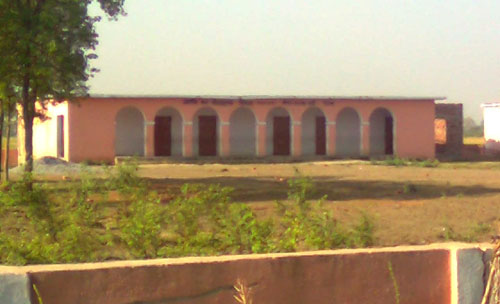
In many of the rural schools such as the one in the photograph in my earlier entry, there is plenty of land to be converted into playground or to develop a good enough nursery to improve the ambiance to make the students learn better. Unfortunately, the school hardly gets a motivated school administrator or headmaster who takes initiative. In good old days, some were easily available as there were missionary educationists at heart inspired by great political leaders such as Mahatma who has social issues as his priority.

English can’t be the right medium till the student understands it as proficiently as his own mother tongues. Unfortunately, in India, many a times, the mother tongues are different than the language used as medium. In Hindi belt itself, the mother tongue is different. Students find it difficult to pick up the matter taught even in Hindi. With Bhojpuri at home and Hindi as medium of instruction, the students find it difficult to grasp the subject taught in Hindi. The school must focus to teach the language of its medium of instruction in the first five years for effective understanding of what is taught. It’s unfortunate that the students even after 10 years of schooling don’t become proficient in the language used as medium, say, Hindi or as second language, such as English. It is only because of the scarcity of good trained teacher. Only the use of technologies both at school by teachers and at home by tutors or guardians can overcome the problem. India had this problem since ages and so is its illiteracy so high. India must learn some lessons from the developed non-English speaking countries. India has wasted 60 years and has still failed in reaching at the right policy on the medium of instruction.

For the students in rural school, the English has been the toughest subject to pass the tests and the reason of shunning the schooling. Interestingly, with emphasis on English they do neither become proficient in Hindi nor in English. Still in hope of better employability in present situation, the English medium schools are mushrooming all over the country, even in rural region.
All the political parties and administrators must agree that the system of temporary or contractual teachers for cutting the cost of educating is not the answer for enhancing the accessibility of education for a larger population. It has made the mess of teaching; Let all the teachers be on regular agreed or better scale to attract the best stuff in teaching. One can’t expect good teaching from third class input of teachers. It’s not only the qualification judged by the certificates and degrees but the aptitude for teaching should be the criteria to select teachers for the rural schools. If anything it is the technology that can facilitate the accessibility of education for all. But it requires a change in the mindsets of those in education sector and setting up of the facilities. Alumni of the schools and the local donors can participate in big way to overcome the financial constraints.

It must be mandatory for the school to impart some skills before a student completes the class x or xii or before he leaves the school even midway.

In good old days, someone in the village used to donate the land and or get constructed the building. The first high school at Samahuta, a village near my own village came up because of the endeavour of one Late Dharamraj Rai. The only girls’ high school there was the work of another person named Raja Rai. The story of BHU that was the handiwork of Madan Mohan Malviya is well known. The education policy for the rural India must emphasize and encourage the role of the locals without which education will not reach to every child of every household.

The school premises must become a place of pride for the community and must come up as a place of worship that provides knowledge as well peace of mind.

Even after the passage of the Right of Education Bill, I doubt the education to spread the way it is intended if the community doesn’t participate positively for educating its children rightly.

I wish the education at rural schools is under an independent group selected by the parents of students and out of the manipulation of the heads of panchayat system that has gone political and so extremely corrupt. People of the community that the school serves, are not bold and conscious enough to stand against the malpractices that the panchayat heads in collusion with the government officers are inflicting on schools and education.

I wish the people are alive to this major issue of building the future generation and find the effective solution to attain 100% literate, enlightened and empowered community through good education from the rural schools.

Posted in education, rural india | Leave a comment

IIT Day Again

And the day would have been one of celebration in thousands of families in India. The result of the entrance examination for IITs has appeared on the website. IIT-JEE over years has become a symbol of the excellence of education in India. It is the most sought after aspiration for the parents for their children- both male and female.

A total of 13,104 out of about 4.5 lakh candidates succeeded this year for entering 15 IITs. It has been increasing every year. The states left out till date, hanker for getting an IIT and / or IIM. I still wonder why the government went on increasing IITs started with the first IIT, Kharagpur instead of bringing these institutes in different names.

Unlike our IIT days with girls almost missing in the campus, engineering education has very much become the domain for the girl-students too.1.13 lakh girls appeared this year in the test, and 1476 are in the list of successful ones.

But more surprising for me is the news of the results for the candidates opting for Hindi in examination because of certain controversies. About 554 candidates in Hindi medium have qualified- a threefold rise over last year’s 184. Anand Kumar of Super 30 along with Nitish Kumar was the most vocal protesters. I am sure there have now no reason to grumble. As promised, IIT authority managed it well. But will not those candidates improve their proficiency of English before it’s too late for a better career?

Legendary ‘Super 30‘ Patna, the unique and free coaching institute for underprivileged and poorest of poor has made it again with 100% success rate. I heard Anand Kumar who announced to increase the number of candidates from 30 to 60 for the next year and upgrade it to Super 60. If I am not mistaken, a similar plan was in media last year too. I wish Anand Kumar would have focused on scaling up the intake of underprivileged children that are in plenty in his own state.

Perhaps all those who talk of and demand for affirmative action must make Super 30 Model as the benchmark. I wish Anand Kumar a success in scaling up the number. If he can do that in Bihar, other states must encourage more Anand Kumars to come up and help affirmative action.

Hundreds of brilliant teachers in every state must take the clue from Anand Kumar or find better means to help the needy students.

However, I still remember the year1957, the registered letter from IIT, Kharagpur that was the gate pass for my entry into the only institute of national importance at that time, travelled from Kharagpur to Birlapur and then redirected to Pipra and my grandfather who accompanied me to Kharagpur to attend the important interview though I was late according to the letter’s date.

There was no web or even telephones for communication.

Posted in education | Tagged | Leave a comment

Troubling Tuesday

I don’t know why but somehow I am getting scared of Tuesday. I have started avoiding expecting any good things to happen on this day.

Believe it, I regularly read ‘Sundar Kand’ of Tulsidas Ramcharitmanas on this day and Saturday to please God Hanuman who eliminates all obstacles.

Alok, my cousin had volunteered to get all the remaining household items out of AJIRA, my abode till recently in Salt Lake City. He was reaching Kolkata from Pipra to help me in closing a deal. I kept on following him. But at the last moment the officers of my tenant refused to oblige me in handing over the possession of my premises to Alok whom I had deputed for the task. They kept me guessing and confused till late in the day. All my persuasions didn’t help. Now it will be done on May 31, the official final day of the tenant.

And in Noida, my RO water filter has failed working since yesterday. In this month itself I had spent Rs 500 on it. I contacted both the repair men who had been doing it. They kept on affirming the visit but didn’t appear. I don’t know why they behave in this manner, when both had charged a lot of money each time they visit. I had to buy a 20-litre bottle of mineral water.

And in the afternoon on this hot summer temperature going up to 50 Celsius, the inverter also got inoperative. Shri Sunil Kumar, a Keralite entrepreneur in Noida and the manufacturer had got it repaired in this month itself. I talked to him and put my cell phone near it to make Kumar hear the type of noise it was making. His service men are not available to repair it: One has gone to Vaishno Devi and the second one is attending in a distant place from where he can’t come tonight. I will have to get fried if there is a power cut tonight.

And my Airtel telephone has gone dead. Anand couldn’t talk to me when he tried. He had to call me on cell phone. But I cut it short as it costs even for incoming call for foreign calls.

I don’t know what is in store. Alok is on way to Pipra on the truck. I am to track him. I pray he reaches home safely.

Should I be superstitious or take it in stride?

Posted in personal | Leave a comment

Education in Rural Region

While the wide media coverage of the battle between Nitish vs. Narendra was the cause of morose for many, I had some reason to keep my hope of developmental politics alive. I kept on hearing about Nitish Kumar visiting schools during his Viswas Yatra and his dialogue with the students and teachers. His blog on the positive effect of state gifted bicycles for students on improving enrolment and reduction in the figures of dropouts kept me and perhaps many pretty excited.

Deepak and Prakash visited me on their return journey after a ten-day off in Pipra, their village home and stayed with us for a night with their mother. Both are pursuing master course in engineering, the elder in BITS, Pilani and the younger in IIIT, Bhuwaneswar.

I wish to do something to improve the quality of education in the village school and have a plan to set up a library cum creativity centre in the school. I am ready to bear all the expenditures of books and implements. I had discussed the same with some coming out of the village who are employed. And then, I talked about the same project with my uncle. He had been library enthusiast in his early days. I was surprised when he in plain language discouraged me to do anything of the sort. As per him, it is not of any use rather it will be a waste of money.

Deepak and Prakash, his grandsons also brought his message.

The village school runs classes up to class VIII and may add up to class X by next year. I considered it as a major achievement for the village. But I find few things that must be taken care of.

School: The school consists of just few rooms. There is a boundary wall but no gate that can be locked. It has no security guard for protecting the school in the night or when it’s not running. The condition is same for all the schools that I know all around my village. Many don’t have even boundary wall. I don’t know why the Panchayat or the government can’t engage and employ a full time guard and a residence for him in one corner in the premises. He could be engaged in multiple roles for different essential work in the school such as housekeeping and cleaning too.

Without the necessary arrangement against the burglary, one can’t even dream of a modern good school with many essential equipment and teaching aids such as audio and video system, computers and internet facilities and other facilities in its laboratories. The government must think on this aspect as an essential requirement if it has intention to make the school taking the advantages of the contemporary technologies.

Teachers: Most of the teachers are very lowly paid as ‘Shiksha Mitra’ and are hardly devoted to their work of teaching. Many are not even qualified and skilled enough to do that. I don’t know why the government resorted to such a system to save the cost of education. It has just created a band of discontented teachers in a government set up that is already not ready to be accountable for the performance.

Community: I don’t know how the present system of education can impart and ensure quality learning to the students and who will do that, if the community is not ready to take any interest and leaves everything to the so called government to do. Every school requires a mentor to see that it functions effectively. A good mentor can only build a good school. I wish the community being served by the school does find one.

I don’t know if the schools in the other states are significantly different.

If I go by what I hear from my uncle who had been instrumental in bringing many developments to the village and others who have served in responsible positions such as senior teachers and headmasters of high schools, I get worried and lose hope.
The finance is not a problem in providing and spreading the education to all today. It is the atmosphere of brotherhood and fellowship that is getting scarce.

I wish Nitish Kumar and other leaders, through the mass contact such as Vishwas Yatra, discuss this subject too. Perhaps, for the first time a Chief Minister is visiting schools and that too, the rural ones on such a scale to find out firsthand the conditions and shortcomings of the schooling in the state. It’s a great gesture and it is bound to encourage the students as well as their parents for focusing on education to bring in better days in their households. Let it not be only for votes. Let it build a society with better fellowship in the communities and make it responsible and accountable for the government projects taken up to benefit them.

I wish him also to appeal the students and teachers to switch over to the modern education system with English, computer, and skill as the main focus to compete with other developed states.

I wish Nitish appeals to the villagers to nurture and build the village-school as a place of pride for the village, with a library and creativity centre, a play ground for all the village youth and a meeting place for all to further their knowledge through schemes such as adult education.

Posted in education, rural india | Leave a comment

Ratan Tata – A CEO with Difference

First I thought of calling Ratan Tata a business leader, but then decided for CEO. Many of my era doubted Ratan Tata to be the right man to succeed a stalwart like JRD Tata. But today I consider him as pre-Duryodhana Bhishma of Tata Empire. Ratan Tata, the head of Tata Group is also the chairman of Indian Hotels owning the Taj Mahal Hotel Mumbai, one of the targets of the terrorists of 26/11.

One of the entries in my friend, OP Khanna’s regular mails was on the gestures of Tata after 26/11 and I thought it to share with my readers. Here is the listing of what Ratan and his men did:

All category of employees including those who had completed even 1 day as casuals were treated on duty during the time the hotel was closed.

Relief and assistance was provided not only to all those who were injured and killed but extended to all those who died at and around the railway station including the “Pav- Bha ji” vendor and the pan shop owners.

During the time the hotel was closed, the salaries were sent by money order.

A psychiatric cell was established in collaboration with Tata Institute of Social Sciences to counsel those who needed such help.

Employee outreach centers were opened where all help, food, water, sanitation, first aid and counseling was provided. 1600 employees were covered by this facility.

Every employee was assigned to one mentor and it was that person’s responsibility to act as a “single window” clearance for any help that the person required.

Ratan Tata personally visited the families of all the 80 employees who in some manner – either through injury or getting killed – were affected.

The dependents of the employees were flown from outside Mumbai to Mumbai and taken care off in terms of ensuring mental assurance and peace. They were all accommodated in Hotel President for 3 weeks.

Ratan Tata himself asked the families and dependents – as to what they wanted him to do.

In a record time of 20 days, a new trust was created by the Tatas for the purpose of relief of employees.

Even other people, the railway employees, the police staff, the pedestrians who had nothing to do with Tatas were covered by compensation. Each one of them received subsistence allowance of Rs. 10K per month for 6 months.

A 4 year old granddaughter of a vendor got 4 bullets in her and only one was removed in the Government hospital. She was taken to Bombay hospital and several lakhs were spent by the Tatas on her to fully recover her.

New hand carts were provided to several vendors who lost their carts.

Tata will take took responsibility of education of 46 children of the victims of the terror.

Senior managers including Ratan Tata were visiting funeral to funeral over the 3 days that were most horrible.

The settlement for every deceased member ranged from Rs. 36 to 85 lakhs [One lakh rupees are about approx 2200 US $] in addition to the following benefits:

a. Full last salary for life for the family and dependents;
b. Complete responsibility of education of children and dependents – anywhere in the world.
c. Full Medical facility for the whole family and dependents for rest of their life.
d. All loans and advances were waived off – irrespective of the amount.
e. Counselor for life for each person

It has to do with the DNA of the organization, with the way Tata culture exists and above all with the situation that prevailed that time. The organization has always been telling that customers and guests are #1 priority

The hotel business was started by Jamshedji Tata when he was insulted in one of the British hotels and not allowed to stay there. He created several institutions which later became icons of progress, culture and modernity. IISc is one such institute. He was told by the rulers that time that he can acquire land for IISc to the extent he could fence the same. He could afford fencing only 400 acres.

When the HR function hesitatingly made a very rich proposal to Ratan – he said – do you think we are doing enough?

The whole approach was that the organization would spend several hundred crore in re-building the property – why not spend equally on the employees who gave their life.

Should not Ratan be considered as the best face of Indian management?

Posted in industry, management | Leave a comment

Food Grains Shortage: A Myth or Mismanagement

India’s fourth good harvest in a row has swelled wheat stocks to 31 million tonnes, almost eight times its target of 4 million, forcing authorities to pile up nearly 7 million tonnes of grain under tarpaulin in the grainbowl states of Punjab and Haryana.

Stocks of rice, too, at 26 million tonnes, are more than double the target of 12.2 million and set to soar as forecasts of normal monsoon rainfall from June will help the crop bounce back from a 14% fall after last year’s drought.

Should the report above excite us?

The country’s inflation rate is still in double digits. Almost all state government find itself helpless in stopping the hunger deaths of the people of the BPL category and destitute. The centre takes a course of shifting the responsibility to the state governments.

Are not the food shortages in the country only its mismanagement? Why can’t the basic priciples of inventory management such as FIFO be applied?

Let the government or FCI announce a policy to outsource the task of storage to the private enterprises. There will be hundreds and thousands of takers of the business.

While the grains in millions of tones are kept in open to get spoiled, a large number of abandoned warehouses and factory sheds and other buildings in almost every part of the country remain unutilized. The right hand doesn’t know what is there in left hand.

Why should not the scientists and entrepreneurs innovate and manufacture better bags that can keep the grains in it safe and protected from rain?

Is it not criminal to waste and spoil grains when millions of hungry people are going to sleep without food?

Should not the UPA-II government reviewing its performance of the first year in power in its second inning consider the situation as one of its biggest failure?

Posted in agriculture, governance | Leave a comment