IIT, Bihar and Japan

Should someone who keeps Bihar near to his heart not feel bad about Japan’s preference of Andhra Pradesh over Bihar for helping in setting up its IIT? Perhaps, normally I wouldn’t have been shocked to see the news while surfing in early hours of Thursday. “Japan, which was slated to collaborate with the new Indian Institute of Technology (IIT) to come up in Bihar, is now not keen on doing so. Instead, the Japanese are putting their pie on the IIT that is to be set up in Andhra Pradesh.”

It was sometime in 2007 that the media reported Japan’s interest in setting up Bihar’s IIT. I don’t know why Japan showed interest in working in Bihar at that time. Did it expect some miraculous change in law and order situation with the coming in of Nitish’s government that has not materialized?

I myself doubt the seriousness of the interest of Indian delegation in pleading the case of Bihar. It would have pleaded the case of balanced development of the different regions of the country to Japan. With my experiences of dealing with Japanese from different automakers, I know they need to be really convinced to get into any business. That was the reason that its first attempt to come in India’s auto sector in big way failed. Only Suzuki could establish itself strongly in India.

Why should India allow Japan to discriminate between the states for IIT? But I do agree that accessibility of Hyderabad is far better, more so with new International airport. With many industries all around, Hyderabad is certainly a better choice today. But was that the consideration when Late Dr. BC Roy could get the first IIT located at Kharagpur. What were the means to access Kharagpur but railways or very poor roads? Moreover, it for the government at the center that can materially change the accessibility. Patna or Boddha Gaya can easily be changed into an International hub for air traffic linking the whole of East Asia that is Buddhist.

The bogey of law and order is a creation of Indians more than the Japanese. Unfortunately, it is the Indian bureaucracy and the in-flight of the political leaders from Bihar in New Delhi that are damaging the case for the development of Bihar.

The media report has mentioned the name of Sanjeev Sinha, director (new business group), UBS Investment Bank, as the mediator between the Indian and Japanese governments. As I understand he is an IIT alumnus. I wish he explained the role played by the delegation to convince Japanese about the case of Bihar in detail. It should not be just a one-sentence statement rejecting the case of Bihar. If law and order is the reason, nothing should come up in Noida and Gurgaon.

The news is shocking and derogatory too. I wish the chief minister and the people of Bihar take a note of it and see how hard they are to work to wash off the poor perception about Bihar in India as well as abroad.

Posted in education | Leave a comment

Watch ‘Chitrahaar’, Learn Language

It is an interesting discovery, particularly for India where literacy is low and craze for film songs is high. One can speed up learning of a language using a subtitle in the language for the film songs in popular TV programme. Gurcharan Das in his column in last Sunday Times of India provides the story.

Girirajsingh Natubha studied up to Class 2 in Jamnagar. All his life he struggled to read simple words. A few years ago, however, he found to his surprise that he had begun to read. It happened quite amazingly after he began watching Chitrageet, a Gujarati television programme of film songs, which had subtitles at the bottom of the screen. Since he knew many of the songs, he could anticipate the next word. When it appeared he would read it unconsciously and sing along, karaoke style. Soon he found he was able to recognize words in the bazaar and before long he was reading headlines in the newspaper.

It is finding of Dr Brij Kothari, a social entrepreneur and an IIM Ahmedabad professor. ‘Same Language Subtitling’ is a simple but powerful idea, which is proven to improve literacy among adults and children. When lyrics are subtitled on film songs, and words appear in sync with the actor’s voice, the viewer makes a sub-conscious link of the spoken to the written word. Literacy, thus, takes a sudden leap for early and struggling readers.

It was while researching medicinal herbs of the Andean communities in Ecuador and watching Spanish films subtitled in English, that Dr. Brij Kothari had his `eureka moment’. “I think I told some friends who were watching with me, `Why don’t they simply subtitle these Spanish films in Spanish? And if they just did this on film songs in India, India would become literate!'” says Brij. That was in 1996, and since then Brij has been working at it, developing his simple idea into a literacy campaign. Same Language Subtitling (SLS) is a fun reading practice that not only helps early-literates and school dropouts, but also, according to Brij, “doubles and even triples the rate of reading improvement that children may be achieving through formal education”. SLS was tested at villages and railway stations before it was beamed nationwide through the popular programme, Chitrahaar.

Dr. Brij is perhaps the second professor of IIM, Ahmedabad, after Anil K. Gupta, Grassroots Innovation fame, whom I know doing something for commoner. Idea may be simple but if it provides answer to the poor literacy, why should it be not adopted whole-heartedly?

There are many ways to self-learning. The story started with Eklavaya is never ending. The other day, TV channels flashed the story of the Dalit boy who kept himself locked in a room with few videos of English movies and came out speaking typically perfect American English with all its slangs and nuances. Cartoon channels also are helping in making small kids learn English language faster. However, the dubbed ones will be useless for the purpose. Animated videos based on the curiculla can go miles in making teaching interesting. However, the schools need the equipment, and perhaps power sources that with rural electrification moving fast will be soon available.

But what about the change in the mindsets of teachers and parents! Will they consider listening to ‘Chitrahaar’ a good way to learn language?

Posted in economy | Leave a comment

Farmers Always at Loss

Be it Shining India of NDA or the Rs 60,000 crore loan waiver credited to Sonia, marginal farmers, and more so, the landless labouring people in rural India remain deprived and helpless, and so angry too. Those claiming to govern are not able to do something that can make their life a little better and without the worry to go hungry to bed.

Ashok was narrating of a change in village cultivation this year. Almost all the farmers have grown mustard on a portion of their land among the Rabi crops. Perhaps, it was to have cooking oil for their use and then sell the excess amount. Mustard certainly fetches a better price than one by wheat or other Rabi crops. But then as the inflation increased to 7%, one of the first steps that the government took in panic was to reduce the custom duty on imported cooking oil to zero. The prices of cooking oil might go down by Rs 3-4 a litre and create an impression of decreasing prices that the government wants at large. But the price of mustard seeds crashed down drastically up to Rs 6-10 per kg spoiling the dreams of the farmers abruptly. The same happened to soybean too. No one in the government can appreciate the agonies of the farmers. Will the farmers continue with mustard seeds and soybeans next season?

Every time farmers and horticulturists are ready to sell, the traders play the same trick- be it sugarcanes, vegetables, or seasonal fruits. Hoardings and unscrupulous manipulations of the intermediaries decide the price of the farmer’s produce and provide the maximum benefits to the traders and deprivation to the farmers. Farmers are neither united enough nor economically strong enough to do something against these antifarmer communities or cartels. The government and politicians sympathize with the farmers but don’t take any punitive actions against the traders. It is because the traders’ associations collect money from its members and pass on to the politicians that the farmers can’t do in absence of any strong association.

In good old days, it used to happen with paddy and wheat too. However, that being the major crops, the prices have stabilized to a certain extent.

With untimely rain, the traders raise the retail prices blaming it to the loss of crop by the farmers. But hardly any profit of the enhanced price goes to the farmers. The intermediaries and petty retailers get the maximum cut of the higher prices that a consumer is made to pay under many pretexts.

Organized retail companies were to cut down the intermediaries, and directly procure from the farmers. But the strong unity of the petty retail traders and intermediaries with their political clouts are trying to see that it does not happen. Unfortunately, the governments are with traders and intermediaries.

It is for the country and its leadership to decide how can it make the farmers happy. Should it by paying the best price to the farmers for what they produce? Or should it be by assisting the mill owners as in case of sugar or textile sectors in creating a situation whereby they don’t pay even the agreed price? Should the government and politicians be happy or if so at all, for how long by declaring huge loan waivers to project their pro-farmers image and get votes instead of changing the damaging system?

As a management student, we learnt that the leading OEMs (original equipment manufacturers) in manufacturing sector such as Tata Motors or BHEL assist their vendors in every possible ways to produce the desired quality parts going in OE at the least cost; the organized retail sector must work with the same working philosophy with the farmers and all other accessories manufacturers, pay the best price so that it can sell to its consumers at the lowest price. The prosperity to the farmers will be the prosperity for the organized retail sector too. ITC claims to do that for all its procurements for its food products through e- Choupal. HUL has announced its plan to procure the raw vegetables directly from the farmers for its Kissan and Knorr brand products.

It is unfortunate that the country takes pride in being called the second largest exporter of cotton. Our textile sector has not grown fast enough to add value, to create employment, and to export the finished textiles or ready garments to get the maximum margin as the other countries including Pakistan are doing. And the economists and politicians are calling it a free economy. And the worst to suffer are farmers who grow cotton. Is it because of the government negligence or lack of encouragement to the textile industry?

Posted in agriculture | Leave a comment

To Bihar’s Credit

Many a times, I get confused. What would have been the right course or the benchmarks for Bihar? What model it must follow? Should Bihar go for one followed by Naidu’s Andhra Pradesh?

And then I find the highest incidence of farm indebtedness is in that Andhra Pradesh, the fifth biggest producer of food grains in the country. And I get delighted that the incidence of farm indebtedness is much less found in poverty-stricken Bihar. Bihar’s farmers live and work within their means. I am sure the number of suicides and deaths due to starvation too must be least in Bihar.

And I am told of the huge number of engineering colleges that AP built. I get morose and start envying AP again but the next moment I read a report of a great beginning on education front at the grass-root levels in Bihar. I feel elated.

“In an overdrive, Bihar has recruited 2,00,000 teachers, 50 per cent of them women, and built 65,000 classrooms in less than two years. The state is also setting up more model schools to impart vocational training in the secondary schools. In fact, there are around 35 model schools/basic schools in West Champaran district alone that seek to impart skills like tailoring and computer-aided learning along with the school curriculum. What is really significant is that Bihar has taken the lead in providing vocational skills in the secondary school level. Pratham has started teaching applied arithmetic and computer application to former child labourers now going to local schools.”

“From 21.5 lakh students out of school in Bihar, the number has declined to less than 9.5 lakh. One big reason for Bihar’s success is the government seeking the help of organizations like the Idar-e-Shariat, Muslim Pasmanda Mahaj and Din-i-Talim to provide bridge courses to Muslim girls, who accounted for 60 per cent of the 14-16 year age group that is not in school.” The state is taking all assistance from Pratham and UNICEF, and is not depending on the inspector raj of its education department.

I do also feel great when I hear about the Bihar’s revolutionary step in bringing in the maximum number of women in democratic system. For record at least, India has more elected women representatives than all other countries put together and Bihar is in the forefront. According to the Ministry of Panchayati , “No less than 10 lakh women are in our panchayati raj (local self-government) institutions, comprising 37 per cent of all those elected and rising to as high as 54 per cent in Bihar, which has 50 per cent reservation for women.” Women’s empowerment is getting a new resonance in an underdeveloped Bihar district. Kishanganj, which didn’t have a district hospital till a few years back, is witnessing a revolution with an NGO teaching reproductive and sexual healthcare to teenage girls in a madarsa.

I knew the miserable conditions of the teachers and students of the unaided schools and colleges in Bihar. How much of potential human resources were getting wasted? But then Nitish comes with some unique ideas and gives a new hope to those schools and their teachers. I wish the teachers appreciate and cooperate rather than taking political advantages.

However, no one can have any excuse about the miserable conditions of some sub-castes of deprived Dalits. According to a rough estimate, there are some 20-lakh Dalit children in Bihar who are not enrolled in schools despite the SSA scheme. I really get totally drained off. But I find again something that makes me hopeful after finding a statement right from Krishna Kumar, officer on special duty at the Raj Bhavan, Patna: “About 1,000 children in the age group of five to seven and belonging to the Musahar community will be adopted and enrolled in government schools soon.”

But with all the stories of some glimpses of hope, I hardly find any big projects coming up in Bihar. All the proposals for setting up the factories and enterprises in Bihar seem to be non-starters.

Despite high hopes of an improved investment in Bihar under Nitish Kumar, the state did not see much improvement in 2007 compared to 2002. Per capita investment rose to Rs 3,145 from Rs 3,080. Surprisingly, Bihar had performed better in the previous five years. Per capita investment had risen from Rs 959 in 1997 to Rs 3,145 in 2002.

The government must have right people who can focus on the task of attracting investment in the state. Nitish Kumar must find some effective assistants or if necessary hire some from private sector, who can concentrate on the task of building Bihar’s sugar industry, food and fruit processing industry, or handicrafts. He can pick up some real genius from among his bureaucrats who can take the tourism in Bihar to the level of Rajasthan.

Nitish must be a little more aggressively ambitious about the development of Bihar. Nitish can certainly create modern Nalanda and Vikramshila. As Buddha is building IT strength of Calcutta, and Naidu built Hyderabad, Nitish can also build Patna, and Gaya as IT hub. The educated young men of Bihar will expect at least this much from him. Nitish can rejuvenate the glory of ancient Bihar in metal sector. Nitish must offer to the honest investors something more than what other states are offering. No one will come unless they find the state a better destination. And Nitish must make his men realize this. I wonder if Nitish has that will or wish to become a path breaker from Bihar’s political tradition of very low orders.

Unfortunately, Nitish might have established himself politically, but have not been able to bring about the changes in infrastructures and administration that can allure the investors in big way. And sometimes I wonder if he would have been satisfied himself with his achievements. For me, and may be for many, it is an opportunity lost and hopes belied.

Bihar perhaps will have to wait further for a ruthless aggressive leader who makes Bihar turnaround to get into the league of developed states.

Posted in governance | Leave a comment

IITs: Fee Enhancement for Exclusivity <

I have a reason to be happy, rather to be obliged to the Almighty. Coming from an insignificant family of farm holders in a remote Bihar’s village, my grandfather, a teacher by profession could dare to educate me in the best institutes such as Presidency College Calcutta, and IIT, Kharagpur. Perhaps, the credit should go the institutes too that had so little fees. I was going through the diaries of my grandfather. He used to send Rs 40 or Rs 50 by TMO to me in those days. My monthly expenditures (1957-1961 in IIT) were hardly Rs 100 or perhaps less. But that was a lot of money for him and the diaries mention of extreme difficulties to arrange it. I was really lucky to have my grandfather who looked after my every need in those days. He used to come to pick me from Kharagpur before vacations and to see me off to the nearest railway station, Uluberia while going to Kharagpur even at that age. He was working at Birlapur near Calcutta in those days.

I am happier today to see my three sons also graduating from engineering colleges. Rakesh went to IIT, Khargpur; Rajesh to BIT, Mesra; and Anand to NIT, Kurukshetra. I wonder how I managed it, as for some time at least two of them used to be in colleges. Perhaps, it was also because the institutes demanded very little money as fees. While Rakesh spent about Rs 500-600 per month, Rajesh managed in Rs 1000-1200, and Anand took Rs 1500 or so.

I got a shock of my life to read today the proposed increase of the fee of IITs today. The news carried some informative figure of interest too. I got emotionally inspired to make this personal entry that speak of my time.

The seven IITs charge an annual tuition fee ranging from Rs 21,000 to Rs 27,000, which is likely to go up to Rs 50,000 when the fresh 2008 batch enters these institutions. Since the inception of the IITs till about 1998, the annual fee in the IITs was Rs 500. “This fee was set by the ministry taking into account a formula – a third of the education cost must be borne by the students, another third should be earned by the IITs (through research, gifts and endowments) and the remaining must be subsidized by the government,” said P V Indiresan, a former director of IIT, Chennai. Then, in 1953, the cost of education at MIT was Rs 1,560 and it was Rs 1,420 at the Imperial College, London. The IIT fee was set at Rs 1,500 and students paid a third.

I don’t know how many of the middle-class families could afford it without resorting to bank loan that was neither available in our days nor I would have felt convenient even if it would have been possible. I wish, I were wrong in under-estimating the financial strengths of the middle class Indians at present time.

I personally feel IITs should not charge any fee from those who compete its extremely tough entrance tests because of their exceptional merits. The selected ones are certainly the cream of the country and they all deserve the waivers of the fees for their performance as award or reward of the central government, as IITs are central institutes. In a country where more than 6 lakh students join engineering courses in so many of its public and private engineering colleges, the government can certainly finance the education of its 4000 best students. And in return the nation may expect them to pay back by their ideas and means.

I am sure the directors of IITs could find better and innovative avenues for raising its resources and cutting down its wastages. One of that may be extensive involvement of the students with the paid projects in the industry. Alumni and industry can also come forward to create fund for the institutes as it happens in US.

With the IITs coming up in every state and perhaps very soon to every district quarter, as such the government is going to pull down its brand image. Are IITs trying to retain it by making it exclusive for elitists?

PS: TOI has expressed its view and a counterview has also appeared today on the issue of the exorbitant fee rise proposed by IITs.

Posted in education | Leave a comment

Are Indians Really That Poor?

Time and again, the politicians and columnists are emphatically quoting the report of an economist saying 77% of our population, 836 million, lives under less than Rs 20 a day. I feel some thing is messy somewhere.

Yamuna pays Rs 1500 per month for a maid who cleans our utensils and cooks two meals at around noon and leaves. She hardly works for four hours a day. And she works also in two more households. Thus a simple uneducated unskilled woman can earn about Rs 3000 or more per month. Moreover, the lady has other members of the family also are engaged in some or the other occupation. Husband pulls riksha. Daughters also work in households. Overall the family does earn much more than what economists have estimated. Every few months, a situation comes when we get forced to part with the maid rather the maid leaves us. And thereon we do employ another one on the same and more salaries.

Hari washes our clothes and irons it. There are many like him in Noida in every block, in every sector. Perhaps with washing machines becoming popular, Hari found his earning threatened. He started cleaning the cars in the morning. He does also take up some odd jobs such as cleaning of water tanks and gets a good remuneration for it. His earning per month is much more than what economists estimate. And we are to keep Hari in good humour; otherwise it will be difficult to find another replacement.

Ashok visited us recently. He brought some home-prepared sweets from my aunty in village. We were discussing the situation of labour force in villages. According to him and my brother-in-law from another village, a full time person is given an acre of land per year plus the morning snack and daily rates in form of grains, about 3 kgs. It adds upto Rs 40,000 per year. It is certainly much more than the economists estimate. And it is difficult to find a man to work even in village. The young men from the families have gone out of village to work in fields or workshops in other states. They still are loyal to their family at home. They regularly send money. It has brought another social change. The ladies of the house do no work any more in the houses of those in village, who were engaging them earlier and need them even now. Those left in villages idle away their time instead of doing something to add to the household earning.

I do certainly not mean that the people whom the economists mention as poor are not poor. But I insist that all those who are poor must be empowered and encouraged to increase their earnings by working extra hours, to get educated formally or informally, to get engaged in new professions that is the order of the day. With tractors taking over bullock-pulled ploughs, the men becoming redundant must be trained to become a driver or mason, or electrician. And every village must have the training facilities so that the new generations can join workforce more confidently. Will the leftists demand retaining of the ploughs and bullocks or change? Introduction of the tractors and harvesters in rural India has saved billion worth of grains that used to be wasted in the traditional time-taking processes of harvesting.

As I understand, the plan panel is set to redefine ‘poor’ of the country. As another vote catching formula, all SCs and STs may be listed in BPL (Below Poverty Line). Will it solve the problem?

Unfortunately, the rural India is hardly known to the economists who plan for its future and allocate funds under different heads. Will the bureaucrats or for that matter any one who deals with the rural assignment spend few days, particularly the nights in the villages of the different regions? I am sure that will help them in doing their jobs better with more affectivity and ultimate gains for the beneficiaries.

Posted in economy | Leave a comment

India’s Demographic Dividend

The government has been trying to upgrade the skill building institutes of the country since its 2004 budget. And in Budget 2008, one more establishment has been announced. This time it plans to set up a non-profit skill development corporation in private-public sector to harness India’s demographic dividend. The corporation will map areas where there are skill gaps, set industry standards for vocational training in association with the UK-based City & Guilds, and work like a regulatory body with industry looking after delivery. The aim is to design an accredited certification for industry-endorsed training, and continuously evaluate trainers. It is a great mission, if it comes up.

Around 10-15,000 good trainers will be required to carry out the task. What will be the source of these trainers? One solution lies in redeploying willing and able retired personnel, including from the defence sector. Another way out may be to motivate and involve the persons in industry who can take up part time job of training. Latest technology can also come to aid and ease the role of the trainers as facilitators whereby they can impart training to more number of people.

As per one estimate, Industry will need some 120-130 million people till 2015. While 4-5% are to be highly qualified specialists (PG, PH.D) in various areas for the top positions, some 20-23% are to be graduates in engineering, medicines, accountancy, and other professions. Some 30-32% requirements will be for vocationally trained people (with full schooling). 40-45% may be the requirement of unskilled persons with no formal education or who may be school dropouts for working as helpers, guards, construction workers, etc. The better quality of education at all levels of the pyramids will be the interest of the people as well as the country. With globalization, India can cash on its demographic advantage to man the scarcity of skilled manpower all over the world and in turn that can push the families of those skilled ones to a higher standard of living.

As estimated, every year, around 13 million young people enter the job market. However, about 2.5 million only get enrolled for some sort of formal training. Even then, most don’t get remunerative jobs, because of the poor quality of education and skill imparted by the education system.

Many in the industry have been having its own training facilities to man its requirements. Some of them are excellent. As reported, corporate India directly trains about 40,000 people annually via various short-duration vocational courses. It can certainly further expand it. Additionally, a government certification can impart more credibility and be a supply source for others with no such facility. A working experience in an industry for a year or two must be made compulsory, as in some countries, before one embark on further studies. ISB, Hyderabad has such restriction. I just can’t think of an MBA education for a student who doesn’t know what an enterprise is.

As per an estimate, the Centre invests around Rs 20,000 crore annually in various skill development, vocational training and entrepreneurship programmes under the various ministries. I personally think all the skill building initiatives must come under one ministry, The existing PPPs forged by CII and several industries to upgrade facilities at the over 1,800 industrial training institutes (ITIs) in the country are steps in right direction. Around 300 companies have come forward to take up the World Bank offer of Rs 2.5 crore funding for upgrading each of 1,396 ITIs to provide specialized training. Currently, the ITIs train about 7,20,000 children and other vocational institutes train one million people.

But with 300 million people expected to enter the job market in the next 19 years, India must improve on the available facilities quantitatively, but more importantly qualitatively to bridge the gap between the quality of training and the job market requirements. Every state must establish sufficient number of institutes and trade schools even in rural India. Private sector must develop a model where some of the existing facilities of the schools there be used to train the manpower required. All the school dropouts must get a training of at least one trade skill that can earn him an honest living.

Industry can extend its hands to help the people of the country. It will be in line with its new thrust for CSR as well as inclusive growth of the society in which it works. In last decade, the private sector has entered the industry of creating public schools, engineering colleges and business schools in big way. As it seems, education has become a great business. It is unfortunate that there is practically no significant investment in industrial training and skill building facilities. Perhaps it is not paying enough a business.

Posted in Uncategorized | Leave a comment

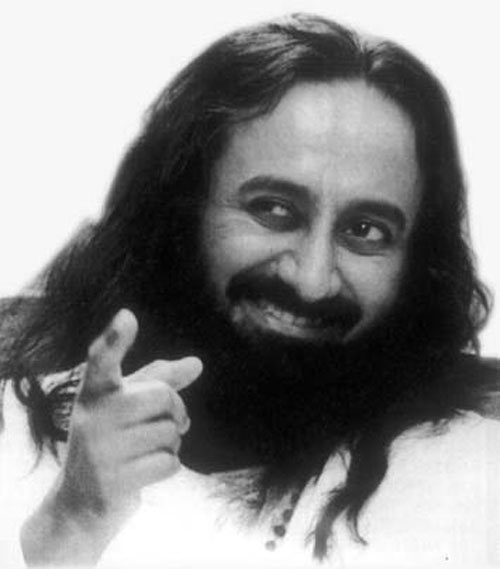
An Indian Guru- Expectation Belied

It happened last Tuesday. I had seen the welcome banners for Sri Sri Ravi Shankar as I entered Sector 40 enroute the park where I take my morning walk. I could understand that he must be attending some function of his followers of ‘The Art of Living’ group. But I couldn’t know the place and time. Many a times, some of my friends and his followers wanted us to join the course, but because of my lethargy, we could go for that. I had also read about him in newspaper and seen him on TV. To me Guru Ravi Shankar appeared to be a good modern spiritual thinker. Perhaps, I found him pretty liberal and secular in approach. His disciples are from middle class and even rich ones. One of my friends once narrated to me how he brought a change in the life style of the colorful Vijay Mallaya. Perhaps my friend must have read about the story somewhere. With so much input, I was already pretty inquisitive about him. In heart of heart, I wished to see him, but I didn’t as usual made any endeavour for that. Yamuna had planned for a movie in afternoon, and I had heard her instructing maids accordingly. We were to pick up Aroras at around 4.30PM from his residence.

At around 1.45 PM, Yamuna got a call from Sangita Jha. As her husband, Mithilesh Jha was busy with some meeting she wanted to accompany us to the function for Sri Sri Ravi Shankar, presuming that the Mrs Sahay had invited us too for that. Mrs Sahay is a member of a kitty party in which both Yamuna as well as Sangita are the members. Yamuna is always ready for such a function. She agreed without asking me instantaneously, as the function was fro an hour starting from 3 PM. I was very happy, as my wish got fulfilled. I thought it something as a divine dictate. When I informed Arora, he also wanted to accompany us. But after few minutes he informed that he would not.

We reached the residence of Mrs. Sahay around 3 PM. A huge crowd was already waiting and singing in the living room. Many were on road itself to get a glimpse or perhaps they were not the invitees but wished to see the Guru. I managed to sit on floor though with a lot of inconvenience with men and women all around. Yamuna could get a chair in one corner. The disciples were continuously singing religious songs with many young and old women dancing too that have become a usual practice these days. Every one in crowd appeared to participating and eagerly waiting for the Guru. In between, I got restless sometimes, because of the physical torture of the postures I had to follow in sitting. But I could manage and continued. The Guru arrived. I could see him from a near quarter. The people were busy in touching his feet and giving their offerings- garlands, flowers, envelopes and packets. I was only busy in looking at his face. I expected some sort of halo on his face, some godliness in gestures and blessings, and some unusual brightness that we as less human don’t have. He appeared to be very tired and drained off. His dark complexion seemed gone darker. He happened to be so much unimpressive that his photos don’t say. Perhaps, he is more photogenic than what he really is. Only very few perhaps the host family or the close disciples could reach him. And for so many of the followers there he didn’t utter even a word. I was morose as I could hear his voice.

I wish he would have at least spoken a little, or, may be, blessed the people in general who had collected there, in few sentences. I still wonder why he didn’t do that. And my disenchantment with the guru system got further accentuated and this time a little more bitterly.

Perhaps, Guru wanted us to go to its website to hear his voice.

And finally, we returned, I consulted Yamuna and went staright for ‘Race’.

Posted in Uncategorized | Leave a comment

Agriculture Sector- Some Critical Issues-1

Over the years, the agriculture sector contribution in GDP has reduced to only 18.6 per cent. However, as reported, Agriculture employs 60 per cent of the workforce. The number may be debatable and doubted. However, many of issues reflected in data require actions without political sloganeering.

Over 114 million of India’s 127 million farmers operate small farms. Frankly, they are farmers by default with almost no serious education of agricultural science and techniques. Strangely, agriculture is the only sector that is manned mostly by the workforce with almost no formal education about farming. It is all inherited, if at all. The farmers have hardly the desired skills in agriculture to enable them to look at farming scientifically and commercially. They hardly know when and how to move away from the production of low value cereals and pulses to other high value agri-products to make a better living for the family. The 59th NSSO survey states that the farmer is mostly dependent on informal and often unreliable sources of information: “Only 18 per cent of the farmers across the country were aware of things like bio-fertilizers. Only 29 per cent knew about the minimum support price.”


Why can’t the imparting of knowledge regarding farming in simplest possible language be made compulsory in curricula in rural schools along with training in at least one useful skill?

Vernacular newspapers, magazines, radio and TV channels that reach rural must get at least somewhat farmers-oriented.

The universities and colleges of the states teaching agricultural related subjects in higher education must establish extension centres in villages or set up call centers that can answer the queries of the farmers in their language and if necessary visit them to demonstrate. The students and faculty must get them involve with actual problems of the farmers as much as possible to make their knowledge useful.


India has all that could make India’s agriculture a great contributor to its economic strength, may be better than other countries:

· India has the world’s second largest area of arable land of 161 million hectares, more than China and only marginally smaller than that of the United States (176 million hectares).
· India has the highest area of irrigated land (55.8 million hectares, compared the China’s 54.5 million and the US’s 22.4 million hectares).
· India is also one of the world’s largest users of artificial fertilisers (11 per cent of world usage, up from 5 per cent in 1980).
· Use of tractors in India is higher than China or Australia. And it has an innovative tractor and agricultural equipment and implement manufacturing industry.

However, India’s agricultural productivity remains lower than that of China, the US and many other countries.

· For almost all crops, Indian yields are lower compared to other major growing countries.
· India’s wheat yield per acre in 2003-05 was 2,688, compared to 6,499 for the top five countries with the highest yields after excluding China.
· India has the largest cultivated area under pulses in the world, but production has decreased from 14.26 million tonnes in 1990-91 to 13.38 million tonnes in 2004-05. India would need to import an estimated three-five million tonnes in the next five years to meet domestic demand.
·
According to the 11th Five Year Plan targets, by 2012, food grain production should reach 337 million tonnes from 208 million in 2005-06. It means a greater than 200 per cent increase, in some cases, of production of the principal crops, with no increase in net cultivable area. Pulses production would need to more than double, to 30 million tonnes. Oilseed production is envisaged as increasing from 16 million to 58 million tonnes.

It can happen only with some extraordinary innovations from the scientists in the field to improve productivity. New plant varieties with higher yields would be the answer that can happen only through better research and technology. After all, China increased rice production from 160 to 180 million tonnes in just three years from 2003 to 2005, through intensive reforms in agricultural research. As per the China Agricultural Yearbook 2005, 2,046 new plant varieties were submitted for registration. Seed quality is tested using molecular DNA technologies.

India’s performance in this area has been miserable in comparison with China. Indian farmers still predominantly use rice varieties developed 20 years ago. India’s rate of growth of rice production is the lowest in Asia, lower than even Pakistan, Myanmar and Sri Lanka. In 1997, the Indian Council for Agricultural Research (Icar) developed 72 new varieties of field crops that reduced to 35 by 2001.

It is unfortunate, but perhaps the scientists are neither motivated nor capable enough to take up the task before them. And that requires actions to make a breakthrough for the India’s farming bottlenecks.

Posted in Uncategorized | Leave a comment

Speech Recognition- Technology Brings Together

Anand has helped us in getting the web cam and the necessary software installed in my laptop. Today perhaps we are connected in best possible manner. Every week more than once we can talk and see each other on real time basis with help of the web camera. With Skype, the picture quality is better than what we used get through Yahoo. Perhaps with a better speed of broadband Internet, it will further improve.

Shannon and Yamuna have the language as the hurdle to communicate all that they wish to share with each other as mother (-in-law) and daughter. Both Shannon as Yamuna have attempted to learn the language of each other, but couldn’t take it to the point of success. It is really difficult task. One can learn it easily in childhood, but it is very difficult at advanced stage of life with no great fear of certain loss or incentive great enough to put in the right effort of endeavour. Few days ago NDTV Imagine announced a new serial ‘Angrezi mein kahate hain’ to teach English. It started on March 24. We missed the first session, but Yamuna remain awake to watch it at 11PM on that night. It is a nice programme, if followed religiously with self -practicing session. However, she has failed to continue doing that.

However, perhaps very soon technology will find the answer. I was going through the latest issue of ‘India Today’ and came across what Sunil Mittal informed the audience at the ‘India Today conclave 2008’ on technological breakthroughs for better connectivity through voice recognition.

“Speech recognition is becoming very good. Today, the American troops in Iraq are constantly conversing with their local Iraqi counterparts. Online real time, he speaks in Iraqi, he speaks back in English, this is happening now. Give it two to three years, a Chinese will converse with anybody in India and he will blabber in Hindi, you will get a response from him back in Hindi although he will be speaking in Chinese.”


A lot of work is going on voice recognition that will make the life of the business executive from all corners of world easy and efficient. I still remember the arduous irritating translating sessions when dealing with Japanese. I am sure, if once the ‘voice recognition’ software is available commercially; we shall have it loaded at both ends. Shannon then will be able too conveniently converse with Yamuna. She could get the tips on cooking and other religious rituals. However, perhaps it will still be difficult for Shannon to appreciate the dialects such as those in Bhojpuri songs and sayings that Yamuna is best at.

Perhaps it will be this technology of voice recognition that will integrate the world. One can with any one with one to one basis with no translator required.

Posted in Tecchnology | Leave a comment