“Euro-English”- One Day Some Hinglish

My friend OP Khanna keeps me on his regular mailing. OP was one who in early seventies went to Germany on an Indo-German scholarship. We were working in HM those days after IIT and had a lot of dreams. He was a better dreamer than me. He proved it in life too. His love of Germany remains. I liked his note on “Euro-English” and I hope all of you will also like it:

The European Commission has just announced an agreement whereby English will be the official language of the European Union rather than German, which was the other possibility.

As part of the negotiations, the British Government conceded that English spelling had some room for improvement and has accepted a 5- year phase-in plan that would become known as “Euro-English”.

In the first year, “s” will replace the soft “c”. Sertainly, this will make the sivil servants jump with joy. The hard “c” will be dropped in favour of “k”. This should klear up konfusion, and keyboards kan have one less letter. There will be growing publik enthusiasm in the sekond year when the troublesome “ph” will be replaced with “f”. This will make words like fotograf 20% shorter.

In the 3rd year, publik akseptanse of the new spelling kan be expekted to reach the stage where! more komplikated changes are possible.

Governments will enkourage the removal of double letters which have always ben a deterent to akurate speling.

Also, al wil agre that the horibl mes of the silent “e” in the languag is disgrasful and it should go away.

By the 4th yer people wil be reseptiv to steps such as
replasing “th” with “z” and “w” with “v”.

During ze fifz yer, ze unesesary “o” kan be dropd from vords kontaining “ou” and after ziz fifz yer, ve vil hav a reil sensi bl riten styl.

Zer vil be no mor trubl or difikultis and evrivun vil find it ezi tu understand ech oza. Ze drem of a united urop vil finali kum tru.

Und efter ze fifz yer, ve vil al be speking German like zey vunted in ze forst plas.

If zis mad you smil, pleas pas on to oza pepl

Posted in Uncategorized | Leave a comment

And Nightmare At Home Over

Boys gave the finishing touches and completed the painting work. The dirty work went on for over a month from rakshabandhan to this day when Yamuna is fasting for Jiyutiya. It was troubled time for us. We hardly went out for more than an hour, neither could we invite any one. However, I had been allowing Yamuna to attend her kitties and also to have evenings with the neighbours who miss her.

Surprisingly, the vendor of the wall-fixed almirah also barged in at the right time bringing in the huge fabricated structure. And it was put in the place vacated by the termite-eaten one.Perhaps the change of material from wood to steel was the only answer to escape the tirade of termite for ever. I still think NOIDA Authority must make it mandatory to treat the construction site for all builders to avoid the inconveniences and loss to the households.

Perhaps this was the last major work that I have got done, if I go by the life of the paint promised by the manufacturer. Hereafter, I shalln’t be there. It will be for the inheritors to do that.

However, I plan to relax and enjoy enjoy the next few days, if I can.

Posted in Uncategorized | Leave a comment

Jimutabahan (Jiyutiya) Today- Mothers fast For Male Child

Yamuna is fasting today for long life, prosperity, and trouble free life of her sons and grandsons. Some women in some region of rural Bihar fast to get a male child too, if they don’t have one. Naturally, the modern liberal women will oppose the fast with gender-bias. But I am sure in rural India in particular they can’t bring any change.

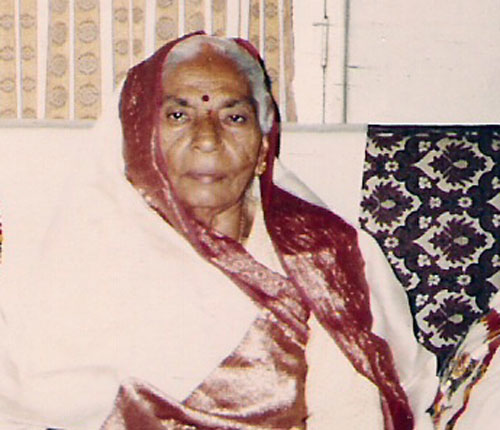
My mother (photo above) was not very religious according to traditional perception. Later on, she was having poor health too and stopped fasts that were to be observed manytimes in a year in our family. But she continued to have the rigorous fast on Jiyutiya. I was the only male child. She did all she could do to see that I get everything in life she thought is the symbol of rich and successful man. And she died as satisfied mother seeing her son as successful executive in big corporate firm with all amenities available.

I think back and come to realize that I didn’t do much for her. My father was very sick for long time. He did get all our attentions. But perhaps in turn my mother got neglected.

On this day, I just remember her and feel sorry about whatever I couldn’t do for her. I wish she could excuse me from wherever she is.

PS: Yamuna broke her fast at 9.30 AM on September 15. Naturally, at this age the whole system must be getting upset. She doesn’t take even water, as is the practice. However, as I have observed she sleeps well when she fasts. As a part of the rituals, there is a story telling also. The stories are about the origin of the fast, its benefits when observed rightly, and problems if any deviation occurs because of human weaknesses.

But one thing more! For each child, one or sometimes two Jiyutiyas are worn. You can see them in the photograph of Yamuna, my wife. It is the modern one obtained last year from Patna courtesy Biva, my brother’s wife. Earlier one was lost in a burglary in 2003 here at our residence in Noida.

Posted in Uncategorized | Leave a comment

Smarter Younger Generation’s Unique Involvement

Many years ago, I was traveling to my hometown, Sasaram in Purushottam Express. As a habit, when I was nearing Sasaram, I went near the gate and started seeing outside. I never knew some of the young co passengers were watching me. One out of them came forward and asked, “Uncle, What are looking for?” ” Every time I pass through this area, I expect a change in the overall view- some prosperity, some factories, some other constructions going on. But I never find any.”
Those were the students from XLRI, Jamshedpur. Once I came to know I asked, ” Can’t you take the rural issues in your management project?” They kept mum.

I have found my dream getting materialized. Many highly educated young men and women are trying to go away from the traditional route and doing some unique things for the society.

Have you heard of Educational Initiatives’ ASSET, Pratham, iDiscoveries, AID India, Eklavya, and Uttarakhand Seva Nidhi (USN)? Educational Initiatives’ ASSET is a set of diagnostic tests developed to probe how for schoolchildren are learning concepts rather than just parroting them. Pratham focuses on improving learning outcomes in government schools. iDiscoveries is an innovative teachers training programme. AID India carries out science teaching and primary school programmes in Tamil Nadu. USN has developed environment as an examinable subject on the mainstream curriculum. And there must be many more that I am not aware of.

And who are people manning these organization? Sridhar Rajagopalan, an IIM-Ahmedabad alumnus and former IBM Tata with two others are behind Educational Initiatives, and running it as a profitable business. Aditya Natraj, an MBA from the world famous French management school, INSEAD and a chartered accountant with seven years experience is working for Pratham. Himanshu Joshi an IIM-graduate and an employee of Glaxo SmithKline has joined iDiscoveries. Balaji Sampath, an IIT graduate with a doctorate in electrical engineering from US runs AID India. And hardware engineer Chandra Anil, software engineer Smita Kalyani, and Ravi Shankar an ex-IITian with a doctorate in computer and electronic engineering are with Sampath. IIT and MIT-trained engineer Lalit Pande has started USN. The list of the new category of social soldiers would have been much bigger, if I had known about them,

All the institutions mentioned above are working to improve the quality of education and teaching, and making it more useful to the society. All the persons named are highly educated and dedicated in the service of the society they belong to.

I only wish many more join them, if not full time at least by their moral and financial support with smaller goals. I wish, some 1,00,000 Indian engineers and other professionals (including IITians) that are working abroad and are well off form a group that ensure that no one of the kids of India will go without education because of the paucity of finance from the family. Each one can take care of a primary school in any part of India and the quality of education that its teachers impart.

Some Interesting News
India overtakes China in phone user growth
Rs 672,000 cr ( about $ 149 billion) worth announcements in 75 days
Amul set to become world’s largest liquid milk brand</POST_

Posted in Uncategorized | Leave a comment

Resurgent West Bengal- is it real?

Many a times, I try to forget the bitter experiences of the past and start thinking very positive about West Bengal. But I don’t know why something happens soon enough and my opinion gets in reverse gear again. The amount of mental agony that I underwent recently to get a birth certificate from Uttapara Municipality has become the sore point this time. Many well wishers of Anand helped in getting every document desired by the municipality – the certificate from the HM Hospital, and affidavit from the SDO office fast enough in shortest possible time. The person deputed was going to submit it hoping to get it in hand that day itself. Something happened. CPM workers put a big lock in the municipality building and stopped all work. With all sort of influences because of my acquaintances of half a century in West Bengal, I couldn’t get that small paper for Anand. That was essential for Anand to put up his papers for green card. I had to leave to providence. It took weeks. It was only the pressure of local people, because of impending Durga Puja that made CPM withdraw the agitation last Tuesday. In West Bengal, still things are very much in hand of local leaders who can take any decision without considering the inconveniences caused to the people.
Such things happen so often, sometimes created by the ruling party, and sometimes by Mamata’s party that we forget to keep a track. But if we go by the media report, Buddha Babu has brought in transformation. He is different. He can fight with his party to make Bengal developed. Bengal is changing and changing fast. All industrialists are making a beeline to setup some or the other ventures in the state. I have not understood the logic of setting up a Rs 1 -lakh- car plant of Tata Motors in Singur, near Kolkata. The farmers’ agitation is already pet news in Bengal’s media.

However, I thought West Bengal would be better placed in India Today’s 2006 State of the States’ study. But, it does not indicate any resurgence in Bengal.

Done by economists Bibek Debroy and Laveesh Bhandari, the 2006 State of the States study of ‘India Today’ puts Bengal in the bottom ten of the 20 big states of India almost on all parameter except for agriculture.

In Overall Rating, West Bengal ranks at 13 with improvement in score. In ‘Law and order’, WB is at 14 with deteriorated score. Agriculture is the only parameter in which WB is at 7 with significant improvement in score. I thought West Bengal will be much better of in primary education and healthcare, but in primary education, WB stands at 12th rank with reduction in score, and in primary health, it is at 11 with some improvement in score.

In ‘Consumer market’, and ‘ Budget and prosperity’, W. Bengal is at 13 with improvement in score. However, in ‘Investment environment’, WB is at 18 with certain deterioration. And in ‘governance rank’, WB is at 15.

I hoped in ‘Infrastructure’ (% of household with electricity, LPG, % of villages with pucca roads, per capita road length, and bank branches, density of post offices and teledensity) West Bengal would be better with three decades and more of single party rule. However, WB ranks only 15.

What should I conclude? Should I go by the one of opposition leaders who said recently, ‘the biggest media hype today is being created around the chief minister, Buddhadev. The Bengal boom is just clever packaging.’

I don’t agree with the leader. Kolkata’s skyline is changing and changing fast. But it is too little an achievement for a party that spoiled the total work culture of the state. They must be honest to admit their mistakes and support Buddha in going faster for a change without creating any hurdle for shellfish reasons.

Some Good News
Videocon buys Daewoo Electronics for $700 mn
Industrial output surges fastest in decade
High-tech School of the Future

Posted in Uncategorized | Leave a comment

India As The Factory of The World- Prospects

It is only manufacturing and that too if it expands in all corners of India up to the rural inhabitants that India can get in to the status of developed country. The large domestic market will be the main attraction and India’s strength in IT and management must help. Manufacturing absorbs all level skills supporting even some with almost no skill.

According to a report presented by the National Manufacturing Competitiveness Council (NMCC) the Indian manufacturing sector grew at an average of 7 per cent between 1995 and 2004. However, the share of manufacturing remains rather stagnates at 17 per cent of India’s total GDP against 31 per cent for Malaysia, 34 per cent for Thailand and 35 per cent for China. For GDP to grow at 10-12 per cent, the manufacturing sector has to grow at 12 per cent average. And that only can create 1.6 to 2.9 million jobs annually, for the six million joining the working population every year.

Investments, both domestic as well as FDI coming in manufacturing is a sure indication for the forthcoming growth. FDI in the manufacturing sector has risen from $806.73 million (Rs 3,752.50 crore) in 2001 to $1196.93 million (Rs 5,567.70 crore) in 2004-05. The figure for 2005-06 was $2.09 billion (Rs 9,700 crore). However, 2003-04 was a bad year with lower FDI inflow into manufacturing at $671.47 million (Rs 3,123.40 crore).

The size of the consumers is attracting some MNCs to get into manufacturing in India. As example, Nokia, the Finnish mobile maker has setup its manufacturing facility in a SEZ in Chennai with several of its vendors and original equipment manufacturer (OEM) partners How can the manufacturers overlook India with 105 million mobile phone connections at present and that adds five million new subscribers each month? Many mobile phone companies are following Nokia for manufacturing mobile phones in India. Nokia in India will manufacture high volume phones for India, Middle East, North Africa and Asia.
Hyundai Motors of South Korea is another example. It began its manufacturing facility in Chennai for producing cars for the domestic market, but today have transformed the plant as the global manufacturing hub for the company’s hatchback cars. In 2005, Hyundai exported 96,560 cars from India. Hyundai Motors is setting up its second plant for an investment of $860 million (Rs 4,000.40 to double its capacity to six lakhs per year.

General Motors India and BMW are setting up new manufacturing units. Suzuki Motors has tied up with Nissan Motors, wherein the latter will source cars manufactured at Maruti for export to Europe with investment going up to $600 million (Rs 2,790.80 crore) in this project. Tata Motors, M&M, and many others are also investing in expanding its capacity. Tata Motors’ Rs 1 lakh car will be a revolutionary product.

It is not only high tech, but also the mass consumer goods such as lingerie that is attracting MNCs. As reported, an export-oriented joint venture ‘Intimate Fashions’ in collaboration with German lingerie-maker Triumph International and the MAS Group currently manufactures over seven million bras annually in its Chennai plant. Triumph International is setting up a new factory that will start commercial production by April 2007 with a capacity of over 12 million pieces

However, the number of new entrants in manufacturing, both local as well as from abroad is dismal. Manufacturing must become craze for the country, and our businessmen and traders must not remain perpetually tempted to import everything from China or other cheaper countries. Instead, they must get all those products suiting to our consumers’ test and requirements manufactured in the country at the cost that can earn them profit and provide employment and prosperity to many.

It is happening, as India has shown indication to improve on infrastructure- roads, and telecommunication. But the task of connecting all the rural areas by roads and electrifying all the households will be necessary, as without that the manufacturing can’t reach the rural India in big way.

What must be the main tasks: many more trade schools are to be opened. Private sector including MNCs must be encouraged for that. Big business houses and NGOs must move to ensure that all the youngsters getting into working population must get some sort of skill- training, and they also take pride in entrepreneurship and innovate wherever they work.

Posted in industry, manufacturing | Leave a comment

On Teacher’ Days- Can We Vow To Respect Our Teachers?

I come from a teacher’s family. My grandfather was teacher all his life, and for me, a ‘Guru’ in real sense for everything that is good in me. It was he who taught me to respect my teachers. And I did that in school, college, and IIT. Even today I feel the teachers must consider themselves a different class, the real Brahmans in true sense. The memories of the first teacher of my village school- Sri Ganga Dayal Pandey, Sri Kishori Mohan Roy Choudhry of Birlapur Vidyalaya, Prof. Tara Pada Mukherji of Presidency College, Prof. BR Seth, Prof.R. Misra, and Prof. Laxshmi Narayan of IIT, Kharagpur are still vivid.

But on this day, I can’t but pay homage to Professor HS Sabaharwal of Ujjain who was recently assaulted due to student politics and ultimately died. I don’t know much about him but I salute him as he belonged to the community of teachers. The death (murder?) of professor H S Sabharwal during student union polls on August 26 has raised this question in my mind. Why should this training in democracy be continued in the educational institutes just following some western concepts? Why can’t the student bodies be one like the Gymkhana of IIT, Kharagpur? Why can’t the affiliation of student groups to political parties be banned?

</div

And then how can I forget Prof Seyfarth? I remember him on this day. I don’t know who all of the family (in photograph) are where. He was my teacher in the final year 1960-61 in IIT, Kharagpur, and head of ‘Machine Design’ that I was specializing in. he was one of some American professors who came in IIT, Kharagpur that year, perhaps in exchange programme. Their method of teaching was different, and the way of assessment was different. Perhaps all that suited my temperament for learning. In the first semester of the final year, I topped the class. Prof Mulgaonkar was the head. He expressed his surprise when he was announcing the ranks. I was also surprised. But that made me dear to Prof. Seyfarth and Prof. Fellows who taught thermodynamics. And they live in my memory till date. As I think, they were from Illinois Institute of Technology. I wish they are alive and someone could give me some information. And in my next visit to US I could visit them.

I wish and appeal that the parents must do their best to inculcate in their children a respect for teachers without which all that their children will attain will be useless.

Posted in Uncategorized | Leave a comment

Vande Mataram: Why Indian Muslims Are Intolerant?

I read today this passage in Sunday Times of India.

An antique collector has a currency note of Indonesia. Ganesh the widely worshipped Hindu deity shares space with the former Indonesian president, KI Hadjar Dewantara, in the country’s national currency, the rupiah. Dated 1998, and valued at 20,000 rupiah (Rs 102), As per the collector, “There are many more such notes with Lord Ganesha issued in this Islamic country every year.”

I am not surprised at all, as I have been to Jakarta to visit a Mitshubishi car manufacturing plant. En route to the factory, I was just looking at the signboards on the roadside. Quite a significant numbers of them were with Sanskrit names. Muslims there never protest about that.

And then I read another news item. The government has asked all the schools to make their students sing the national song- ‘Vande Mataram’ as part of its centenary celebrations on September 7. Islamic seminary Darul Uloom Deoband has asked Muslims to keep their children away from schools on September 7 to avoid any controversy with regard to singing of ‘Vande Mataram’ in educational institutions on that day.

Some Muslim leaders and clerics say it was ”against the tenets of the Shariat”. All-India Muslim Women Personal Law Board (AIMWPLB) is opposed to making singing of ‘Vande Mataram’ mandatory in schools, colleges and madrassas; and supports the advice by Darul-Uloom of Deoband to Muslims. Why are the friends of the community so rigid about it? Why can’t they learn from Indonesia? Are the Indonesians lesser Muslims?

‘Vande Mataram’- the song was composed in 1875 by Bankim Chandra Chatterjee and adopted as the national song at the Benaras session of the All India Congress Committee on September 7, 1905. Until 1930s there was no objection in using the song or ‘Vande Mataram’ as slogan. It integrated wholly with the people and agitators of the freedom movement. And then a controversy broke out. Some minority leaders felt it glorified Hindu deities, idol worship and had a regional bias. However, on October 28, 1937 a committee comprising Mahatma Gandhi, Maulana Azad and Subhas Chandra Bose observed that the first two stanzas had no religious allusions. It is these two stanzas that is basically the national song.

Naturally a question comes to our mind. What is more important for any good citizen of the country- nation or religion? We were taught in our school days, ‘Janani Janambhumisch Swaragdapi Gariyashi’. Why should Indians be preached any ideologies that divide them? What is wrong if as a Hindu I sing the prayer in praise of Allah or Christ? I really get so much of pleasure and satisfaction too, when I see Yamuna bowing her head whenever she sees any religious place, be it a mandir, mosque, gurudwaara, or church. Why can’t all religions preach this and also that the nation is above everything? We are Indians. It is the duty of every Indian to sing our national song with our heads high.

Read some more if you are interested on the topic:
Song sung blue by Barkha Dutt
Losing the song for the words by Abhishek Singhvi
The Lessons of Vande Mataram by Vir Sanghvi
Song sung blue by Asif Jalal
How bhadralok was he? by By Indrajit Hazra
Latest News
Deoband washes hands off fatwa

Row narrows to V-word

Posted in Uncategorized | Leave a comment

Dalit or Deprived And Education

Benjamin Paul Kaila with a dalit root in Andhra Pradesh is a successful IT professional in Los Angeles. He is paying back to the society he came from. Kaila, 45, co-ordinates an annual scholarship scheme for deserving Dalit students in his home state. What a grand exemplary gesture even without much media glare! Half the scholarships are reserved for girl students and it is ensured that the Mala and Madiga sub-castes are equally represented. A Hyderabad-based organisation Devdas Adidela, and activist P.V.V. Rao is helping Kaila in his endeavour.

As a child in a Dalit settlement in a village in Guntur district, Kaila would walk four miles to attend classes in a Telugu-medium school. Living without electricity, water or sanitation, he eventually obtained a postgraduate diploma in computer science and worked in the IT industry in Hyderabad and Mumbai for a few years.

Why can’t others in US or back home who have gone to be member of creamy layer emulate Kaila’s example and help the students of their community who are not able to continue their studies because of finance?

I read this story in ‘Outlook’ and started thinking. Why can’t all the political leaders particularly dalit ones- Mayawati, Ram Vilash, and many others go out on a yatra all over the country, address the deprived class, and pass on the message that they must send all their kids to schools under ‘Sarv Shiksha Aviyan’? Do all the people at the bottom of the pyramid know that education is available free with midday meal and in many cases with dress and other assistance? Do all the students of deprived class know that finance is not a constraint if they do well in studies? How many of them know that banks are ready to finance the study if they perform well?

I don’t think if any one today does perform well in schools and collages and wishes to continue his higher studies the finance is constraint. Every now and then we get some media news about the type of help the people in society are eager to provide to the deserving needy students. But I strongly feel that the message has not reached to all parents and the students in our country. I wish someone the government starts a campaign on line of polio plus so that none remains poorly educated in the country.

Posted in Uncategorized | Leave a comment

Indians Need Employment

Wherever you go, you see huge lot of people mostly young without any useful engagement. Perhaps this is the biggest visible difference one finds between India and the developed countries. India’s burgeoning labour force is already over 400 million and expected to rise above 650 million by 2020. So the importance of growth with maximum possible employment is obvious…and critical.

In last six to eight years, most of the big and medium size companies of the country have not increased its employment rather for increasing its productivity to competitive level, it has downsized or right sized whatever you may like to call. “Between 1995-96 and 2002-03, about one million jobs were lost in organised manufacturing (shown by employment data of Annual Survey of Industries, CSO). In the next three years, despite rapid industrial growth, employment did not increase. In fact, there was a marginal fall in employment by about one per cent.”

Other clear indicators of lack of employment growth are also there. In many industries, growth of sales in recent years never showed a significant increase in wages and salaries, indicating thereby that employment has not grown. Sales of tyres and tubes companies increased by 28 per cent between 2001-02 and 2004-05, but wages and salaries grew by only 9 per cent in this period. A similar pattern is observed for ball bearings, cement, polymers, dyes and pigments, and synthetic yarn, to name a few. In prime movers sector, for example, sales grew from Rs 10,044 crore in 2000-01 to Rs 17,537 crore in 2004-05, while the payment of wages and salaries came down from Rs 2,465 crore to Rs 2,060 crore in this period.

In a recent interview published in India Management Magazine, Ratan Tata confessed: ‘Tata steel brought down its manpower from 78,000 to 48,000, while Tata Motors could bring it down from 40,000 to 19,000.’ Even Maruti Motors cut down strength. With automation, productivity, and incentive, the production level increased. With the present labour laws, any company is very much scared to add manpower. Instead it goes for outsourcing many of the activities or employ casual or contract labour, or even invest in automation.

How can the company put in more manpower if needed without fear? With certain amount of flexibility in labor laws, it will be possible. Globally, trend today is for employing temporary workers. Even many in the younger generation workers in IT sector prefer to work as ‘temp’ and enjoy it better than a single employer. However, with huge number of unemployed mass in India, the system may not still be popular.
As the union representatives present, the changes in labour laws are not only for institutionalize ‘hire and fire’. Every workman must have certain rights particularly the right to present his justified grievances and get that sorted out, but the same workman can’t stand protected all the time for all the misdemeanours causing losses to the company on very unreasonable pretexts of the labour laws.

The irrational labour laws suit in “protecting” the 7 per cent of workers in the organised sector (including government), and this group gets the patronization of all sorts, particularly of politicians and trade unionists. They are hell bent for not allowing any reform in labour laws with the support of left parties and unionists. Perhaps Indian industry can’t create sufficient employment without the necessary changes in labour laws. It will try to solve this problem only through smaller but globally uneconomical units. SEZs may be a solution but who knows with increasing clout of leftists whether it will be possible to make labour laws flexible in these zones.

The new rural employment guarantee programme may be the voters’ scheme, but it can’t create sustainable employment and solve the unemployment in the country effectively. As Mr. Acharya, the economist, says, “The new rural employment guarantee programme is only a “make work” scheme (not real job creation), which suffers from serious design flaws. It’s better suited for conferring political patronage (and corruption) than job creation.”

Manufacturing must expand significantly to create jobs in villages, towns, suburb of metros, and SEZs. Manufacturing must go beyond handicrafts to cover all sectors that can be independently carried out by the entrepreneurial families with electricity, road, and telecommunication facilities easily available to all including those in rural areas.

Our industrial houses must take the lead in developing more and more entrepreneurial families. With big business houses such as Tata, Birla, and Reliance joining the retail sector in big way, can we hope that instead of following the easier way of importing all the cheaply manufactured goods from China and other countries on pattern of Wal-Mart, these houses will try to develop local manufacturing sources that can create a huge employment?

While the potential of increasing business in IT, ITeS, BPO, R&D can provide employment to properly educated categories on sustainable basis, if India can maintain its competitive advantages, it can be only the unprecedented growth in manufacturing and agriculture that can help creating the employment critical for the alleviation of poverty significantly.

PS Read A leftist’s views: Real or virtual reality? by Sitaram Yechury

Posted in Uncategorized | Leave a comment