Story of a Village- some issues and possible solutions


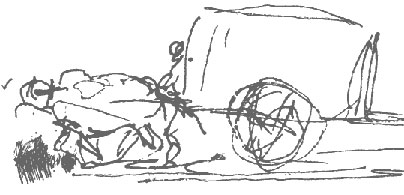
This is a story of a village named Pipra, more popularly ‘Mardan Rai Ka Pipra’, in Bihar near Sasaram. Sasaram is a district town famous as the birth place of Sher Shah Suri who ruled India for 5 years and built the famous Grand Trunk Road linking Dacca to Peshawar. Sasaram also gained nationwide attention when Babu Jag Jivan Ram, the famous cabinet minister in Nehru era, selected it as his constituency in his bid to get elected to Lok Sabha. In those days, Pipra was not connected with any road. However, since it was near a canal, the canal served as a road to go from and to Sasaram. In 1967, the year when Bihar had it’s most infamous draught, electric poles were erected but the village never got any electricity. To start with, because of ignorance and rivalry, some arrogant and ignorant farmers did not allow the installation of transformer fearing it would pose a fire hazard. Once abandoned, the dream of providing electricity to Pipra remained just that. A dream. It never got done even though many people at various times tried very hard through the local MLA and MP. Unlike electricity, Pipra did get connected with Sasaram with two-way metal roads under some World Bank or a similar scheme around early 1990s. However, in this past 5 years, the conditions of the roads have deteriorated as there was little or no repair or maintenance done after the construction. There are a few mini-buses that ply twice or thrice daily between Pipra and Sasaram, except in the rainy season. Passengers including women and kids board them at their own risk.

Over the last 10 years, farming of paddy and wheat has improved and has produced higher yields more so after a recent renovation and widening of the irrigation canal that is fed by water from Sone river. Landholding has reduced; the number of households has increased after partition in joint families. Most of the land holders appear to be happier, when I compare them with their status in 70s. However, I fear that in the next few years land holding will be further reduced and folks will not be able to sustain their families. On the good side, as a few indicators of prosperity, most of the houses of landholders are of now made of bricks with concrete roof. With an approximate population of 2000, Pipra can boast of having about 45 tractors and even 2 harvesters. Some 50 family also own motorcycles, and some 20 use TV powered by solar battery that also powers light bulbs at night since there still is no electricity. Quite a number of families have their own toilets. Surprising as it may sound, but even in this 21st century, their are folks in Pipra (both men and women) who still use open fields as their personal restrooms. Needless to say, during monsoon season, the situation gets worse.

With modern equipments like tractors and harvestors available, the possibility of employment in farming work has reduced tremendously. Today it is very uncommon for the land owners to engage manual workers. In the old days, a lot of people were engaged in farming, the exact number varying with the amount of land available for cultivation on yearly contract. Today with harvestors around, most of the manual work earlier done by workers in the past is carried out by these machines. Agents of Mill-owners buy and carry away the grains straight from the machine’s outlet on trucks and tractors. Today, you will not see any bullocks being used for ploughing or any other type of work. Folks in the village use cows and buffalos mainly for their milk these days. However, households are finding it more and more difficult to keep them. To make matters worse, there is no milk collection facility through any dairy nearby. In other words, families cannot enhance their monthly earning by selling their extra milk. Reality is that besides a total of 2 months in a year, folks in Pipra basically sit idle and have nothing much to do.

Pipra does have a primary school. However, the teacher remains missing for most of the time. Even though salary of school teachers has increased substantially, salary of primary school teachers remains pathetic to say the least. Moreover these teachers are not as sincere or knowledgable as the teachers of our days. It would be a fair assessment that this is the state of affairs in most (if not all) government jobs. More surprising and worrying thing about this is that parents are not at all enthusiastic about the education of their children due to lack of employment prospects. However, mothers today are very keen to get their daughters educated although the reasons are not exemplary. See the idea here is educated girls have a better chance at getting a decent bridegroom for themselves.

In the 70s, two students from Pipra got into engineering colleges, graduated, and got employed in respectable companies near. However, no one since has faired very well in pursuing higher education dreams. On top of it, the elders of the village seem to have poor opinions about those two engineers as well. Turns out, these two were not smart enough to have have earned enough through ‘ooparee amadani’ (under table transactions). As a result, not a lot (or atleast not enough) was reinvested back into Pipra in the form of big houses or lands. The fact is people who leave their homes in villages like Pipra and make a life for themselves in big cities never come back and share/reinvest in the success of the village.

The other day, on my regular morning walk, I met some youngsters who were running on the banks of a newly built canal near my house in Noida (near New Delhi). I intitiated a conversation with them. I was interested in knowing what they were ‘exercising’ for. They said that they were practicing with the hope of joining Indian defense or police force. They went on to say that while being fit is definitely important to seek their goals, what’s really needed is a huge sum of money to be paid to some agents thereby ensuring their selection. I was disappointed. This corruption in the system is cheating many deserving candidates out of well deserved jobs. For many unscrupulous persons, this has become the a very lucrative business.

What can be done to engage more people in useful and productive activities in villages? What can be done to get electricity in the village? What can be done to get roads repaired and to keep the same in good condition as are found in big cities? What can be done to improve the quality of life in villages like Pipra so that successful individuals retire and come back and spend their retirement fortune in their village?

Why can’t some one take a lead and start a weekly market in some open space which is easily available? Why can’t some one take a lead and get engaged in poultry and piggery? Why can’t someone start more dairy farms in villages so that some more people get engaged in the business of milk and related products? Why is it that the farmers don’t switch over to vegetables and some fruits? Perhaps all this requires a changed mindset and new inititiatives by some good NGOs or dedicated persons from government agencies. The answer to our problem is not to have more and more villages like Pipra get abandoned and everyone moves to some big cities. Villages like Pipra are not few and far between that they can be ignored. The country needs a comprehensive strategy if they want this insane exodus from villages to big cities to stop. This is not helping anyone – not every individual makes it “big” in a city, cities are becoming more crowded and villages (and the few that stay back) are getting more and more isolated from the main stream.

A Shining India is ludicrous if Rural India and those who live there are not made an integral part of the country’s future goals and ambitions. As I alluded to earlier, people living in these villages form a huge chunk of our nation and anything which improves their living conditions, their prospects, ensures that their aspirations are met in their very own backyard will be good for them, the village’s economy, the economy of the big cities and the economy of the country as a whole.

Perhaps the Prime Minister of the country must make this his mission – “RE-FOCUS ON OUR VILLAGES AND MAKE IT ATTRACTIVE FOR PEOPLE (FROM OUTSIDE AND INSIDE) TO INVEST AND COME STAY’. He may even create a new ministry headed by the most acceptable and effective member of his team.

Posted in Uncategorized | Leave a comment

Increase Growth Rate, Increase Productivity

Recently, I went through a wonderful article titled The Power of Productivity in the latest issue of ‘McKinsey Quarterly’ (2004 number 2). I strongly recommend this article to everyone connected with running an enterprise as well as the nation’s economists. It propounds that it’s neither capital investment nor the education of the workforce that makes a country grow fast and bring prosperity for all it’s citizens. The article goes on to say that the best growth indicator is GDP per capita, measured simply by multiplying labour productivity (how many goods and services a given number of workers can produce) to the proportion of the population that works. The productivity increase is the key for higher GDP per capita. And the productivity improvement does not always need a lot of investment nor is it necessary to have only educated workforce. More important is on-the-job training and regular upgradation of skills through training in related acquired technologies.

When we talk of productivity, it relates to and covers all tasks and activities of all able-bodied persons of the country. One must improve the productivity of his/her output against the input- engagement time and compensation. Productivity requires fixing up a measurable norm for every activity- the whole of the work as well as its elements. How much time and manpower is required to construct

  • a kilometer of road
  • or a housing complex
  • or to obtain an internet connection from the time it is requested to the time the consumer starts using it
  • or to build a power plant
  • or to lay down per kilometer of oil pipe lines
  • or to get a new product designed and developed

The local as well global standard or benchmarks achieved must be used for comparison and improvement. I cannot emphasise this point enough – Most of the productivity (cycle time, quality, cost, delivery time) improvements does not require huge capital investment. Sometimes it is even available freely or requires only proper utilization of budget already allocated and available. I could cite gazillion of examples from the industry on this subject.

However, what it does require is a different mindset to improve and innovate. It requires the knowledge of some simple management tools for all the team members that do not require high technical education to understand and use those effectively in workplace. Most importantly, it requires leadership to create an environment and work culture for improving productivity. Needless to say, India can attain the status of a developed nation only after it has resolved poor productivity numbers that seem to plague us

Posted in Uncategorized | Leave a comment

Manufacturing Sector- a necessity for India’s Growth


A review of data in 2004 World Machine Tool Output and Consumption Survey (Gardner publication) was interesting. China was 12th in export with $370 million in 2003, Thailand 25th, whereas India was 29th with only $12.9 million. But the figures of import were just amazing. China imported machine tools worth $4040 million in 2003 as numero uno importer; Thailand was at 9th position with $551m, whereas India was 23rd with import of only $139.6m. Chinese consumption of new manufacturing equipment shows why and how it is so much ahead in the manufacturing. Actually China purchased and installed over $6.5 billion worth of machine tools outpacing second-ranked Germany by 2.2 billion. At one time USA used to be number one in export as well as in consumption. Today, USA has gone to 6th position in export, but remains as number 2 in import. Germany has maintained its position almost for quite some years. In 2003, Germany remained number one in export, and number 3 in import. Japan is number 2 in export and imports only some very special machine tools The consumption of machine tools are indicator of the strength of engineering manufacturing sector that comprises sectors such as automotive, automotive components, machine tools, electrical equipment and machinery, textile machinery, power sector equipment, aviation,etc. As machine tools are mother machines for engineering industry, it is, as some says, a good indicator of country’s industrial power. India is far behind in consumption. It shows very low investment in engineering manufacturing sector.

It is necessary that India gives some special priority for improving the growth of manufacturing sector significantly.

No country today can think of becoming a super power without strong manufacturing base.

Unfortunately in every area of manufacturing, we have missed the bus to become the global leader. We blame the government policies, taxation and control as the main reason for the situation. However, the industrialists must also take some responsibility. It requires a change of mind set. Manufacturing is not plain trading business, where one can make quick buck. Manufacturing is capital intensive, and requires a different thrust on technology and management. It requires regular investment, continuous improvement and innovation in process and product to remain competitive.

Some of views on the issue are here:

  1. India has a large capacity scattered all around, that are lying unutilized or very much underutilized. Hindustan Machine Tools Ltd over the years built a machining capability which may be the largest in the world. Similar are the case of other PSUs- BHEL, BMEL, HAL, ordinance factories, railways. Some private companies also have good installed capacity, but capacity utilization is very low. With a change in mind set, some of these companies can also become world leader in manufacturing in their area. An integrated approach may be devised to utilize the facilities and become global leader in component manufacturing. India can be supplier of heavy, medium or small sized components to engineering industries in many counties of world that lack this facility.
  2. In automotive industry, India may try to become a global source for power units (engine and transmission), steering, and axles as well as components of the mechanical subassemblies. Area of focus should be low to medium volume production of components which the industries in developed countries shall like to outsource. Moreover, the production requirement can be met with flexible machining systems. With increasing number of variety, the volume of manufacturing is getting reduced, where OEMs are seeking vendors.
  3. Prototype component manufacturing for OEMs does also have great opportunity, as OEMs will like to outsource them to vendors. Investment in Rapid prototype manufacturing facilities will be a good business proposal.
  4. India can also easily become the world leader for castings and forged components, where the developed counties are withdrawing from the industry. The scope can further improve if the major parts are offered fully machined,
  5. India lacks in some fields of manufacturing. Sheet metal stamping is one. India does not have large capacity stamping facilities. Most of the manufacturers are going for low volume but more variety in models. MNCs import most of the bigger stampings. With very high efficiency and flexibility of newer presses, there is scope for some stamping plants in the country to eliminate the import and transportation of the bulky components.
  6. India has not developed a good die and tool manufacturing capability, particularly for larger ones. Entrepreneurs and government can take advantage of the scope, as India has all advantages and skill to become the world leader in tool making sector. Being skill-based production process, the sector will provide good employment opportunity too. With large number of engineering institutes, training of manpower can easily be done. India’s strength in software design will be additional advantage in die and tool manufacturing where CAD and CAM are extensively used. With revolutionary change in machine tool technology, today one machine tool is sufficient to complete the machining of the die in one setup. Rest is manual operation. Naturally, to provide a total solution to the customers more machine tools and equipment are required depending on services.
    India has the potential to become a global tool room.

  7. The latest development in technology has brought in revolutionary flexibility of manufacturing in all engineering industries ranging from those producing air-conditioner to automobiles. Today, it is possible to complete total machining of an engine cylinder block or an air-conditioner compressor housing on one single machine. Investment can be phased.

As a policy, the country must decide to grow with manufacturing in national interest, large scale employment opportunity remaining the foremost, rather than switch over for mere assembly or import of major consumable products. With many reforms and global approach of procurement, the benefits of improved technology must be harnessed by all to the best. The quality, cost, and just-in-time delivery will make one win. One will have to be the world class to survive and grow. Technology provides the answer.
Encourage manufacturing sector; get an employment growth along with GDP growth of 10% or more.

Some tips for SMEs in manufacturing sector:

A. For entrepreneurs and industrialists
1. Change the mindset
2. Size need not be a limitation
3. Adapt world class manufacturing practices on shop floor
4. Employ technically educated workmen.
5. Provide customized education in related technology
6. Provide challenges for improving capability of processes
7. Train in multitasking.
8. Outsource non-manufacturing and service activities judiciously
9. Start thin and remain thin
10. Use computer to your advantage and also internet to improve productivity
11. Follow latest HR practices and do not exploit the operating class.
12. Invest in future

Please do not exploit the labour force, provide them their dues.

B. For Government
1. Reduce the duty on at machine tools and high tech equipment to zero.
2. Make finances available at low interest rate.
3. Undo reservation for SSIs and let them compete.
4. Make labour dispute acts simpler for fast decision for court
5. Remove inspector controls

Posted in Uncategorized | Leave a comment

Welcome

Welcome to my virtual home. I look forward to sharing my thoughts, opinions, and comments on a variety of topics. So, the mantra for today is:

When in doubt, follow your heart

<

Posted in Uncategorized | Leave a comment

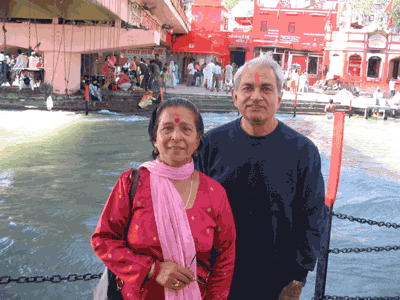
In Hrishikesh a few months back

Nice place

Posted in Uncategorized | Leave a comment

Are Muslim MPs Right?

A news item in media-‘ Muslim MPs say it’s a witch hunt, seek CBI probe’ shocked me, and certainly others like me too.

A group of Muslim MPs charged that the probe into the Mumbai blasts has been communalised and led to a witch-hunt against the community. PM Manmohan Singh, however, didn’t concede to their demand to replace Maharashtra Police with CBI as the main investigating agency.

MPs included Asauddin Owaisi, Haroon Rasheed, K M Mohiuddin, G Nizamuddin, Saleem Sherwani, Furqan Ansari, Shahid Siddiqui and Mahmood Madani and Tariq Anwar. The delegation included MPs from Congress as well as NCP, the two partners in Maharashtra coalition.

Their memorandum said: “Maharashtra ministers, politicians, police and media have sought to communalise the issue and give a religious colour to the act as one of ‘Islamic terrorism.” The MPs were critical of combing operations in Muslim-dominated areas, which they felt targeted “poor and innocent” people.

Can’t we allow the police to do its duty even in as serious a case as Mumbai blasts that killed more than 200 people of all faiths? Should there be some quota even in pointing out at the culprits? Do they mean why people of other faiths are not queried?

Is it a vote politics? I am sure the police should be careful so that people in general are not put to trouble. But to reach at the culprits they must get a free hand in doing whatsoever they wish to do under the command of a honest police officer. Let MPs do their job and not demoralize the police forc

Posted in Uncategorized | Leave a comment

Test

Posted in Uncategorized | Leave a comment

Posted in Uncategorized | Leave a comment