People of Singur, Tata Motors and West Bengal Rulers<

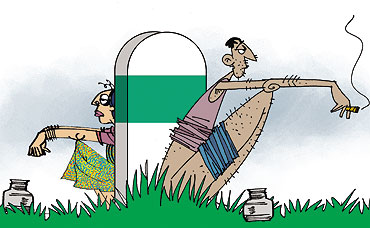
I have been writing in support of the Ratan Tata’s Rs 1-lakh-car project. It will be a revolutionary achievement for the Indian manufacturing sector. However, for few months now, every now and then, I read about protests from the farmers of Singur that Tata Motors has selected as the plant site. The issues related to the project location and politicalisation troubles me, and even after a lot of analysis I can’t find the logics to locate the plant at Singur.

First of all why has Tata Motors selected West Bengal, the state famous for militant and old-generation trade unionism, and the state that provides the leaderships of trade unions all over the country? Is it for a political reason, attraction of Buddha’s initiatives, some bigger gains from the government or purely on technically and commercially superior location advantages? Is a whimsical decision of an influential person from West Bengal in the corporate office of Tata just to favour his state of origin? Singur and all the adjoining areas of Hooghly have performed well on agricultural front with multi-cropping.

Why couldn’t Tata Motors select some place near Kharagpur on the Kolkata-Chennai wing of GQ, where as I remember from IIT days, a large tract of land around the institute, Salwa and Kalaikunda, the air force base, are barren or lying scarcely utilized for agriculture? Tatas do have some manufacturing plants also in the vicinity.

In one of my articles, I did also suggest Tata Motors to buy the huge land around Hindustan Motors factory for its plant. Hindustan Motors may even sell its total facilities there, as it is hardly doing any significant manufacturing there. The government of west Bengal could have facilitated.

But the most disturbing question that I fail to answer myself with all my knowledge of the auto industry of India and abroad is regarding the amount of land required by Tata Motors. Why should the requirement be of 1000-1200 acres for an assembly plant in a multi-crop fertile land? Can’t Tatas appreciate the importance of the farming land that is shrinking every day? If at all, Singur is the best location, why can’t a car assembly plant be constructed in smaller area? I have seen many auto plants both in Europe and Japan producing many times more production that Tatas are planning being produced in smaller areas using multistoried plant building. I understand and even suggest Tatas to set up a number of assembly plants in different states of the country to cater to the regional requirements.

However, I can’t but appreciate the manner in which Buddha government is trying to acquire land for its development projects. All senior members of the government and intellectuals of the party are trying to sell the need of sparing the land for industrial projects to the people and farmers of West Bengal. Though politicians like Mamata Banerji will be trying to cash on this sentimental issue. But the well-oiled and well-entrenched party machinery of the CPM in rural Bengal will make the acquisition of land a lesser trouble for Buddha government unlike some in other states. CPM is working overtime for it. And in the process, as middlemen the unscrupulous ones will take some pretty good commissions from the farmers for getting better compensation paid.

The CMs of the other states must learn some lessons from West Bengal on the issue of land acquisition for major national projects.

PS

‘IBM is legacy, Infosys is the future’
Infosys must share its success story: Montek
IIT alumnus wins Magsaysay award
Latest from Tata Motors
Tata Technologies to design Rs 1 lakh car
Posted in Uncategorized | Leave a comment

An indian’s Congo Capitalism

‘Fortune’ on July 28, 2006 has an entry ‘Congo Capitalism’ by Anjan Sundaram.

In Congo, the world’s most difficult place to do business, an Indian entrepreneur has built an empire of soap, ‘the Wal-Mart of Congo’, as he likes to claim.

Rajesh Nambiar manages a consumer goods empire like the proverbial village elder under a palm tree. Ambling by the green foliage on his factory premises in Kinshasa, Congo’s capital, Nambiar isn’t preoccupied with any grandiose supply-chain or production problems but rather with the quotidian concerns of his local staff.

Nambiar moved from India to what was then Zaire to open a Yamaha motorcycle dealership in 1996, one of the worst moments in the country’s recent history. Inflation had hit 9,800%, the army had pillaged the nation’s businesses, a rebellion was brewing in the east, and expatriates were selling off estates and jetting home.

Nambiar, then 26, saw in Congo’s ruins an unlikely launch pad for his fledgling career.

In theory, business should be next to impossible in this corrupt nation. Neglect and two wars in a decade have left the country’s infrastructure in shambles. The Parliament is filled with former warlords, and the World Bank reckons that Congo’s taxes cost businesses more than their profits.

Indeed, the global lending agency rated Congo the worst business environment in the world in a 2005 survey. But Nambiar is thriving in Congo’s chaos: He created one of Africa’s largest Yamaha distributors from scratch, then engineered a turnaround of operations abandoned by Unilever.

Since Nambiar took over Unilever’s soap, detergent, oil, and foodstuffs factory in 2002, he and his team have cut costs and tripled production. A new palm oil refinery is set to open next year.

“You can make a lot of money in Congo if you have the guts and tenacity,” says Nambiar, who learned his craft selling electrical motors in Mumbai, fighting for the better half of 1% profit margins. “But you need the patience to understand business traditions in Africa and how to get things done.”

“It’s all about logistics. Our trucks could take a week to travel ten kilometers, but they get there, and our products reach every village in the country,” Nambiar says. “We have a guy sitting in godforsaken Ndjokopunda–the only expatriate for miles around–just to get things done. That’s what it takes.”

That, and a fleet of 30 trucks, 20 pickups, nine barges, four boats, and hundreds of motorcycles – mostly Yamahas, of course – plying marshy rivers and bumpy roads.

“We’re the Wal-Mart of Congo,” Nambiar says.

Is it not an example of innovative entrepreneurship of an Indian youngman that may inspire many more to emulate?

Posted in Uncategorized | Leave a comment

Shahjahan With A Difference

Dasrath Manjhi is this Shajahan. Shahjahan had all resources of the Mughal Empire to build his TajMahal. Dasarath did all by himself, with his own sweat. The story had beginning some 22 years ago. Dasarath’s wife was seriously ill. He tried to take her to the nearest hospital, but a small hill came on his way. Because of the hill (Gehlor) he could reach the doctor in time. The distance was small if measured as the crow flies, but the hill came on the way. Dasarath couldn’t save her wife because of the hill. At least Dasarath thought that way. But then he thought this should and would not happen with anyone else of his village. Dasarath started on his mission. He must cut a tunnel through the hill. A hammer, a chisel and a pair of hands started working. It took him 22 years, but perseverance paid. Dasarath succeeded. And today at 60, Dasarath and his achievement has become a legend. He created a history of sort by digging a 3-km-long passage through the hill and connecting his village Gahluar (or Atri in Gaya district) to the outside world. Manjhi’s passage has cut the time for people to travel to the next village from six hours to one. It’s Manjhi’s Taj Mahal, the memorial of today’s Shahjahan to his wife. Media never even bothered to know her name.

And I am really happy to read the end of the story. Today there is chief minister in the state who could recognize his daring task. I was moved by this report.

“A frail old man had entered his durbar on Monday when Nitish Kumar looked up. The man at the helm of affairs stood up and offered his chair. (Manjhi sat on Nitish’s chair for a while.) After all, he was standing face to face with Dasrath Manjhi, the man who had moved a mountain. CM spent more than half an hour with Manjhi, hearing him.”

As a compliment to Dasarath, Nitish Kumar said, “Manjhi is a world-famous man who proved anybody can do anything if he has the will power and commitment,” as Manjhi, sat smiling.

Now, the passage is going to be the part of the state’s road construction programme of a metalled road. Manjhi will perhaps get the possession of the five acres of land that he had been granted many years ago.
As reported, “in the early Nineties, our hero had met the then Chief Minister of Bihar, Lalu Prasad Yadav, urging the administration to construct a proper road in his village. Mr Yadav had immediately told his officials to start work, but in the Samuel Beckett-country that is Bihar, nothing happened. The same routine was repeated during Rabri Devi’s tenure as CM.”
I only hope it would not happen this time and the promises would be kept without losing time.

Some News
A motorbike that runs on kerosene and can carry six people
Bihar’s mountain man seeks a date with Kalam

Posted in Uncategorized | Leave a comment

Rural Employment- Some Possibilities Demand innovative Initiatives

Where can the people of the rural India get engaged once the technologies are taking away their jobs? Combines, tractors, engine pumps, flour and rice mills and oil crushers are replacing the old way of agriculture and food preparatory processes that employed the rural people. Perhaps, rice transplantation only remains manual still. Manual labourers and the ladies in homes have all gone idle. Main task is to create jobs in the villages.

As with the onslaught of automatic machines, the operatives in factories required retraining and redeployment, the people in villages will require training to have the contemporary skills in demand. Those blacksmiths or carpenters that were good in building bullock carts and wooden ploughs must become mechanics for repairing the machines and equipment used today in rural areas.
ITIs must take task of imparting the skill of maintenance of motors, pumps, tractors, and even motorcycles to the people who can set up their service shops in villages itself. The present practice of taking all these mechanical and electrical or electronics gadgets and equipment to nearby towns must stop. Electricians, masons, carpenters, hairdressers, tailor, and for that matter, all trained hands are in great demands. Skills in these trades can provide immediate employment. With thrust for modern housing even in rural areas and banks working for an affordable credit system for farmers, construction may grow as major employment sector and these skills will be in demand even in villages.

Manual works in rural areas will remain limited to construction and repair of roads, watersheds, check dams and tanks, and canals, culverts and drainages for irrigation.

In very near future, the modern way of cultivation will get popular. Skills attached with drip irrigation, water harvesting and conservation, purification to ensure safe drinking water supply, prevention of soil erosion, maintaining cold storage facilities, improving farm productivity, planting non-traditional crops and switching over to organic farming will be in demand.

Education, more so specialized ones such one ensuring admissions of the kids in good private schools will be another area that can engage quite a good number of men and women. Some men will also get engaged in health care activities, and as other service providers to help set up agribusiness, to arrange finance and crop insurance, and to organise sanitation, drainage and waste disposal.

Think of a rural hub for every five-ten villages or a population of 10,000-20,000 people with all services available for the rural population starting from a vegetable and fruit market to other consumables, healthcare and education such as yoga and dietary as preventive steps, repair shops for all gadgets and implements in use by the people today, personal development such as adult education, vocational guidance and training, cyber cafes to train in computer for distance learning and telemedicine.

Women folks are still the least exploited potentials to contribute to the earning of the family in rural regions with changing lifestyle. Ways to use their traditionally obtained skills such as stitching, designing, sewing, and their many crude innovations over the years in handicrafts and arts such as one seen in Madhubani prints must be explored. Some entrepreneurs in textile and apparel industry must develop some working models to use their skills and capability to organize for commercial scale. Why can’t these entrepreneurs move their factories or collection centers to rural India to face the competition from other cheaper countries?

Surprisingly, according to Dr Philip Kotler, the reputed marketing Guru, ‘India’s largest sector, the rural sector, will benefit greatly when we are able to make and distribute $100 computers to villages. The farmers will get more information on crop prices and what to plant. Families will get more information on health and educational opportunities. IT will affect a revolution in the rural area.’

However, $100 computers are far away to happen and made available to those who can use it effectively. India must seek its own solution. It must educate and skill 100% of its boys and girls in some or the other trades. Skill in trades will make the people employable in the village or anyone of the today’s global villages. Ultimately only very few people will be needed for menial jobs. And I hope it happens sooner.

Posted in Uncategorized | Leave a comment

Hemu ‘Vikramaditya’- Unsung Hero of Indian History

If I ask many well-educated Indians, “Who was Hemu?” I am sure to get a blank look on their faces. Unfortunately, he has not been the darling of the historians too. Was it because he had a lowly parentage or because he didn’t belong to one of the higher castes? Was it because of his disadvantages of a wretchedly puny physique to rise from being a saltpeter pedlar in a provincial bazzar to chief minister to one of the principal Sur claimants, after Sher Shah Suri? YK Singh, my neighbour and advocate friend vested last evening, and as usual, knowing my interest in Indian history, asked me about Hemu and expressed his amazement that even traders backed governments of India never tried to honour this great son of India.

Shershah’s short but illustrious reign was over because of his sudden demise in Kalinjhar. On January 24, 1556 Mughal ruler Humayun slipped while climbing down the steps of his library and fell to his death. On February 14, 1556, in a garden at Kalanaur, Akbar was enthroned as emperor. He was in teens at that time. The other rivals for the throne of Delhi were the three Afghan princes of Sher Shah. However the main threat to Akbar’s future came not from the Afghan princes but from a Hindu, Hemu. I wished to find out what John Keay in his ‘India-A History’ writes about Hemu.

“Yet more surprisingly for one who could not even ride a horse, he had acquired a reputation for inspired generalship. Twenty-two consecutive battles is Hemu said to have won against assorted adversaries. To this tally, he added a twenty-third when, soon after Humayun’s death, he stormed Delhi and put its Mughal garrison to flight. Not surprisingly even his mainly Afgan, and so Muslim, troops regarded their ‘Shah h Hemu’ as an inspirational commander.” After the capture of Delhi, Hemu set up himself as an independent ruler under the Hindu title of ‘Raja Vikramaditya’. How many of us know that Hemu, the ruler of Delhi?

At Panipat, on November 1556 Hemu faced Bayaram Khan, Akbar’s guardian. According to Abu’l-Fazal, the enemy had assembled a corps of fifteen hundred of the largest and most athletic beasts ever seen-elephants. For once victory looked to be going the way of the elephants. Hemu, to whose abilities even Abu’l Fazal bears grudging testimony, commanded operations from a gigantic beast called ‘Hawai’ (‘Windy’, or possibly ‘Rocket’). ‘he made powerful onsets and performed many valarious acts.’ Indeed the Mughals were wavering when ‘suddenly an arrow from the bended bow of divine wrath reached Hemu’s eye and, piercing the socket, came out at the back of his head.’ Seeing Hemu collapse into his howdah, his troops lost heart. It was now the sublime army, swords flashing and epithets flying, which closed for the kill. Hawai was captured; Hemu extracted from his howdah and dragged before the young victor (Akbar), was quickly beheaded. Mughals were third time lucky.

And a great hero vanished.

As per one another account,

“Shah Quli Khan captured the Hawai elephant with its prize occupant, and took it directly to Akbar. Hemu was brought unconscious before Akbar and Bairam. Bairam pleaded Akbar to perform the holy duty of slaying the infidel and earn the Islamic holy title of ‘Ghazi’. Among much self-congratulation AKBAR THEN SEVERED THE HEAD OF UNCONSCIOUS HEMU WITH HIS SABER (2,3,4). Some historians claim that Akbar did not kill Hemu himself, but just touched the infidel’s head with his sword and his associates finished the gory ‘holy’ work. However the latter version seems inconsistent with the events that followed. After the battle Hemu’s head was sent to Kabul as a sign of victory to the ladies of Humayun’s harem, and Hemu’s torso was sent to Delhi for exposure on a gibbet.”

One does not wonder if the court historians of Mughals didn’t write much about Hemu. But why have our historians even after independence not done justice by giving Hemu his right place? Is it because we wish to keep our secular image in tact. Don’t the people of India expect a well-done research about Hemu (an aam aadami) who could become the emperor of India just by his unique leadership qualities?

Posted in Uncategorized | 1 Comment

First War of Independence or Sepoy Mutiny

Right from our school days, we knew of 1857 Sepoy Mutiny as the first war of independence. My teacher in village primary school narrated the story of Babu Kunwar Singh of Jagdishpur in our district of that time as one of the heroes of the mutiny. In high school days, my grandfather took me to show the historical movie Jhansi Ki Rani and I heard the local queen declaring ‘Main Apani Jhansi Nahin Doongi (I shall not hand over my Jhansi).’ Next year, India will be celebrating the 150 th anniversary of 1857 the first war for an Independence of India from British rule. However, recently, I read an article in ‘Outlook’ about the mutiny at Vellore Fort.

On July 10, 1806 at 2 a.m. at the Vellore fort, exactly two hundred years ago, Indian sepoys rose in a revolt against the East India Company’s garrison. Discontent over poor treatment, loss of erstwhile status, and poor pay, got provocated here again because of the introduction of a controversial new turban, viewed by Indians as a firangi topi (hat), and the implementation of new regulations over the sporting of caste marks on foreheads, earrings and facial hair.

Many members of Tipu Sultan’s family — twelve sons and eight daughters – were stationed in various mahals within the fort precincts since the fall of Srirangapatnam in 1799. A sizeable number were Tipu’s former soldiers, especially of officer rank had also joined the East India Company. They had not forgotten their attachment for their former masters. Some Mohammedan fakirs through puppet shows in Vellore Fort were lampooning the English and proclaiming their impending doom. The fakirs mocked the Hindus and Muslims in the army for accepting the new regulations, for sporting the turban, which comprised a leather cockade — thus inviting caste and religious ‘pollution’– and a turn screw resembling a cross to be worn next to the heart. The fakirs proclaimed that these would lead to the eventual conversion of all sepoys to Christianity.
At the time of the revolt, 1500 Indian sepoys and 370 Englishmen were located in the fort.

Fatteh Hyder, Tipu’s first son, was perceived to be of one of the key architects of the rebellion, besides Mohiuddin and Moizuddin, the third and fourth sons. Soon after the rebels took control of the Vellore fort on 10 July, they hoisted the flag of Tipu Sultan on the fort and Moizuddin promised to double the salary of the sepoys when the rebellion was completed. While Colonel Fancourt, commanding officer of the Vellore garrison, and Lieutenant Kerras, commanding officer of the 23rd Regiment, were shot at pointblank range, several officers escaped and hid themselves and passed word to the nearest British military station at Arcot. The revolt left 14 British officers and 100 soldiers dead.

Colonel Robert Rollo Gillespie’from Arcot led the 19th Dragoons and the 7th cavalry quite easily since three of the four outer gates of the fort were left unattended. With Col. Kennedy arriving with more reinforcements and the Indian sepoys running out of ammunition, the fort was as easily taken back as had been won by the mutineers. In under eight hours, the entire drama was over. Gillespie and his men spared the princes and others of Tipu’s family; the entire princely retinue was shifted to faraway Calcutta by January 1807.

In the counterattack, some 350, or 800 as per some account, Indian sepoys were killed. And the first major rebellion against the emerging British Empire in colonial India fizzled out.

Was the mutiny on July 10, 1806 at Vellore Fort was the first against the British? And the question seems to be pertinent. Why have we not given much importance to that mutiny?

I think many other small little mutiniest must have gone unnoticed by our historians till date. But the more noticeable are the controversies that relate to the government plans for celebrating the 150th anniversary of the 1857 revolution next year. The national committee is falling apart. Interestingly, the 68-member committee had two historians and the rest were politicians. Now, the only two historians on board have decided to opt out. Historian Ramchandra Guha says, “Historians who are an authority on the 1857 revolution have been kept out of it. I don’t understand that and I have decided not to be part of the committee.”

This is the way the government operates. Politicians wish to occupy the center stage everywhere. Unless the people revolt, the things will go their ways. They will make historians write the history in their own way as it used to happen in Mugal period.

Some Other Interesting Readings

India must discover elements of ‘soft power’
Emperor of steel

Posted in Uncategorized | Leave a comment

Can India leave behind the open defecation?

Open defecation has shamed me time and again. The memory on the night we were proceeding toward our village while returning from Gaya after once-in-life shradh performed for all dead in the family in Gaya just haunts me. It was a September evening getting dark. As soon as the driver would put on the headlight for safety, hoards and hoards of women and girls of the villages, defecating on the sides of the road would stand up in hurry. I do also remember the shameful situation when I visited Khajuraho, a heritage tourist destination. I was out for my morning walk towards the village. I could proceed further out of the shame.
One Anjaali Puri has provided a report on the new initiatives to stop open defecation in Outlook’s latest edition. It is freshening effort. And the minister leads the way.

The rural development ministry with its Total Sanitation Campaign is out to solve the problem. Union minister Raghuvansh Prasad Singh with the first hand experience of the shame for the society has promised, rashly many would say, to make every Indian village free of “open defecation” by 2012. Singh has earned more middle-class approval for declaring that only contestants with toilets in their homes should be allowed to stand for gram panchayat elections. “A toilet or the lack of it,” he says, “is the indicator of a country’s health, not the GDP or the Sensex.” This is not about toilet manners, but about 30 million people in rural areas suffering from sanitation-related diseases, and four to five lakh children dying of diarrhoea every year. And daughters and daughters-in-law being assaulted in open fields. “Izzat aur maryada ka sawal hai,” the minister exhorts their unconvinced men folk, who rather like the rush of fresh morning air on their posteriors. Meanwhile, his publicity machine comes up with advertisements showing grooms shopping for brides, and turning down those who don’t have toilets in their homes

Under the Nirmal Gram Puruskar, the government is giving cash award to “open defecation-free” zones, ranging from Rs 2 lakh for the smallest panchayat to Rs 50 lakh for the biggest district. President A.P.J. Abdul Kalam handed out awards to 760 panchayats and nine blocks that qualified in 2006.

The number of awardees is expected to multiply manifold next year. In 2007, Midnapore or South Tripura is a front-runner to become India’s first open defecation-free district. The inspections have been farmed out to social research organisations and market research outfits like ORG-Marg, are rigorous.

And the list of award winning states presents some surprises. Maharashtra tops. Tamil Nadu closely follows West Bengal closely. Thirteen other states have opened their accounts, including “bimarus” like Bihar and UP. The missing include IT hub Karnataka and rich Haryana and Punjab. And the minister Singh fumes, “See, 70 per cent of rural homes in some states have TVs but not even 40 per cent have toilets.”

The success of an experiment in Midnapore in the ’90s, involving UNICEF, the Ramakrishna Mission and voluntary groups, contributed to a more on-the-ground, campaign-oriented approach to rural sanitation. Research for the government by ad agency Ogilvy and Mather showed that appeals to local pride, women’s personal dignity and health and hygiene would work best.

Diarrhoea among tribals made health arguments work in Tripura, whereas in an industrialised state like Maharashtra appeals to pride and development work best. “We asked an elderly lady in Midnapore why she installed a toilet, and the answer was, to stop her daughter-in-law from going out so often, and avoiding housework.”
As claimed, with the new strategies, rural sanitation coverage has increased from 22 per cent in 2001 (as recorded by the census) to about 38 per cent in 2006. But even if all the people for whom the crores of new toilets have been built are using them, that still leaves about 500 million rural Indians out there squatting, everyday.

And that is not all. Urban areas are even the worse. Even after my numerous letters to Noida authority, the huge plot in front of our houses meant for some big hospital is a nuisance for the residents. And if you travel by ordinary class in rail, you just can’t see outside in the early morning as the train approaches some small or big urban areas.

It is certainly the lack of facilities, but it also is because of the rural mentality to a certain extent. But the change is coming fast.

Posted in Uncategorized | Leave a comment

A Company With Rural Bias

For many years, the AGM report of ITC has been an educating document for all managers. Since Deveshwar started its rural initiatives with e-choupal as main theme, I look for this report to find out what progress the company has made on this revolution initiative to meet its social responsibility. This year report has the progress report on Choupal Saagars too.

The ITC e-choupal as a village digital kiosk with a human interface within walking distance from the farm gate is supplemented through physical infrastructure – the ITC Choupal Saagar – which functions as a hub for a cluster of villages within tractor able distance. These made-to-design hubs also serve as warehouses, and as rural hypermarkets for a variety of goods. In fact, the e-Choupal infrastructure provides an efficient delivery channel for rural development and an instrument for converting village populations into vibrant economic organisations.

This infrastructure project now comprises about 6000 installations covering nearly 36,000 villages and serving over 3.5 million farmers. Over the next 7-10 years ITC envisions to create a network of 20,000 e-choupals and over 700 Choupal Saagars entailing investments of nearly Rs.5000 crores, thereby extending coverage to 100,000 villages – representing one sixth of rural India. This networked rural delivery system can contribute significantly towards addressing the ‘knowledge deficit’ highlighted so forcefully by the National Commission on Farmers. It can also meaningfully complement the Bharat Nirman initiative of the government, towards truly securing a ‘new deal for rural India’. The latest recognition for the transformational impact of this pioneering initiative is the Stockholm Challenge Award 2006.

While 10 Choupal Saagars are already operational, 9 more are in an advanced stage of completion. Another 40 Choupal Saagars will scale the rural retailing initiative up in the next 12 to 18 months. This hub and spoke model is being energised at the village level through sanchalaks and samyojaks drawn from the farming community, who represent the extended enterprise.

I dream of a Choupal Saagar at every 200 km on GQ and E-W and N-S corridors Expressway and it must serve as rural hub for all the villages in a circle of 100 kms. It will buy all that the people in the area will produce and sell to them all- products and services that the people in the area need. The scope of and facilities at Choupal Saagar can be expanded in all possible manners. It can network with all rural initiatives such as Project Jyoti of Microsoft India or MS Swaminathan Research foundation, SEWA in UP or Computers@Classrooms programme of Infosys.

As it appears, ITC has not yet covered Bihar and Orissa in its programme. Why should not it use some of its retired employees of the areas to take the lead and implement the projects of e-choupals and Choupal Saagars?

I have, time and again, expressed my views that other companies with rural projects may join these initiatives of ITC, so that this proven model covers 100% of the rural villages. CII and Assocham may coordinate with the other big companies that are its members. Even the projects of setting up Village Knowledge Centres connected to the Village Resource Centres of the central government can be a part of e-choupal and Choupal Saagar to get the best from the limited resources available for the rural India.

Rural business hubs hold a lot of promise

PS
Some Good NEWS
NRI student wins int’l space science contest
Money surely can’t buy you happiness Countries of the World in rank HPI order

The amazing success story of K B Chandrasekhar

Posted in Uncategorized | Leave a comment

Nitish and Bihar

Nitish Kumar, the CM, Bihar must be in dilemma. His being engineer must have aggravated his worries. What should be his priorities? Can he talk of bringing in investors in IT or BPO sector, as Budhhadev Bhattacharya are going for? With not even a single college of technology or management or medicine in the top 20 institutes of the country, it is a difficult task to assure an investor about the availability of cheap, abundant, and quality human resources in the state. But let me confess this is just a myth. If the biggies in IT sector invest in Bihar, they will not find dearth of good engineers, as the students from Bihar have been filling up proportionately larger chunk of seats in engineering and management colleges in every part of the country. And many of them will love to come back to Bihar if they get a job there and may be at a lower salary. IT investors may take advantage of this aspect of Bihar’s strength.

Bihar is having a large number of unemployed graduates in age of 20 to 35. They might have been the part of the mass of unemployable graduates that our education system produces. Perhaps, Bihar will need some enthusiast educationists with innovative entrepreneurship to set up some institutes of employability for these graduates on the line of one set up in Tamil Nadu by Reliance as ‘The Reliance-NIS Sparta Academy’s School of Employability to provide the country’s corporate world with trained and skilled students who are ready to work in any industry.

Nitish at one time talked of making Bihar a manufacturing hub, but then what will he manufacture with all the minerals gone to Jharkhand? There are some sectors that can certainly attract investors. One is certainly sugar. Bihar can become the manufacturing hub of endless items coming out of sugar- from candies to ethanol or rum. And a special task force for sugar based sectors with a missionary chief can bring a revolution for rural Bihar with ideas ranging from contract farming to rural hubs on line of ITC’s choupal Sagar.

With a strong control on panchayats, Nitish can provide a unique leadership to change the rural Bihar with many initiatives that may not require that huge an investment. And he must emulate other states in this regard.

As the first priority, all the panchayats must work for massive plantations on government land along state roads, rural roads, irrigation canals, and grazing grounds. Family below poverty lines must be given the ownerships of the trees they plant and grow. Why can’t Bihar participate in plantations of Jatropa and other bio-diesel plants? President APJ Abdul Kalam had called for the national mission on bio-diesel to realise 60 million tonnes of production a year by 2030. And as a corollary, why can’t Bihar be a honey producing state that may provide extra earning and employment?

If Punjab can contributes 25 per cent of the total honey produced in the country and if its 23,000 beekeepers can earn Rs 15 crore by exporting nearly 3,000 tonnes of honey annually, worth Rs 15 crore, to countries like the USA, the UK and other countries of Europe, and the Middle East, why can’t it be Bihar? If Haryana can invest in a 100 percent export oriented and invite international player such as Yakult Danone to invest for producing world-class buttermilk at its state-of-the-art unit, why can’t Bihar have one milk-processing unit in each district headquarter? Why can’t Bihar set up an institute such as the National Institute of Food, Technology, Entrepreneurship and Management (the first of its kind in the country) at Kundli (District Sonepat)?

Bihar can prosper only through its rural based industry. And there is huge potential. But it requires government policy and coordination that can bring entrepreneurs, farmers, and scientists together to achieve the goals.

We all hope and wish Nitish to succeed, but success demands innovative and sometimes harsh approaches. As one example, Nitish will have to ensure that ‘rangadaari’ (mafia group) is crushed and rangadaars- small or big, are behind the bar for ever, otherwise no investor will like to come to Bihar, and even the people for whom these investment are intended will not be benefited.

Posted in Uncategorized | Leave a comment

Human Development Index- happiness and poverty!

What should constitute a more representative Human Development Index?

Who is better and whom do we, or should we, rate having better quality of life: a poor woman in Kerala who can decide what to do with her life or a richer woman who is told what she can or cannot do by her husband or father?

Some of the world’s most respected economists, including Nobel laureate Amartya Sen, World Bank chief economist Francois Bourguignon, WHO expert on violence indicators Alex Butchart and UN and International Labour Organisation head of statistics Francesca Perrucci and Sylvester Young, are helping in the world’s first concrete bid to measure individual happiness and well-being across countries and continents and to introduce a new measure of assessing poverty – in terms of happiness.

It is the Oxford Poverty and Human Development Initiative (OPHI), a new economic research centre within the department of international development at Oxford University. Accordingly, Sabina Alkire, director, Oxford Poverty and Human Development Initiative (OPHI), with the help of Amartya Sen, has designed a shortlist of questions on five topics radically to change the Human Development Index (HDI), the standard set of measures used by the United Nations Development Programme (UNDP) to compare levels of development and the impact of economic policies for every country in the world. The five topics are: decent work; physical safety; empowerment; measure of shame; subjective humiliation. The questions could figure in the 2010 census worldwide if the benchmark International Household Survey network based in the World Bank agrees to the proposal.

According to Sabina Alkire, the move to introduce a Gross Well-being Index was to supplement the traditional international data on health, education, nutrition and income that would will help create a new measure of poverty. Thus, if dirt-poor people in the developing world display a general sense of well-being, international surveys would henceforth record their ‘wealth’ of happiness alongside their material poverty.

Alkire’s research in Kerala lasted from November 2005 to April 2006, and included destitute, non-destitute and “recentlypoor” women (those who were lifted out of dire straits by micro-credit). According to her, the Indian data was important in the creation of the new happiness and well-being index. “The Kerala study shows that there is a great range of empowerment. It was the first time we were looking at psychological indicators of empowerment. I found that the women felt very empowered as housewives and the sense of well-being was high.”

Bolivia may soon become the first country in the world to include questions on well-being in its census along the lines of OPHI’s proposed internationally comparable indicators. Will India follow? Perhaps, it can provide a measure that PM was referring to while addressing the CEOs of India Inc. in CII meet.

However, the main concern is very genuine, as the trickle down effect of even a higher GDP growth is not getting down to the people at the bottom of the pyramid that is essential for social harmony and continuity of the growth.

President Kalam wrote in ‘Outlook Business’, May 5, 2007 issue. He writes:

GDP is growing nearly 9% per annum and more. However, economic growth is not fully reflected in the quality of life of a large number of people, particularly in rural areas and even in urban areas. Kalam talked of a “National Prosperity Index (NPI)” that is a summation of (a) annual growth rate of GDP, plus (b) improvement in quality of life of the people, particularly of those living below the poverty line plus(c) the adoption of a value system derived from our civilisational heritage in every walk of life which is unique to India. That is NPI=a+b+c. Particularly, ‘b’ is a function of availability of housing, good water, nutrition, proper sanitation, quality education, quality health care and employment potential. ‘c’ is a function of promoting the joint family system, creation of a spirit of working together, leading a righteous way of life, removing social inequities, and above all promoting a conflict free, harmonious society.

Ultimately, the idea is to create a society where one can see a smile on the face of everyone, using whatever index we use.

Posted in Uncategorized | Leave a comment