Sarva Siksha Abhiyan- Mission, Issues and Innovations

Many a times, I feel like agreeing to one opinion of a rebel friend of mine. He thought Nehru’s five year plans would have concentrated only on education at least for few decades.

Perhaps Sharva Shiksha Abhiyan (SSA) was a path correction. It came a little late with a mission for attaining universalisation of elementary minimum education; but it was always better late than never. The SSA had all the potentials to change the destiny of India in fastest way. 2005 was the deadline for putting 3.4 crore children in the 6-14 age group in school. And by 2010, every child would have received eight years of education. Resources could not have been the problem with the Centre, states, and many external agencies like World Bank, Department for International Development (DFID) and European Commission participating. However, it didn’t happen, and as usual the excuses were many. And that appears in its performance report.

40 per cent of the eligible age group (13.6 million) are still out of school, the drop-out rate across the country is 39 per cent, 75,884 schools in the country have a single teacher and another 6,647 have no teacher at all, and the country is short of at least 50,000 upper primary schools and 31,648 habitations do not have school

And one of the major reasons is the indifference of the politician masters for whom SSA is hardly a necessity. Rs 100 cr sanctioned under the drive got diverted to other activities or schemes. 2,369 non-existent schools got Rs 50 lakh in Jharkhand alone. Rs 100 cr worth of textbooks distributed to non-eligible children in MP, Chhattisgarh & Assam. The teacher-student ratio in Bihar remained t 1:93 because of no recruitment perhaps for years. Only 3.29 lakh have been recruited so far ageist the sanctioned 5.96 lakh posts of teachers. Most states have gone for the less-qualified temporary Shiksha Karmi as a teacher, perhaps because of some selfish motives of bureaucrats in collusion with politicians. Add to that some more bad news. 5 per cent of the schools run in kutcha premises, 33 per cent schools do not have toilets and nearly 50,000 schools do not even have a blackboard.

But there is some good news too. Almost allover India, some unique innovative methods to achieve universalisation of elementary education are under experimentation with quite a significant success.
Fishing Boat schools of Andhra Pradesh in East Godavari district were introduced for migrated fishermen’s children who didn’t have any one to look after them, once the parents sailed into the sea with their boats for fishing. The family had little scope of education for the children. 310 children were taken out on another boat. Started for joyrides, it became play school with teaching tools and play kits. After some months, all but 57 joined regular schools.

West Bengal has come out with Rabindra Mukta Vidyalaya for children who could not go to upper primary schools. Gujarat has come out with some unique innovations for girls’ education that are: Diwali camp, Ujasbhani and Dikari Mare Bhanvu Chhe (Daughter, I want to study). While Diwali camp gave girls an opportunity for all round personality development and empowering them, Dikari Mare aims to take help of daughters to teach illiterate mothers.

UP came out with Meena Manch geared towards increasing enrolment, and retention of girl child. From a kit of 13 books, stories are discussed linking them with issues arising in the girl’s daily life. Haryana provides free bicycles to girl who does not have a school in her own village with the rider that she has to appear for the class VIII exam to fully own the cycle. And panchayats who achieve 100% girl enrolment are given a prize of Rs 1 lakh. Jagruthi Shibhira, Karnataka provides awareness about pitfalls of early marriage, low status of women. Pratibha Karanji, Karnataka provides platform for girls to showcase thelatent talent such as singing, and dancing

With all the shortcomings, the story of SSA programme will be presented in a world meet in Manila. The Department for International Development, World Bank and Asian Development Bank has selected SSA as a case study. It is a rare honour to government -run SSA. The agencies consider the programme as “an excellent example of a government-led, highly effective development partnership in elementary education that is enabling millions of previously excluded children to go to school.”

But, India has many miles to go. You feel really shocked to hear when some crazy ones from higher castes don’t allow the underprivileged children to study in the school meant also for them. Perhaps, one the SSA will also solve this social cynicism too.

PS: India near full enrolment at primary school level

Posted in education | Leave a comment

India and Indians Crackling

There are big news and variety of achievements appearing almost daily in media. India is on go. We pray this Diwali that it continues.

‘The Nasdaq is all lit up in New York. The world’s most cited market index is celebrating Diwali by lighting up its building in Indian colours amid the razzle-dazzle of Times Square, part of the increasing attention towards India and its economic and cultural advance in this part of the world.’

On a single day, October 18, 2006, many things happened.

In the biggest overseas acquisition attempt by an Indian company, Tata Steel offered $7.64 billion (around Rs 34,500 crore) in cash for buying Corus, the UK’s largest steel company with a production capacity of 18 million tonnes a year. If the acquisition materialises, Tata Steel can become the world’s sixth largest steel company from its existing ranking of 56.

The Videocon led-consortium agreed to pay Daewoo’s creditors $700 million (around Rs 3,220 crore) for the ailing company. RHJ International is the holding company of the US buyout fund Ripplewood. Daewoo has access to high-end technology for LCD and plasma televisions, which are fast replacing cathode-tube televisions in most countries. Daewoo operates six plants in South Korea and 18 overseas units. Its assets totalled 1.65 trillion won ($1.7 billion) at the end of 2005.

Glenmark Pharmaceuticals licensed the German major Merck to develop a diabetes drug. The deal earns ¤190 million (Rs 1,077.5 crore. More than the earning, the deal is a significant milestone of India’s pharmaceutical sector. Is it not an achievement of the R&D capability of the Indian company?

Nokia, convinced of the huge telecom market of India may soon have a second manufacturing facility in Kolkata after thee first one in production in Chennai. Nokia Siemens Networks, a 50:50 joint venture between Finnish multinational Nokia Corporation and diversified conglomerate Siemens of Germany will set up the facility and invest close to Rs 1,600 crore in stepping up all operations in Kolkata.

National Knowledge Commission (NKC) proposed to connect 5,000 entities -universities, academic institutes, research and development labs and libraries, under the project, titled ‘Knowledge Network’.
And finally a news item from US heartens me, as it symbolizes the grit of Indians who can excel in all odds.


Gujaratis, mainly Patels, own 21,000 of the 53,000 hotels and motels (more popularly known as Potels) in the US. It makes for a staggering 42% of the US hospitality market, with a combined worth of $40 billion. Asian American Hotel Owners Association, which has 9,000 members and 90% of whom are Gujaratis, says Indian-American hoteliers pay $700 million in taxes every year and create a million jobs.

PS: Latest
Corus Board proposes Tatas’ takeover offer

DUBAI, OCTOBER 19: Indians are among the top property investors among non-Arabs in Dubai following the British nationals who top the list.

Unit of India’s IFGL Refractories buys Goricon
Jindals set to aquire Thai steel major
Indian Steel Maker Is Ready to Acquire Much Larger British Rival
Tatas to pay $1 bn cash, Corus backs bid
TATA-CORUS

Posted in Uncategorized | Leave a comment

An Open Letter To MD, Tata Motors

Dear Mr. Ravikant,

I saw on one of the TV news channels today a group of women demonstrating in front of Tata Centre, Kolkata against the land acquisitions from the farmers of Singur for your project. You may take it a mad Mamta’s move, but as a technocrat we must give a serious thought to the issue. As I know, you are also from IIT, I think you can understand and appreciate the feelings of another alumnus. My reasoning is entirely technical based on industrial engineering practices with no political bias.

I am myself an IITian of Kharagpur (1957 Mechanical Engineering). I spent whole of my life learning manufacturing and management of automobile industry only. While working for Hindustan Motors, for your information, I did carried out an educational programme too for general manufacturing and then on gear cutting for your managers at Tata Motors’ Jamshedpur plant in 1993 that was well appreciated.

I am amazed by the decision of Tata Motors to locate its prestigious Rs 1 lakh- car project at Singur (interestingly, the place is very near to the plant of Hindustan Motors, Hind Motor (Uttarpara), Dist Hooghly.

Further, I was shocked the news of Tata Motors’ requirement and then demand of 1000 acres of mullt-icrop fertile land of the farmers from the state that is in hurry to make up the damage caused by its own follies for housing the new plant.

Why should Tata Motors need so big a plot for assembling only 1lakh cars a year? I have seen car assembly plants in UK, Germany as well as in Japan manufacturing many times more cars and that also bigger ones in fraction of Tata Motors’ demanded land area.

Why can’t Tata Motors think of multistoried assembly plant construction, as the land is very precious, fertile and cultivable in its selected location?

Further, why should Tata Motors not locate the plant in marshy land lying all around? Hindustan Motors was built in early 1950s on a marshy land offered by Dr. BC Roy. Perhaps, Tata Motors would have negotiated for the unused land lying at the plant site of Hindustan Motors that it is now interested in selling for real estate to make money. Tata Motors could have taken assistance of the affable present West Bengal government to get the deal made.

Further, I learnt from a report in media today that Tatas are already holding huge land area in vicinity of Tata bearings in Kharagpur. The land is being offered to Bhushan Steel for a steel plant. Why can’t that land area be used to locate this new project of Tata Motors? Tata Motors could have many location advantages because of Tata Bearings as well as IIT, Kharagpur in proximity such as outsourcing of some of R&D activities to IIT, Kharagpur and the sources of required talent bank.

Further, Tata Motors could also think of locating the new project in Durgapur where many plants and premises are lying deserted because of the menace of leftist unions. Durgapur of today can provide many other advantages too.

Lastly, is Tata Motors convinced that work culture of West Bengal, particularly of the region around Singur and the manufacturing sector, has changed to be favourable and is conducive enough to make the location of a plant of so important project of Tata Motors justified? Is it someone so much sold to the leftist government behind the project location?

The government of West Bengal will acquire the land for Tata Motors, as it has the brute power of its party cadres, but as socially conscious business house, should not Tata rethink over the issue if there is so much of opposition?

I expect Tata Motors to put its replies to my technical queries to my email address: irsharma@gmail.com.

Indra

PS. A media reply by Ravikant

Posted in industry, management, manufacturing | Leave a comment

Can Hiuen Tsang Link China India Better?


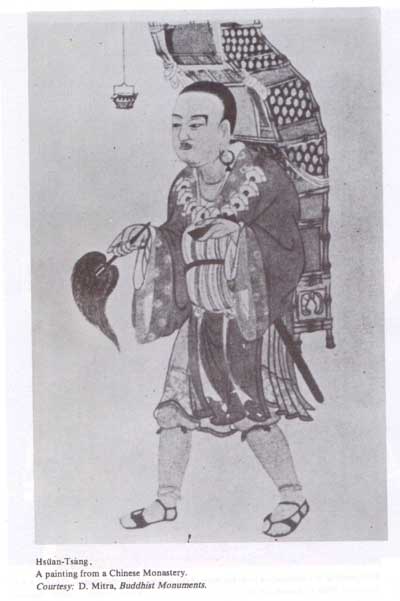
I read about Hiuen Tsang who came from China to India in 7th century in our history course as student for school final examination. And with a little interest in history of Bihar, I kept on reading whatever and whenever I got about him and his account of Nalanda University.

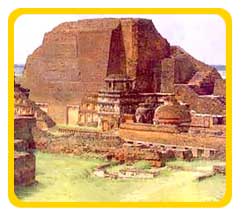
It was in December1966 that I visited Nalanda as tourist after my adventurous social service work with Jai Prakash Narayan’s Bihar Draught Relief at Noorsarai along with some foreign volunteers. It is interesting to know from media that 2006 has been declared as India-China friendship year. A temple dedicated to the Chinese traveler Hiuen Tsang, lying in ruins for long at the university town of Nalanda has been reconstructed through a joint India-China effort. As reported, various craftspersons, artists and technicians from India as well as China are working in Nalanda to complete the renovation by October 31. Murals from Luoyang near Xiang, Hiuen Tsang’s birthplace, have been flown. A mammoth, gleaming and impressive monastery-like structure-over 56 feet tall-is being readied. Care has been taken to keep the architecture as authentic as possible. A statue of Hiuen Tsang, cast in bronze and weighing 750 kg, stands guard at the entrance. The temple will also house ancient manuscripts from Thailand, Sri Lanka and China. Once the temple is ready after renovation, Hiuen Tsang’s mortal remains, currently housed in Patna Museum, will be formally moved to Nalanda.

The temple will add to the tourist attraction of Nalanda. There is also an ambitious plan to restore some of Nalanda’s lost glory. A new cultural village that can add to visitor’s attraction is on the drawing board

As it appears Nalanda has and can provide a lasting link between the intellectuals of China and India. It is Nalanda where Hiuen Tsang spent almost 12 years in the company of several thousand scholar-monks. Hiuen Tsang studied logic, grammar, Sanskrit and the Yogacara school of Buddhism, and returned with 650-odd Sanskrit texts.

Plans are also afoot to replicate the ancient Nalanda University, where Hiuen Tsang spent considerable time in the 7th century AD. Nitish Kumar is taking a keen interest. Interestingly, Nalanda is his home constituency too. The plan is afoot to set up an international university of Nalanda spread over 500 acres. As reported, Korea, Japan, and Thailand have shown interest to pitch in with the funds. Singapore and Japan officials have already met with CM to discuss the project.

I dream of a University of Nalanda, that can academically compete with the best of the universities in the world in thousands of acres properly landscaped with all academic facilities better than the best of the universities in the world. Let each of the participating country build one college of specific branches of knowledge. Let there be American Institute of Advanced Sciences, German College of Engineering, Italian Institute of Fashion Design, French Institutes of Fine Arts, Russian College of Aeronautical Engineering, Indian Institutes of Applied Philosophy, International Management Institute funded by Switzerland, Asian Agricultural Institute, and many more from different countries but at the same time the best in its core domain knowledge with all the best infrastructure for learning, libraries, auditorium, playgrounds as well as the township. All institutes in the university must be open to all countries based on merit with no quota of any type.

I don’t know if Nitish can take the project as a mission of his life and build something that can be remembered in the same way as old Nalanda University is remembered even today after thousands of years. It is possible if he decides to request either Singapore or Japan to get the project executed.
————————————————————————————————-
PS: PS: Please use the ads below if they interest you.

Posted in Uncategorized | Leave a comment

Footprints Of A Nation

ushmita Choudhury in Anniversary Issue of ‘India Today’ recently listed 30 events that changed our lives. I thought of selecting some as a technocrat. Each of the events has made a big impact. Those who had experienced the days before the events can only appreciate the change. I still remember 1966 and the food shortage in Kolkata. My wife was pregnant with my eldest son. I sent someone to procure rice that is our main meal. The man returned empty-handed. I do also remember the purchase of the first black and white TV on the birthday of my second son, and the amount of maintenance it required. And then when we returned from UK and the Europe’s trip, Yamuna who was with me insisted to bring the first colour TV in 1982, as the colour transmission had started by the year because of ASIAD. Here are the other events:

1967, Green Revolution
Food shortage in the 1960s had led Prime Minister Lal Bahadur Shastri to appeal to the nation to skip a meal every week. In 1966-67, India had to import 20 mt of foodgrain. The Green Revolution saw the output grow by 70 per cent.

1982, Colour TV
On November 19, 1982, viewers saw life in colour for the first time, and the events at the Asian Games. One lakh CTV sets were imported.

1983, Sachet Revolution
It began with shampoo in sachets. Now everything from toothpaste to hair oil is available in sachets.

1968, Jaipur Foot
The artificial limb developed in Jaipur is known for transforming lives of the handicapped. The prosthesis was upgraded in 1985.

1977, Mark II Pump
To a drought-scarred India, Mark II was more than a cheap durable water pump. From 600 units a month in 1977, one lakh units were being manufactured by 1984. It’s among the best hand pumps in the world today.

1983, Maruti 800
The car, ridiculed at conception, not only became a middle-class necessity but also put more women behind wheels.

1986, Equity Cult
When companies like Reliance Industries-which raised an army of 12 million shareholders in eight years-came out with public issues, ordinary Indians took the expressway to lakhpati-dom.

1995, Cyber Café
When India’s first cyber café opened in Bangalore, little did people realise how quickly and fundamentally, dotcom would change India. Today 60 per cent of India’s Net users access the web through cyber cafés.

2000, BPO industry
It represented a new paradigm for international trade in services. Call centres were a Mecca for fresh graduates looking for decent pay packets.

1991, Cable and Satellite TV
Thanks to the surfing frenzy of cable TV, the average Indian watches two hours of TV every day and there are 300 channels fighting for mindshare. The latest to beam is direct-to-home TV.

1997, Multiplex
The number stands at 250 today, while 1,000 more are expected to start withing the next five years.

2000, Reality TV
Be it KBC, Nach Baliye or The Great Laughter Challenge, everyone wanted his/her 15 minutes of TV fame.

1999, Easy Credit:
Life-on-EMI became the mantra as banks fought with each other to offer more attractive loans, making life easier for people.

2006, Cheap Mobile Phones
July 2006 alone saw 5.28 million new mobile subscribers. Be it in the dunes of Rajasthan or the delta of Bengal, this is the most potent weapon available to the country to bridge the digital divide.

Posted in Uncategorized | Leave a comment

India- Possible Global Destination For Automobile Manufacturing

Indian automobile manufacturing has left behind the days of Ambassadors and Padmini in the pages of its history. Today India is selling more than a million passenger cars and as estimated by a number of agencies, by the end of the decade the car sales in India could double to 2 million units. I don’t have a doubt about it. With metalled roads reaching the rural India, all the used Maruti 800 will certainly go to villages along with some new and bigger cars too. And the domestic demand will persists, but the manufacturers are working for the exports with equal zeal to meet the contingencies.

However, today there is only one Indian player- Tata Motors, in car manufacturing with over 16% market share; and Mahindra and Mahindra with its Renault’s Logan will soon join as the second one. Maruti Udyog that is now a Suzuki company is at the top in car manufacturing with over 44% share. Hyundai is another volume car manufacturer with more than 15% of the market share; and is serious one with its major investment plans in India.

One in the developed country may doubt about India becoming a powerful automobile manufacturing country. It is more so when one looks at how UK and other European countries couldn’t do that in the wake of the rise of Japan and then to a limited extent South Korea as the major automobile manufacturing countries. China is coming up fast to become another Asian country in automobile manufacturing very soon. With its ambitions to become world leader in every sector of industry, no one could have any doubt about its place. However, it never means that Indian manufacturers can’t do it. Both- Tata Motors as well as Mahindra and Mahindra, as a company can make its presence important enough in the sector.

Tata Motors entry in car manufacturing with ‘Indica’ and its success was the proof of its internal strength. If Tata Motors could do the same with its Rs1-lakh car, that could be a game changer. However, Maruti Udyog of Suzuki now, will try to do its best to maintain its entry-level monopoly. As reported, it would be positioning Maruti 800 against Rs 1-lakh car, and that’s why it is not dropping it from its product line. By offering Swift with diesel engine from its new plant at Manesar, Suzuki will cut into ‘Indica’ market too. Tata Motors will have to upgrade its engine as well as the overall quality to a much higher level; and simultaneously come out with something new and more delighting to car crazy customers.

Mahindra and Mahindra couldn’t learn the tricks of car business with its Ford collaboration as Tata Motors did from its Mercedes one. May be Renault-Nissan’s tie-up for ‘Logan’ will provide that chance, and it could go for similar success as it did with Scorpio in SUV. Mahindra with Ingenio, the new platform of the SUV can prove to the market its engineering prowess. I wish one of them could have built a uniquely innovative and popular vehicle such as Mitsubishi’s mini-Pajero on one of their platform, say ‘Indica’.

Unlike China, not many Indian entrepreneurs are willing to enter automotive sector. Bajaj Auto and Ashok Leyland could do that, but it seems both the companies wish to keep sticking to its core competence unlike Tata Motors. However, with increasing market both Suzuki and Hyundai can make India its manufacturing base for models meant for export to geographically advantageous countries, and even Toyota and Honda at later stage may get into models requiring mass production in India for export. It can happen if India exhibits certain manufacturing advantages over China through better-priced and superior quality auto components.

Every auto company in India is investing in big way for increasing its capacity- Tata Motors Rs 10,000 crore; Maruti Udyog Rs 9,000 crore; Hyundai Motors Rs 5,000 crore; Mahindra &Mahiindra Rs 1,000 crore; General Motors India Rs 13,80 crore; Honda Siel Rs 920 crore, and even Ford Motor India Rs 345 crore. The industry’s investment figures totting up to more than Rs. 30,000 crore are good enough a signal for boom in the sector and its continuance. And even the newer ones such as VW, Nissan and BMW are trying to get into manufacturing of its vehicles in India.

Posted in Uncategorized | Leave a comment

India Links With Winners

Congress spokesman Abhishek Singhvi has come out with a statement about Mohammad Yunush, the Nobel ‘for Peace’ Prize winner of 2006. “India recognised Mohammad Yunus and the pioneering work of his Grameen Bank in popularising the concept of micro credit in Bangladesh with the Indira Gandhi Award for Peace, Disarmament and Development in 1998.” Does he wish to associate Yunus with Congress Party or the philosophy of the party to work for poorest of poor and recognize those who work in that field?

A feature in ‘Sunday Times of India’, New Delhi found Kiran Desai, the coveted Man Booker prizewinner’s link with Kalimpong. Kiran Desai’s ‘The Inheritance of Loss’ has a reference to Kanchenjunga in the first paragraph itself. In Kalimpong, in the company of her aunt, Kiran wrote parts of her book. Dr Indira Bhattacharya, a pediatrician who has lived in Kalimpong for the past 20 years, is Kiran’s aunt and the sister of author Anita Desai. She’s recounted the story, ”She came to stay with me when she was writing the book. She was here in Kalimpong for about two months in the mid-nineties.” Kiran has had an abiding connection with this hill town close to Darjeeling since her childhood. Whenever she would visit India, she would make it a point to come down and see her aunt. Kiran had briefly been a student of St Joseph’s Convent. Kiran was particularly close to her maid Doma, who, too, is mentioned in the book. Why should the aunt not associate herself with the prizewinner, when it means suddenly becoming important as a source of masala materials for media?

Dileep Padgaonkar never wanted to be left behind and so wrote a feature in TOI October 15, 2006 telling how ORHAN PAMUK, Nobel Laureate watched ‘Awara’ as a boy, and his next book even mentions Indian cinema. Is it not some news that is bound to bring cheer to Indians? As Dilip found through one of his conversation, Pamuk visited India some three years ago, which was barely noticed in the Indian media. Pamuk carried vivid memories about it- about many words he had heard, which were minor variations of Turkish words but which carried the same meaning; about the similarities he found between the Crawford Market in Bombay and the Grand Bazar in his native Istanbul; about the ‘glorious abundance of humanity’ he had seen in Madurai. And he recollected the time his parents took him to watch Hindi films and how Raj Kapoor’s Awara in particular had held all of Turkey in absolute thrall.

If we do some research, some one from RSS or BJP background may soon find the ancient family link of Orhan Pamuk with India?

Posted in Uncategorized | Leave a comment

Indian Sub-continent And Four Economists

Last week, the name of the four economists, Jagdish Bhagwati, Amartya Sen, Manmohan Singh, and Muhammad Yunus of the subcontinent, appeared one way or the other in media. Jagdidh Bhagawati, the professor in Columbia University got in news as a probable candidate for the Nobel Prize for economy. He has been the best-known advocate of globalisation. Unfortunately, he couldn’t make it this year too. Amartya Sen is another economist and already Nobel laureate. Manmohan Singh, the economist Prime Minister of India dazzled the luminaries at Cambridge University, his alma mater with humility and simplicity and proposed the breaking of barriers between the developed and developing for the sake of the millions of farmers in developing countries. He was conferred with the honorary degree of ‘Doctor of Law’ by the university at a special function. And then came the wonderful news of the Noble for peace going to Muhammad Yunus and his Grameen Bank of Bangladesh.

Bangladeshi microcredit pioneer Muhammad Yunus with his Grameen Bank was cited for the efforts to help ”create economic and social development from below” in Bangladesh. Their work advanced economic and social opportunities for the poor, particularly women. They have been instrumental in helping millions of poor people improve their standard of living by letting them borrow small sums to start businesses.

Yunus’ pathbreaking method of credit delivery to the poorest has emerged as one of the most effective tools to fight chronic poverty. Microfinance is the giving of very small amounts of credit and financial services and assistance to the poor to help them raise their income levels and living standards. A study by the World Bank found that 40% of the entire reduction in poverty in rural Bangladesh was directly attributable to microfinance. Yunus’ Grameen Bank lends about $30 million a month to 1.8 million needy borrowers.

”Poverty alleviation is peace,” Yunus told reporters at his home in Dhaka. Yunus, as reported would use part of his share of the 10 million kronor ($1.4 million) award money to create a company that would make low-cost, high-nutrition food for the poor. The rest of his share would go towards setting up an eye hospital for the poor in Bangladesh. I was in Bangladesh many years ago. The rural Bangladesh, as I saw while moving out to different factories in the country that we were to study, presented a dismal story. Even the outskirt of Dacca presented the similar situation.

Yunus has certainly innovated a new way of alleviating the poverty. And as Ela Bhatt of Sewa fame said, “Yunus is an economist in action. The Nobel Peace Prize for Muhammad Yunus and Grameen Bank is also a recognition of the women of Bangladesh, the small savers, the small borrowers, the loan re-payers and their integrity and discipline.”

Sometimes, a query crops up in my mind. Who should among the four of these economists be rated at the top? Jagdish Bhagwati and Amartya Sen have remained professors and will be known for their contribution to academics. Jagdish Bhagwati may get Nobel next year. For many, Manmohan Singh as the Prime Minister of India may certainly be at the top. But could he get his opportunities exploited to the best in the interest of the people of India? Couldn’t he do better by getting all his dream projects implemented better? Who failed him- his bureaucrats or his head of the party, who appointed him? Can’t Manmohan perform better in the rest of his tenure as the Prime Minister of India to get his Bharat Nirman implemented effectively in the time frame it promised?

I believe, the contribution of Yunus as economist for the people at the bottom of the pyramid of his country, takes him to the top among the four economists.

Read ‘What the Nobel Means for Microcredit’
Nobel Winner Yunus: Microcredit Missionary
Can Technology Eliminate Poverty?
Losing its lustre
Peace Prize to Pioneer of Loans to Poor No Bank Would Touch by By CELIA W. DUGGER
Excerpts From Nobel Peace Prize Citation
Nobel winner Yunus pledges to help end poverty
Nobel award gives impetus to poverty battle: Yunus

Posted in Uncategorized | Leave a comment

A Roadmap For India’s Manufacturing Sector

As economists say India must excel in manufacturing to provide employment to its teeming millions. And fortunately for India, it has proved almost in every industry its capability to become world class. Both public and private sectors have done wonderfully excellent to grow even after all political constraints.

Some big names in public sector manufacturing units include BHEL (power generation and distribution equipment), BMEL (earthmoving machines), HMT (machine tools of all types), and HAL (aircrafts, helicopters). Many more have gone sick because of the problem because the ownership with the government. However, each one had the capability, human resources with technical talent and could have become world-class manufacturers, if the government would have granted the autonomy and encouraged sound governance.

The Indian manufacturing companies in private sector are doing fine and today quite a number of the enterprises are globally competitive. The names in this category include Tata Motors, Mahindra and Mahindra, Bajaj Auto, L&T, Hero Honda, Suzlon (wind mills manufacturer), Videocon and Ashok Leyland. But many smaller companies such as Bharat Forge, Amtek Auto, Crompton Greaves, Shanthi Gears, Carborundum Universal (grinding wheels), and Kirloskar Oil Engines are also having potential to get into the list of global companies. And there are even companies like Essel Propack (manufacturing laminated tubes) and Moser Baer (manufacturing digital data storage discs) that are already global though many mayn’t be knowing about them.

I personally feel some big companies such as HMT, Hindustan Motors and even Tata Motors could have helped spreading the manufacturing wider and deeper if the companies would have encouraged its employees to be entrepreneurs at the right time. Many technocrats could have become the suppliers of components, subassemblies, and services. The companies sold out its equipment such automatic machines, and presses, when it decide to go for farming out as policy. The companies could have offered the machines and equipment to the employees on verge of retirement and could have developed them as sources that could have served the industry as well as the society.

The public sector units as well as the defense and railway manufacturing enterprise have still not gone for outsourcing the components and subassemblies in big way retaining huge number of employees. And that it must to bring better productivity and that will create a lot of new entrepreneurs too in manufacturing.

This is a time when India could attract the manufacturing companies with the contemporary technologies in West Germany and Japan to come and set up its plants in India, even if necessary with special concessions. I think India must not allow anyone and everyone to come and start its shop. They must be some with outstanding background of technological excellence from whom the country can get benefited on long term. What can India learn from Salim Group and its motorcycle plant?

Posted in Uncategorized | Leave a comment

Manufacturing And Infrastructure

Chinese miracles in manufacturing sector are credited to its superb world-class infrastructure. How can manufacturing have a competitive transaction and transportation costs without fast lane roads, fast handling ports and airports, and power without outages? Can India match its infrastructure construction for bringing in manufacturing sector to a respectable percentage?

Now almost for sometime, India is averaging an annual growth in excess of 8%. The growth rate must touch 9-10% ‘to make a decisive impact on poverty and to provide productive employment for millions of unemployed young population’. Many experts believe that to be achievable for India. But India will have to improve upon its agricultural and manufacturing growth. While there is limitation for the growth of agriculture, manufacturing can grow faster easily.

Manufacturing today constitutes barely 17 per cent of the gross domestic product (GDP). Indian manufacturing must grow at the rate higher than 12%. Manufacturing in India must become competitive to attract investment. The job creation for over 40 million registered unemployed will languish without the investments for many green-field projects as well as expansions from both, the domestic manufacturers as well as foreign ones. Manufacturing can be the only bridge to draw away at least some of the 56 per cent of the populace dependent on agriculture that are highly unproductively employed.

Manufacturing very lately is doing fine touching a figure of 10-12%, but the growth is to be sustained and further improved. Better infrastructure is a necessity for the growth of manufacturing. It means some effective implementation drive to the infrastructure projects that are in pipeline. The country must think of some out-of-the box solution to sort out the problem of power availability and rural electrification. Manufacturing can neither accelerate nor add in its contribution share without power. Rural India can’t participate in manufacturing without rural electrification.

On both the fronts, the work is already in progress. Plans for building huge generation capacities with gas or coal based mega power projects, hydroelectric projects, and nuclear ones, are in hands. Rural electrification is moving fast under Bharat Nirman initiatives. However, as even the Prime Minister of the country confessed if India could control the losses. A ruthless even though unpopular initiative can reduce drastically the high transmission and distribution losses that account for almost 40% of the electricity produced.

Recently, the Prime Minister talked about the investment in infrastructure:

Infrastructure – defined broadly to include road, rail, air and water transport, electric power, telecommunications, water supply and irrigation – will need about Rs. 14,50,000 crore or US$ 320 billion in the next five years.

In the roads sector, the four-laning of the Golden Quadrilateral though delayed is getting nearly completed by the year-end. And a program for six-laning the entire Golden Quadrilateral on a BOT basis has already been approved along with another program for developing 1,000 km of expressways.

Railways with strong bottom line are preparing an ambitious investment program- private container trains, dedicated freight corridors, development and modernization of stations, setting up logistics parks and warehousing.

In addition to upgrading and modernizing Delhi and Mumbai airports and setting up airports at Bangalore and Hyderabad through private developers, a plan for the development of 35 non-metro airports by AAI has been approved.

The government is planning to develop 76 new berths by 2012 of which 53 are to be undertaken through PPPs.

Mukesh Ambani recently promised to build a port in Navi Mumbai. Car manufacturer Maruti Suzuki is planning to team up with multinational automobile major Nissan Motor Company for developing a dedicated port to ship out vehicles. Infrastructure sector is becoming attractive enough to draw many similar proposals.

The growth story of the telecom sector is inspirational to believe all these to happen fast. ‘The target of 15% teledensity set for the year 2010 will be realised this year itself and that also with another big achievement of its cost of service today being lower than that in any other country in the world.’

All these will facilitate manufacturing sector to be attractive too.

As the Prime minister tells, “A fascinating story is unfolding and the entire world is watching with wonder the emergence of India as a major economic force.”

Read: Power theft short-circuiting growth

How are things in China?

Posted in Uncategorized | Leave a comment