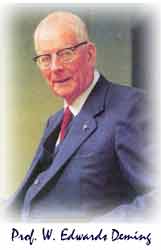
US Billion $ mark and the Deming prize


Four companies joined the billion dollar club in just a month’s time – Ranbaxy (9th march), Infosys (13th April), Wipro (16th April) and Bharati Televentures (23rd April). This was followed by Murugappa group, Bajaj Auto and Tata Power. Reliance Industries, TCS, Hero Honda, Tata Motors, Tisco, Nalco, and ICICI have already been the members of this elite club for some years now. While all PSUs in oil and gas sector have also crossed the US billion dollars mark, there are other companies from varied sectors – Grasim from cement, BHEL and L&T from Heavy engineering, a number of PSU banks, M&M and TVS Motors from auto sectors – who have joined the club as well.

Here are some other highlights for readers to digest:

  • Reliance Industries’ net profit crossed one billion dollar mark.
  • Auto components and then ‘made in India’ vehicles export in value terms crosses billion dollar mark.
  • Tirupur knitwear export exceeds one billion dollar

Thse are some of the things that makes me and I think every Indian ‘feel good’. As I spent my whole life in manufacturing, the news of four companies getting the coveted ‘Deming’ prize in a single year (2003) was heartening. These companies are not very large in scale, but the achievement is very much significant. They are:

  • Mahindra & Mahindra, Farm Equipment Sector- manufactures tractors.
  • Brakes India Foundry Division – part of TVS group.
  • Rane Brake Linings – a Rane group company manufacturing auto components like steering and suspension systems, seat belts, valves, etc.
  • Sona Koyo Steering Systems – a company of Sona group in joint venture with Koyo of Japan..

It all started with Sundaram Clayton, Brakes Division in 1998 winning the Deming Application prize for the first time, followed by Sundaram Brake linings in 2001 and TVS Motor Company in 2002. But the winning of Deming prize by four Indian companies has shown that Indian industry is indeed maturing (or should I say, “shining” ). The Deming Prize is conducted and managed by JUSE (Japanese Union of Scientists and Engineers) and is perhaps the most respected prize of the world – almost attracting similar respect as one of Noble prize.

All these achievements are confirming that we can do it in every sector, and we can become the leader keeping all our humility. Indian companies are right on the course to achieve global excellence. More and more Indian companies will join this league in the very near future. I am confident.

Posted in Uncategorized | Leave a comment

My Dilemma for Election 2004


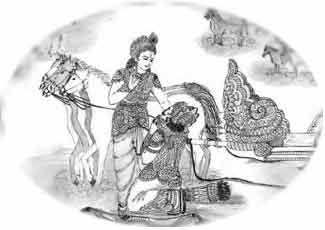
Tomorrow (10.5.2004), I am going to exercise my most cherished right as a citizen of this great democracy. However, I find myself in a dilemma almost similar to the one that Arjuna had in Mahabharat. Unfortunately for me, I don’t have Lord Krishna around to show me the way. Here’s my dilemma:

I do not want vote for Congress because:

  • The handout given by the local party candidate has two photographs in two corners at the very top- Sonia on the left and Late Rajiv at the right. I do not think of them as the real face of Congress. Why can’t the party keep Nehru and Indira Gandhi as its icons, if it is allergic of Lal Bahadur Shastri or Narsingha Rao?.
  • The party is dynastic to the core. It has proven so more by bringing Rahul, the fourth generation in the fray without any apprenticeship.
  • It backs Laloo Jadav- the greatest joker among politicians across the nation, if not the globe. He has played caste-based politics to the core, especially at the cost of Bihar’s backwardness.
  • It will be backed by CPM that will put a strong brake to all reform programmes to accelerate the growth of Indian economy.

I do not like BJP because:

  • Sometimes, it uses Togadia and Dalmia to garner votes of a community.
  • The old guards are not preparing younger and effective leaders such as Jaswant Sinha, Arun Jaitley, Arun Shourie, or Pramod Mahajan for the top position.
  • The government could not complete the promised sections of Golden Quadrilateral Project.
  • The government could not come out with a clear time bound programme to get over the power shortage in the country.

I can not vote for BSP because:

  • I doubt the capability of its leader after Taj corridor case.
  • It talks more about Manubadi philosophy rather the development of under-privileged class of the society.
  • It is wasting money in promoting their leader for selfish purposes.

I can not put my vote for SP as well because:

  • This party is equally dynastic with the son in hurry to take the charge.
  • It talks too much about its secular beliefs without doing any concrete work to improve the quality of life of the minority.
  • It has brought in film actors and actresses from outside the states to represent the local people like some other national parties.

i think that this dilemma is affecting not just me but perhaps every voter. Our decision is almost always without any reason. In the end it ends up being selecting the party that you think is the lesser of the evils.

Posted in Uncategorized | Leave a comment

Include a course on Japanese Management tools in high school


India’s industry level interactions with Japanese industry happened perhaps some time in early 80s. It allowed our professionals to learn the Japanese management styles and the tools they used in the management of their companies. Over the period, the tools have become very popular in Indian industry as means to improve the overall performance of the companies. Auto components sector is one such case. The sector has exported more than a billion dollar worth of auto components in 2003-2004, something unimaginable just few years ago. The education and training of the Japanese management tools still remain mostly exclusive to some industries only. Consultants, management schools and industrial organizations and institutions conduct short term courses for industrial workers and supervisory staffs. However, some of these Japanese management tools have universal application. Every working individual and a group including a housewife or a staff in your municipality or corporation can use it to solve his problems and improve the quality of life of his own and that of the society. A chapter or two on these Japanese management tools and their applications must be added in social science course in school final (class 10). Some more sophisticated ones such as new management tools may be part of class twelve courses throughout the country.

What are these management tools/techniques? 5S, TPM (Total Productive Maintenance), and Kaizen (incremental continuous improvement) are the most important ones.

“5S” relates to the role of housekeeping and the concept of ‘a place for everything and every thing in its place’. “5 S” gets its name from five Japanese words that cover the total activities of the strategy (Seiri – organising, seiton – neatness, seiso – cleaning, seiketsu – standardisation, and shitsuke – discipline). Is it not some thing which every housewife will love to know about a little more? Actually, she practices some without knowing that she is doing it.

TPM involves the user in the maintenance of his equipment and facility without depending totally on external agencies for that work. Here again every household uses a number of gadgets. With increasing consumerism, the number is growing. How many of them are being used effectively? How many times you find them needing repair when you have gone to use them? One of my friend recently complained that his refrigerator ditched him, when he was expecting the prospective father-in-law of his son. He had to buy one in hurry. TPM eliminates this unreliability.

Kaizen is a method to bring about improvements in everything we do in incremental manner. It is based on the belief that every one has some creativity and can contribute. As against innovation, Kaizen is less spectacular, but more effective. All of the working population is expected to participate in continuous improvement. It may be the quality of the product or processes, its cost, its delivery time, or customer satisfaction. Smallest or the biggest-all businesses can improve its competitiveness with kaizen at work.

Seven* management tools are used extensively in the management of any enterprise. One requires data recording and use of some simple mathematics and graphs for reaching at conclusion. Now, an additional set of 7 new** management tools are in use. Working philosophy is also unique while using these tools in some respects. Idea is to promote team working, in which we Indians have been named by experts as poorer. Brain storming is extensively used during application of the management tools to find possible solution of the problem or improvement.

These tools are equally applicable and useful at home and in all types of professional activities in the enterprises involved in different fields. One of the fads these days is to get an ISO certification. Even good public schools are striving to get the certification. All these years I found new boys and girls come to work with good education. But they lack the basic inter-personal skills and temperament of team working and problem solving. I am of an opinion that some of these things can be included in the courses at school level. They can start creatively contributing in attaining the mission of their enterprises without much specialized training. Simple illustrated text materials can be prepared by professionals to suit school level standard. I am sure it will help in building a better quality of life for a larger group of population. As mostly, the average education level of workforce is school final and twelve plus, the knowledge of these tools and techniques will be of great help for the new entrant in any organization or enterprise. Its inclusion will no way burden the student, as it is practice-based and real life subject.

a. *Check Sheets, Pareto Diagrams, Histograms, Cause and Effect Diagrams, Scatter Diagrams, and Control Charts
b. **Affinity Diagram, Interrelationship Diagraph, Tree Diagram, Prioritisation matrices, activity Network Diagram, Process Decision Program Chart, Matrix Diagram
c. The icon supporting this post is the word “kaizen” in japanese I am told. I sure hope they’re right
Posted in Uncategorized | Leave a comment

Can IT stop the death of democracy?

An article in Indian Express on 5.5.2004 mentions a complaint- “In Andhra’s Nanagapaka village, early voters complained that when they pressed the button of the Congress the light of the Telegu Desam party glowed.” I had not taken a similar story from Bihar when a report in local media said- ‘whatever button was pressed in the EVM, the light glowed in front of lantern, giving the vote to RJD (Laloo’s Party)’. Indian Express article was authored by a technologist, Ravi Visvesvaraya Prasad – http://www.indianexpress.com/full_story.php?content_id=46301. He has listed some technical flaws that EVM may show. Flaws can cause errors and manipulation. Through a feedback letter, I requested Mr. Prasad to avoid raising such an issue during election. It will create confusion. He should come out with technical suggestions to solve the problems. However, both the manufacturers- Bharat Electronics Ltd. (BEL) and Electronics Corporation of India Ltd. (ECIL) claim the machines to be tamper-proof. A million of EVMs have been deployed in this election. A similar article appeared in Economic Times on 4.5.2004 – ‘EVM’s fine, but polls can be rigged’ http://www1.economictimes.indiatimes.com/articleshow/659192.cms And then a news on 6.5.2005 in Hindustan Times- ‘The presiding officer and 11 others were arrested on charges of bogus voting and rigging.’ To add to my sorrow, a news channel has today shown BSF jawans rigging the votes. Is the news shocking or should we live with these for ever?

The machines are to be further sophisticated and automated. The machines must be more user-friendly and more robust to avoid its misuse. The machines must be tamper proof against all the variability that can be caused by unscrupulous technicians under the guidance of their officers. Can it contain the thumb impressions of all the voters for the booth in its reference file, and when the voter puts his thumb on the switch against his choice, it records his vote after verification? But my proposition is not limited to making it tamper proof and to removing even the perception of its manipulation. It may require education. In next 2-3 years, extensive education programme must cover the total population.

Can our IT professional improve the machines with latest technology to an extent where the system can hit at all the pertinent issues- the way the election is conducted and its cost that runs in billion, the large scale deployment of manpower for manning each booth that are 700,000 this time? Can it be made an unmanned affair, where the armies of the presiding officers are not needed? Can the machine work like an ATM, so that the voters insert his card and record his vote? Can the vote be stored instantaneously in a distant central data storage bank through wireless system, so that the machines are not to be stored in locker rooms and protected before counting days?

IT professional and the administration should take up the challenge of devising means to make the process of election simple. The candidate can put his papers for candidature on line with EC. All the voters come to know about the candidates by his work for the society and not through his marriage-like procession or campaign yatras. Voters get access to the candidates’ affidavits that can be made available through e-chaupal type sites. The local newspapers publish a comparison of different aspects of candidates credentials based on affidavits. How can the country get rid of this huge wastage of money and human resources, more so the aberration in society? Can not everything be done quietly maintaining the right of secrecy of voters totally? Can we not come out with a system that eliminates the interference by Papu Yadav and similar musclemen, the booth captures, the influence of ruling party and its administration? Can we not avoid a system where the candidate is to campaign and show his in his constituency only once in five years? Our election system is at the root of all corruptions and creates a parallel economy. Our technologists and managers should think of a way out to make the system fully safe, secured and reliable while maintaining the total secrecy of the opinion of the individual. Our politicians must agree and legislate to stop criminals even the perceived ones to participate and win by threat or the perception of threat even from prison, otherwise the generation to come will not excuse them for their follies. I am the innovations are on. For the first time in world, India -a country with all diversity has used the electronic voting machines this large scale. It has cut down on the cost of paper ballot papers that will be in crores. But let the technologists make the system perfect.

Posted in Uncategorized | Leave a comment

Laloo’s Bihar


On 3.5.2004, I was watching the opinion poll on Election 2004 on the tube. However, the programme wasn’t interesting enough to keep me from retiring for the night. I was about to turn off the TV and call it a day when the anchor announced the next programme was “A day with Laloo”. The announcement forced me to reprogram my “biological clock”. I usually hit the sack by 9.30 in the night. But, for once, sleep has to wait. It has been interesting to observe the political situation in Bihar as a case study. Why is Laloo the “hero number one” of Bihar? The undisputed numero uno. Single-handedly, he is running his ruling party for a record number of years. It was evident as I watched the programme that there were moments when Mr. Laloo Yadav got very annoyed with all the “negative questions” (read embarrassing questions) being asked by the reporter. In fact, at times, Mr. Yadav seemed so downright angry that there was every likelihood that the reporter will be being tossed out of the helicopter in which they were travelling! However, I guess, the reporter had lady luck on his side. In my opinion, the positive aspect of the story was Mr. Laloo Yadav’s wife – Rabri Devi. For the benefit of those who are not aware, she also happens to be the Chief Minister of Bihar. However, to be fair to her, I was thoroughly impressed by the way in which the CM treated the reporter at her residence. Rabri Devi is a totally transformed lady. It is evident that power has actually brought about a positive change in Rabri Devi. She offered the reporter as well as Laloo some snacks herself. Biharis, in general, may be looked upon as a hostile and a crass lot. But when it comes to it, their hospitality is unparalleled. At the CM’s residence, the reporter also went to Mr. Laloo Yadav’s cowshed. He has, perhaps, 100 plus cows of good breed. He looks more of a BJP man when you see him with his cows. It may be shocking for urban intellectuals that a CM’s house and its adjoining land are used as farm and dairy. Strangely, the reporter never bothered to ask what happens with all the milk produced in the residential cowshed. How is it consumed? Is it sold in open market? What happens to the revenue generated from the sale of milk? Does it go to personal account of CM or some trust?

For all the questions about the poor condition of Bihar, Laloo had the usual answers: “NDA is biased against Bihar”; “All the negative stories are conspiracies against him”; “Biharis are self-respecting people”. The reporter, to be fair to him, addressed Mr. Yadav as a “jester” in an apparent reference to his mind-numbing answers and his never ending antics in general. Thankfully, the reporter’s caustic remarks did not provoke Mr. Yadav at all. In fact, Laloo Yadav himself has been coming out with “witty and humorous” slogans for which he is famous. For example, the one about mixing aloe, bail, and his name. Why is lily Yadav not serious about answering questions about general development – rather the lack of it – in Bihar? Can he not do something in that regard? But wait a second! To some extent, Laloo’s cowshed itself gives the answer regarding what he could have done for the people of Bihar. He inherits the knowledge of cows and other milk producing cattle. Laloo’s or Rabri’s government could have encouraged dairy industry in a big way as it was done in Gujarat. The conditions in many villages and of many families would have improved with the additional earning from milk production. This would have enabled his community and the people backing him to live a better life. He could have certainly changed the face of Bihar with his own innovative contribution with large scale animal husbandry projects for the rural employment. He could have brought a “white revolution” (pun intended) or “milk revolution” (take your pick) in Bihar. And all this could have been done without much help from the central government. He very much understands the need of the people.

Laloo’s speech accompanying his EVM course was full of gestures and dialogues that befits a jester. But people attending the rally were happy and excited. They were happy simply to be so close to Laloo. They do not expect more. Most of the reporters do not understand what he speaks in Bhojpuri, the language that he speaks proficiently. As reported in The Hindu, in one of the rally he said, “Lathi Utthavan, Tel Pilaavan, Baajpa bhaghaavan”. Translated in english, it literally means – Take your lathis, oil them well and chase the BJP out of Bihar. In my opinion, it is highly explosive and provocative slogan. It is a cry of war against a rival party. But no one can stop him. He has mesmerized a large group of the population. He has become more stronger with Mr. Ram Vilas Paswan coming under his fold. How long the duo will go on playing with the sentiments of the people of Bihar? How long the intelligentsia will tolerate this? How long the younger generation of Biharis will go on migrating from Bihar because of the fault of their leaders? How many years of opportunity for development will be lost for a state with a great past and potential? The questions keep piling. Hopefully, someday soon, a son of Bihar will come out with the answers to these tough questions and lead Bihar out from today’s state of hopelessness and despair.

Posted in Uncategorized | Leave a comment

Some important priorities for the new Indian government


It hardly matters who forms the next government after general elections 2004 for Lok Shabha. For the sake of continuity, NDA is certainly preferred. If verdicts come in favour of NDA, it will have no excuses in 2009 (at the end of their second five years term) for not completing the task or getting its great dreams realized. If either of Congress alliance or third front manages to get into governance, it will take some time to complete their common minimum programme causing a delay in implementation of the programme. However, that cost will have to be borne by the country and its people who prefer the split verdict. But ultimately, the new government will have to perform and try to catch up the lost time. The member political parties will have to give up their own special agenda and go whole heartedly for the national priorities.

Without losing any time, the government must move into action mode and get into the speedy execution of on-going projects such as NHAI roads, power plants, construction of world class port/airports, etc that are already cleared by the previous government. The country can not afford any holdup or slowdown of these projects because of the change in government as it normally happens. Some of the expectations from the new government will be as follows:

General:
PM coming to the office must go for a smaller ministry by abolishing some or merging the responsibility of some in one. PM must select young, honest and effective ministers based on proven track record rather on political considerations. PM must give them targets for judging their performance and periodically assess. It will be in national interest that PM keeps himself aloof from political lobbying of vested interests.

Transportation:
Roads must be the priority number one. Nothing can move as planned without it. All the villages and towns, as promised must be connected by metal roads of good quality. Simultaneously, a robust mechanism must be in place to keep it maintained to world class standard. A speed of 11 km for NHAI per day for 4-, 6-laning has been attained. So, the government must give to nation a minimum of 4000 km of roads of that class per year, i.e., 20000 km in next 5 years plus the linking roads in other projects such as Grammin Sarak Yojana.

Electricity:
In next 5 years, power shortage must be brought in control. It is possible, if not politically messed up. Electricity for every household is to be considered as a necessity. Every year, at least 10000 MW generating capacity must be added. At least10 companies if not more such as Reliance Power, NTPC, Tata Power, Essar Power, ONGC, BHEL must add 1000 MW each of thermal power. Simultaneously, companies such as NHPC and similar state units must add the hydro-electric power plants of small, medium and big sizes. Northern States must get into the scheme religiously and generate the abundant hydroelectric power possible in their state, States like Jharkhand and West Bengal must build large thermal plants near their coal reserve reducing transportation cost. The states may become the key suppliers of power to other states. Nuclear Power Corporation, solar power and wind mills in specific advantageous areas must complement the capacities. The bottleneck due to inefficient State Electricity Boards will perhaps be overcome with already enacted new ELECTRICITY Bill…

Employment:
Employment for both unskilled and illiterate manual workforce as well as young educated youth must attract maximum attention as promised. It must be one of the goals in all action plans. Manufacturing and agriculture must get effective boost as promised in manifestos for increase employment. Other avenues for creating employment such as an effective thrust on tourism and retail service sector must be opened and explored. It also requires a change in mind set for the people, so that they start appreciating the importance of entrepreneurship and self employment. The government must only facilitate and should never think of providing subsidies and doles.

Water:
Without wasting time, the work must start to improve the availability of drinking as well as irrigation water. It requires immediate start of work on easier and undisputed of the river linking projects that can be completed before 5 years, widening of the canals , repairing and deepening of water reservoirs, construction of check bunds, water harvesting, and projects for stopping the wastage of water. Dependence of agriculture on monsoon must be minimal; otherwise the excuse of lower growth rate can not be eliminated. Water scarcity will be the biggest issue in next general election2009.

Rural Development:
Rural housing should now be the priority. The success of housing industry in urban areas must be duplicated in rural areas too. It should not only be for the one room ones but little more respectable ones. Banks and financial institutions must come out with a model that becomes popular with even small and medium farmers. Our architects also must come out with some attractive proposals which makes the housing acceptable to the farmers and that functionally serves their purpose. Major metros and other cities must go for multistoried housing, and the farm houses, bunglows/kothis must go towards rural areas on express ways rather than congesting it further. With good connectivity through metro and roads, it will cause minimum inconvenience and save the cities for posterity.

PURA (Providing Urban -services in Rural Areas): The new government must create a ministry under a strong and respectable minister who must work to bring the quality of life in villages to such a standard where the villagers do not migrate. Even the affluent ones with their origin in the villages go back to their villages to live there after their retirement instead of preferring to live in urban locations. All the physically fit persons male as well as women living in villages must get suitable and sufficient engagement in villages itself.

Health care:
For health care in rural area with better connectivity through the road projects, private doctors are to be provided with certain incentives to open small clinics. NGOs can provide additional fillips. NGOs can come in big ways in creating health awareness and health care for the community. Increasing the number of medical colleges and nursing institutes and enhancement of its intake capacities is essential to meet the requirements of the country’s health care.

Education:
The education ministry must concentrate on primary education. Education up to class 10 must be free. Course content must change based on actual utility. The system should empower and encourage the village youths to take up the task of education as social mission, where they find pride in educating the uneducated lot. Standard of primary education must improve sufficiently. Before reaching class 10, the students must know the opportunities open for them and shift to the professional education accordingly. The school teachers may be made responsible for total operation and management of the schools? In higher education, India must go for at least one engineering institute of IIT standard, a management school of IIM standard, and a medical college of AIMS standard in every large state. The government must provide real autonomy in functioning of these institutes of nation importance.

Some other priorities include the bold administrative reforms that eliminates corruption and brings effectiveness, cutting all red tapes and unnecessary controls of Inspector Raj. Clearance requirements running in 50s to get a project going must go. Let India start shining in real sense of the term with no one doubting the shine.

Posted in Uncategorized | Leave a comment

Story of a Village- some issues and possible solutions


This is a story of a village named Pipra, more popularly ‘Mardan Rai Ka Pipra’, in Bihar near Sasaram. Sasaram is a district town famous as the birth place of Sher Shah Suri who ruled India for 5 years and built the famous Grand Trunk Road linking Dacca to Peshawar. Sasaram also gained nationwide attention when Babu Jag Jivan Ram, the famous cabinet minister in Nehru era, selected it as his constituency in his bid to get elected to Lok Sabha. In those days, Pipra was not connected with any road. However, since it was near a canal, the canal served as a road to go from and to Sasaram. In 1967, the year when Bihar had it’s most infamous draught, electric poles were erected but the village never got any electricity. To start with, because of ignorance and rivalry, some arrogant and ignorant farmers did not allow the installation of transformer fearing it would pose a fire hazard. Once abandoned, the dream of providing electricity to Pipra remained just that. A dream. It never got done even though many people at various times tried very hard through the local MLA and MP. Unlike electricity, Pipra did get connected with Sasaram with two-way metal roads under some World Bank or a similar scheme around early 1990s. However, in this past 5 years, the conditions of the roads have deteriorated as there was little or no repair or maintenance done after the construction. There are a few mini-buses that ply twice or thrice daily between Pipra and Sasaram, except in the rainy season. Passengers including women and kids board them at their own risk.

Over the last 10 years, farming of paddy and wheat has improved and has produced higher yields more so after a recent renovation and widening of the irrigation canal that is fed by water from Sone river. Landholding has reduced; the number of households has increased after partition in joint families. Most of the land holders appear to be happier, when I compare them with their status in 70s. However, I fear that in the next few years land holding will be further reduced and folks will not be able to sustain their families. On the good side, as a few indicators of prosperity, most of the houses of landholders are of now made of bricks with concrete roof. With an approximate population of 2000, Pipra can boast of having about 45 tractors and even 2 harvesters. Some 50 family also own motorcycles, and some 20 use TV powered by solar battery that also powers light bulbs at night since there still is no electricity. Quite a number of families have their own toilets. Surprising as it may sound, but even in this 21st century, their are folks in Pipra (both men and women) who still use open fields as their personal restrooms. Needless to say, during monsoon season, the situation gets worse.

With modern equipments like tractors and harvestors available, the possibility of employment in farming work has reduced tremendously. Today it is very uncommon for the land owners to engage manual workers. In the old days, a lot of people were engaged in farming, the exact number varying with the amount of land available for cultivation on yearly contract. Today with harvestors around, most of the manual work earlier done by workers in the past is carried out by these machines. Agents of Mill-owners buy and carry away the grains straight from the machine’s outlet on trucks and tractors. Today, you will not see any bullocks being used for ploughing or any other type of work. Folks in the village use cows and buffalos mainly for their milk these days. However, households are finding it more and more difficult to keep them. To make matters worse, there is no milk collection facility through any dairy nearby. In other words, families cannot enhance their monthly earning by selling their extra milk. Reality is that besides a total of 2 months in a year, folks in Pipra basically sit idle and have nothing much to do.

Pipra does have a primary school. However, the teacher remains missing for most of the time. Even though salary of school teachers has increased substantially, salary of primary school teachers remains pathetic to say the least. Moreover these teachers are not as sincere or knowledgable as the teachers of our days. It would be a fair assessment that this is the state of affairs in most (if not all) government jobs. More surprising and worrying thing about this is that parents are not at all enthusiastic about the education of their children due to lack of employment prospects. However, mothers today are very keen to get their daughters educated although the reasons are not exemplary. See the idea here is educated girls have a better chance at getting a decent bridegroom for themselves.

In the 70s, two students from Pipra got into engineering colleges, graduated, and got employed in respectable companies near. However, no one since has faired very well in pursuing higher education dreams. On top of it, the elders of the village seem to have poor opinions about those two engineers as well. Turns out, these two were not smart enough to have have earned enough through ‘ooparee amadani’ (under table transactions). As a result, not a lot (or atleast not enough) was reinvested back into Pipra in the form of big houses or lands. The fact is people who leave their homes in villages like Pipra and make a life for themselves in big cities never come back and share/reinvest in the success of the village.

The other day, on my regular morning walk, I met some youngsters who were running on the banks of a newly built canal near my house in Noida (near New Delhi). I intitiated a conversation with them. I was interested in knowing what they were ‘exercising’ for. They said that they were practicing with the hope of joining Indian defense or police force. They went on to say that while being fit is definitely important to seek their goals, what’s really needed is a huge sum of money to be paid to some agents thereby ensuring their selection. I was disappointed. This corruption in the system is cheating many deserving candidates out of well deserved jobs. For many unscrupulous persons, this has become the a very lucrative business.

What can be done to engage more people in useful and productive activities in villages? What can be done to get electricity in the village? What can be done to get roads repaired and to keep the same in good condition as are found in big cities? What can be done to improve the quality of life in villages like Pipra so that successful individuals retire and come back and spend their retirement fortune in their village?

Why can’t some one take a lead and start a weekly market in some open space which is easily available? Why can’t some one take a lead and get engaged in poultry and piggery? Why can’t someone start more dairy farms in villages so that some more people get engaged in the business of milk and related products? Why is it that the farmers don’t switch over to vegetables and some fruits? Perhaps all this requires a changed mindset and new inititiatives by some good NGOs or dedicated persons from government agencies. The answer to our problem is not to have more and more villages like Pipra get abandoned and everyone moves to some big cities. Villages like Pipra are not few and far between that they can be ignored. The country needs a comprehensive strategy if they want this insane exodus from villages to big cities to stop. This is not helping anyone – not every individual makes it “big” in a city, cities are becoming more crowded and villages (and the few that stay back) are getting more and more isolated from the main stream.

A Shining India is ludicrous if Rural India and those who live there are not made an integral part of the country’s future goals and ambitions. As I alluded to earlier, people living in these villages form a huge chunk of our nation and anything which improves their living conditions, their prospects, ensures that their aspirations are met in their very own backyard will be good for them, the village’s economy, the economy of the big cities and the economy of the country as a whole.

Perhaps the Prime Minister of the country must make this his mission – “RE-FOCUS ON OUR VILLAGES AND MAKE IT ATTRACTIVE FOR PEOPLE (FROM OUTSIDE AND INSIDE) TO INVEST AND COME STAY’. He may even create a new ministry headed by the most acceptable and effective member of his team.

Posted in Uncategorized | Leave a comment

Increase Growth Rate, Increase Productivity

Recently, I went through a wonderful article titled The Power of Productivity in the latest issue of ‘McKinsey Quarterly’ (2004 number 2). I strongly recommend this article to everyone connected with running an enterprise as well as the nation’s economists. It propounds that it’s neither capital investment nor the education of the workforce that makes a country grow fast and bring prosperity for all it’s citizens. The article goes on to say that the best growth indicator is GDP per capita, measured simply by multiplying labour productivity (how many goods and services a given number of workers can produce) to the proportion of the population that works. The productivity increase is the key for higher GDP per capita. And the productivity improvement does not always need a lot of investment nor is it necessary to have only educated workforce. More important is on-the-job training and regular upgradation of skills through training in related acquired technologies.

When we talk of productivity, it relates to and covers all tasks and activities of all able-bodied persons of the country. One must improve the productivity of his/her output against the input- engagement time and compensation. Productivity requires fixing up a measurable norm for every activity- the whole of the work as well as its elements. How much time and manpower is required to construct

  • a kilometer of road
  • or a housing complex
  • or to obtain an internet connection from the time it is requested to the time the consumer starts using it
  • or to build a power plant
  • or to lay down per kilometer of oil pipe lines
  • or to get a new product designed and developed

The local as well global standard or benchmarks achieved must be used for comparison and improvement. I cannot emphasise this point enough – Most of the productivity (cycle time, quality, cost, delivery time) improvements does not require huge capital investment. Sometimes it is even available freely or requires only proper utilization of budget already allocated and available. I could cite gazillion of examples from the industry on this subject.

However, what it does require is a different mindset to improve and innovate. It requires the knowledge of some simple management tools for all the team members that do not require high technical education to understand and use those effectively in workplace. Most importantly, it requires leadership to create an environment and work culture for improving productivity. Needless to say, India can attain the status of a developed nation only after it has resolved poor productivity numbers that seem to plague us

Posted in Uncategorized | Leave a comment

Manufacturing Sector- a necessity for India’s Growth


A review of data in 2004 World Machine Tool Output and Consumption Survey (Gardner publication) was interesting. China was 12th in export with $370 million in 2003, Thailand 25th, whereas India was 29th with only $12.9 million. But the figures of import were just amazing. China imported machine tools worth $4040 million in 2003 as numero uno importer; Thailand was at 9th position with $551m, whereas India was 23rd with import of only $139.6m. Chinese consumption of new manufacturing equipment shows why and how it is so much ahead in the manufacturing. Actually China purchased and installed over $6.5 billion worth of machine tools outpacing second-ranked Germany by 2.2 billion. At one time USA used to be number one in export as well as in consumption. Today, USA has gone to 6th position in export, but remains as number 2 in import. Germany has maintained its position almost for quite some years. In 2003, Germany remained number one in export, and number 3 in import. Japan is number 2 in export and imports only some very special machine tools The consumption of machine tools are indicator of the strength of engineering manufacturing sector that comprises sectors such as automotive, automotive components, machine tools, electrical equipment and machinery, textile machinery, power sector equipment, aviation,etc. As machine tools are mother machines for engineering industry, it is, as some says, a good indicator of country’s industrial power. India is far behind in consumption. It shows very low investment in engineering manufacturing sector.

It is necessary that India gives some special priority for improving the growth of manufacturing sector significantly.

No country today can think of becoming a super power without strong manufacturing base.

Unfortunately in every area of manufacturing, we have missed the bus to become the global leader. We blame the government policies, taxation and control as the main reason for the situation. However, the industrialists must also take some responsibility. It requires a change of mind set. Manufacturing is not plain trading business, where one can make quick buck. Manufacturing is capital intensive, and requires a different thrust on technology and management. It requires regular investment, continuous improvement and innovation in process and product to remain competitive.

Some of views on the issue are here:

  1. India has a large capacity scattered all around, that are lying unutilized or very much underutilized. Hindustan Machine Tools Ltd over the years built a machining capability which may be the largest in the world. Similar are the case of other PSUs- BHEL, BMEL, HAL, ordinance factories, railways. Some private companies also have good installed capacity, but capacity utilization is very low. With a change in mind set, some of these companies can also become world leader in manufacturing in their area. An integrated approach may be devised to utilize the facilities and become global leader in component manufacturing. India can be supplier of heavy, medium or small sized components to engineering industries in many counties of world that lack this facility.
  2. In automotive industry, India may try to become a global source for power units (engine and transmission), steering, and axles as well as components of the mechanical subassemblies. Area of focus should be low to medium volume production of components which the industries in developed countries shall like to outsource. Moreover, the production requirement can be met with flexible machining systems. With increasing number of variety, the volume of manufacturing is getting reduced, where OEMs are seeking vendors.
  3. Prototype component manufacturing for OEMs does also have great opportunity, as OEMs will like to outsource them to vendors. Investment in Rapid prototype manufacturing facilities will be a good business proposal.
  4. India can also easily become the world leader for castings and forged components, where the developed counties are withdrawing from the industry. The scope can further improve if the major parts are offered fully machined,
  5. India lacks in some fields of manufacturing. Sheet metal stamping is one. India does not have large capacity stamping facilities. Most of the manufacturers are going for low volume but more variety in models. MNCs import most of the bigger stampings. With very high efficiency and flexibility of newer presses, there is scope for some stamping plants in the country to eliminate the import and transportation of the bulky components.
  6. India has not developed a good die and tool manufacturing capability, particularly for larger ones. Entrepreneurs and government can take advantage of the scope, as India has all advantages and skill to become the world leader in tool making sector. Being skill-based production process, the sector will provide good employment opportunity too. With large number of engineering institutes, training of manpower can easily be done. India’s strength in software design will be additional advantage in die and tool manufacturing where CAD and CAM are extensively used. With revolutionary change in machine tool technology, today one machine tool is sufficient to complete the machining of the die in one setup. Rest is manual operation. Naturally, to provide a total solution to the customers more machine tools and equipment are required depending on services.
    India has the potential to become a global tool room.

  7. The latest development in technology has brought in revolutionary flexibility of manufacturing in all engineering industries ranging from those producing air-conditioner to automobiles. Today, it is possible to complete total machining of an engine cylinder block or an air-conditioner compressor housing on one single machine. Investment can be phased.

As a policy, the country must decide to grow with manufacturing in national interest, large scale employment opportunity remaining the foremost, rather than switch over for mere assembly or import of major consumable products. With many reforms and global approach of procurement, the benefits of improved technology must be harnessed by all to the best. The quality, cost, and just-in-time delivery will make one win. One will have to be the world class to survive and grow. Technology provides the answer.
Encourage manufacturing sector; get an employment growth along with GDP growth of 10% or more.

Some tips for SMEs in manufacturing sector:

A. For entrepreneurs and industrialists
1. Change the mindset
2. Size need not be a limitation
3. Adapt world class manufacturing practices on shop floor
4. Employ technically educated workmen.
5. Provide customized education in related technology
6. Provide challenges for improving capability of processes
7. Train in multitasking.
8. Outsource non-manufacturing and service activities judiciously
9. Start thin and remain thin
10. Use computer to your advantage and also internet to improve productivity
11. Follow latest HR practices and do not exploit the operating class.
12. Invest in future

Please do not exploit the labour force, provide them their dues.

B. For Government
1. Reduce the duty on at machine tools and high tech equipment to zero.
2. Make finances available at low interest rate.
3. Undo reservation for SSIs and let them compete.
4. Make labour dispute acts simpler for fast decision for court
5. Remove inspector controls

Posted in Uncategorized | Leave a comment

Welcome

Welcome to my virtual home. I look forward to sharing my thoughts, opinions, and comments on a variety of topics. So, the mantra for today is:

When in doubt, follow your heart

<

Posted in Uncategorized | Leave a comment